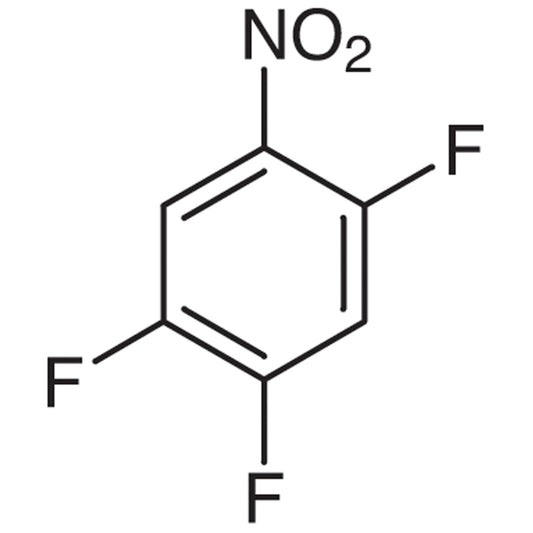
3,4-Difluoronitrobenzene is a chemical compound widely used as a building block in the synthesis of complex organic molecules. It plays a crucial role in laboratory settings where the creation of fluorinated and nitro-containing aromatic compounds is required. This compound is particularly valuable in organic chemistry due to its ability to participate in various reaction mechanisms, especially electrophilic substitution reactions. Its presence in chemical synthesis allows researchers to develop compounds with specific chemical and physical properties, making it an essential tool for both academic and industrial research.
The compound's stability under controlled chemical conditions and its controlled reactivity make it a preferred choice for synthetic chemists. The presence of fluorine and nitro groups imparts unique polarity and reactivity characteristics, which differ from those of standard aromatic compounds. These properties enable precise control over reaction outcomes, making 3,4-Difluoronitrobenzene a versatile reagent in synthetic pathways. Its predictable behavior in different reaction environments ensures consistent results, which is vital for reproducibility in scientific research.
In Indonesian laboratories, 3,4-Difluoronitrobenzene is commonly used in organic chemistry research, especially in higher education institutions and research centers. Its application spans various synthetic processes, including the development of pharmaceuticals, agrochemicals, and materials science. The compound's reliability and effectiveness make it a staple in chemical laboratories across Indonesia, supporting both teaching and research activities.
TCI brochures (PDF)
- Fluorination Reagents, Fluorinated Building Blocks 2026-03-18 · p. 28
- Organic synthesis of fluorinated and nitro-containing compounds due to its reactivity and stability in electrophilic substitution reactions.
- Development of pharmaceutical intermediates where controlled reactivity and molecular specificity are required.
- Research in materials science for the creation of functional polymers and advanced chemical materials.
- Educational use in undergraduate and graduate chemistry courses to teach synthetic methodologies and reaction mechanisms.
- Industrial applications in chemical manufacturing processes requiring precise chemical transformations and compound modifications.
| Brand | TCI |
|---|---|
| CAS number | 369-34-6 |
| Molecular formula | — |
| Purity | — |
| Category | Chemistry > Building Blocks > Fluorinated Building Blocks |
| Pack sizes | Available in standard laboratory quantities as per supplier specifications |
| Physical form | Solid or liquid, depending on formulation |
| Storage | Store in a cool, dry place away from direct sunlight and incompatible materials |
3,4-Difluoronitrobenzene should be stored in a cool, dry environment to maintain its chemical stability. It is recommended to keep the compound in a sealed container to prevent exposure to moisture and air. Due to its chemical nature, it should be stored away from incompatible substances such as strong oxidizers or reducing agents. Proper ventilation is essential when handling the compound to minimize inhalation risks. Laboratory personnel should use appropriate personal protective equipment, including gloves and safety goggles, to ensure safe handling. Regular monitoring of storage conditions is advised to maintain the integrity and safety of the compound during long-term storage.
—
Produk Terkait
-
4-Bromo-2,5-difluoronitrobenzene TCI B3926
Regular price From Rp 1.538.250,00Regular price -
2,6-Difluoronitrobenzene TCI D4123
Regular price From Rp 1.485.750,00Regular price -
3,5-Difluoronitrobenzene TCI D3426
Regular price From Rp 3.048.150,00Regular price -
2,5-Difluoronitrobenzene TCI D1700
Regular price Rp 1.696.800,00Regular price -
2,4-Difluoronitrobenzene TCI D1636
Regular price From Rp 769.650,00Regular price -
3,4,5-Trifluoronitrobenzene TCI T2357
Regular price From Rp 875.700,00Regular price -
2,4,6-Trifluoronitrobenzene TCI T1681
Regular price From Rp 1.696.800,00Regular price -
2,4,5-Trifluoronitrobenzene TCI T1589
Regular price From Rp 1.008.000,00Regular price