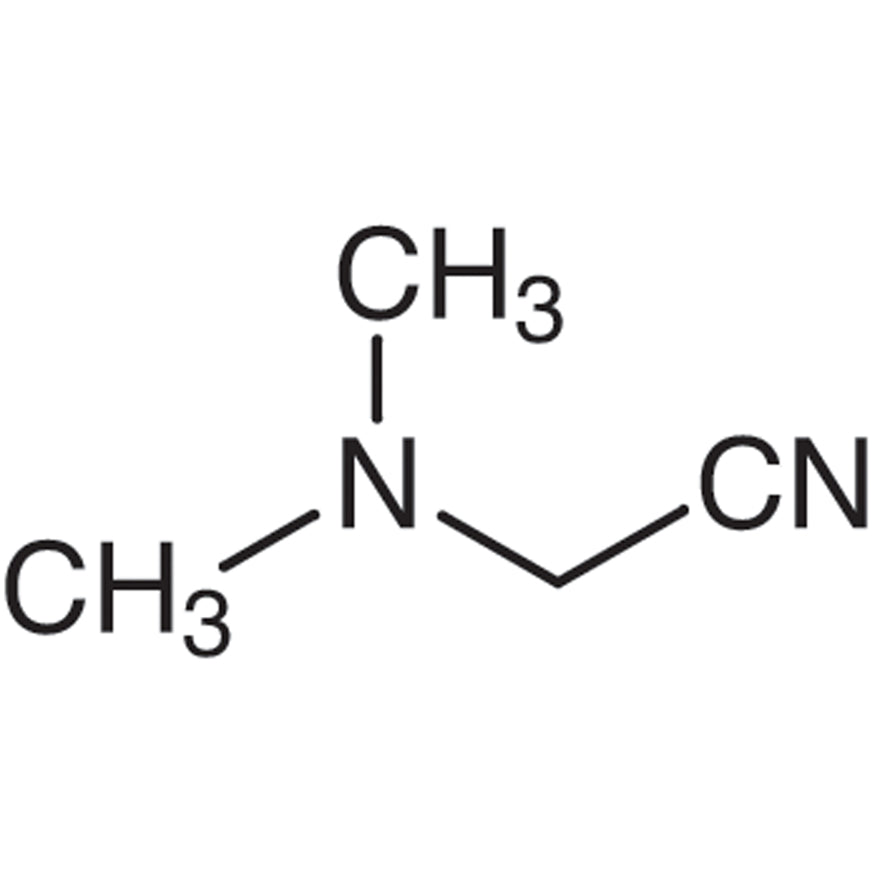
(Dimethylamino)acetonitrile, also known as TCI D1929 with CAS number 926-64-7, is a versatile chemical compound widely used in laboratory settings for its reactivity and functional group. This nitrile compound contains a dimethylamino group, making it a valuable building block in organic synthesis. It is commonly used as a reactant in various chemical reactions due to its ability to act as an electron donor. Its chemical structure allows it to participate in multiple reaction pathways, making it a key component in the development of complex molecular structures.
The compound’s polar nature, due to the presence of the dimethylamino group, enables it to dissolve well in organic solvents such as ethyl acetate and chloroform. This solubility makes it ideal for use in reactions that require organic solvents. Additionally, its reactivity under certain conditions, such as exposure to moisture or UV light, allows it to be a useful reagent in synthetic processes. Its chemical stability under controlled conditions further enhances its utility in laboratory applications.
In Indonesian laboratories, (Dimethylamino)acetonitrile is frequently employed in organic chemistry research. It is particularly useful in the synthesis of compounds requiring high reactivity. Its role in the development of new chemical compounds and its application in various synthetic routes make it a preferred choice for researchers. Its availability and chemical properties support its use in both academic and industrial research settings.
Related TCI products
- TCI M0212 109-82-0 (Methyleneamino)acetonitrile
- TCI H1615 25263-44-9 (3-Hydroxyphenyl)acetonitrile
- TCI C2582 4640-66-8 (4-Chlorobenzoyl)acetonitrile
- TCI C2581 21667-62-9 (3-Chlorobenzoyl)acetonitrile
- TCI C2580 40018-25-5 (2-Chlorobenzoyl)acetonitrile
- TCI A0291 22525-43-5 4-Amino-4'-(N,N-dimethylamino)stilbene
- Organic synthesis applications benefit from this compound’s reactivity and ability to participate in multiple reaction mechanisms, making it ideal for constructing complex molecular structures.
- It is commonly used in the development of new chemical compounds due to its functional group, which allows for versatile chemical modifications and transformations.
- In academic research, it serves as a key reagent in the synthesis of pharmaceutical intermediates and other specialized organic compounds.
- Its solubility in organic solvents makes it suitable for use in reaction systems where organic solvents are required for efficient chemical processes.
- It is frequently employed in laboratory settings that require precise chemical reactions with high reactivity and controlled functional group participation.
| Brand | TCI |
|---|---|
| CAS number | 926-64-7 |
| Molecular formula | — |
| Purity | — |
| Category | Chemistry > Building Blocks > Non-Heterocyclic Building Blocks |
| Pack sizes | Available in various quantities as per standard laboratory supply options |
| Physical form | Liquid |
| Storage | Store in a cool, dry place away from light and moisture |
This compound should be stored in a cool, dry environment, away from direct sunlight and moisture to maintain its chemical stability. It is recommended to use sealed containers made of glass or high-density polyethylene to prevent contamination and evaporation. Due to its reactivity, it should be handled with care, using appropriate personal protective equipment such as gloves and safety goggles. It is important to ensure proper ventilation in the laboratory when working with this material. Avoid exposure to heat, sparks, or open flames to prevent any potential hazards. Always follow standard laboratory safety protocols when handling and storing reactive chemical compounds.
—
Produk Terkait
-
(Methyleneamino)acetonitrile TCI M0212
Regular price From Rp 928.200,00Regular price -
(3-Hydroxyphenyl)acetonitrile TCI H1615
Regular price From Rp 5.565.000,00Regular price -
(4-Chlorobenzoyl)acetonitrile TCI C2582
Regular price Rp 6.333.600,00Regular price -
(3-Chlorobenzoyl)acetonitrile TCI C2581
Regular price From Rp 769.650,00Regular price -
(2-Chlorobenzoyl)acetonitrile TCI C2580
Regular price From Rp 1.326.150,00Regular price -
4-Amino-4'-(N,N-dimethylamino)stilbene TCI A0291
Regular price From Rp 1.936.200,00Regular price -
Tris[2-(dimethylamino)ethyl]amine TCI T2898
Regular price From Rp 2.254.350,00Regular price -
4,4'-Bis(dimethylamino)benzil TCI B1212
Regular price From Rp 3.683.400,00Regular price


![33527-91-2 Tris[2-(dimethylamino)ethyl]amine - AMI Scientific](http://amiscientific.com/cdn/shop/files/TCI2510T2898.jpg?v=1767143487&width=533)