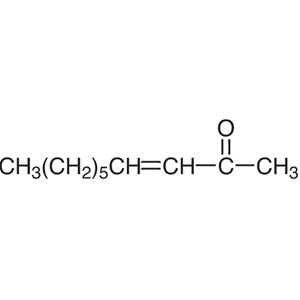
3-Decen-2-one is an organic compound widely used in chemical reactions for the synthesis of complex molecules. As a key building block in chemical research, it plays a vital role in the development of various functional compounds. Its unique molecular structure, featuring a carbonyl group and a strategically positioned double bond, makes it highly versatile for participation in multiple reaction types. This compound is particularly valuable in laboratory settings where controlled chemical transformations are essential. Its ability to undergo hydration, oxidation, and reduction reactions makes it an important tool for chemists working on diverse synthetic pathways.
The compound’s chemical stability and controlled reactivity contribute to its popularity among researchers and scientists. Its molecular structure allows for efficient participation in a wide range of chemical reactions, making it a preferred choice for those seeking reliable and predictable chemical behavior. The presence of both a carbonyl group and a double bond provides multiple sites for functional group modification, enabling the synthesis of a variety of target molecules. These properties make 3-Decen-2-one an essential component in both academic and industrial chemical research.
In Indonesian laboratories, 3-Decen-2-one is commonly used in both pure and applied chemical research. It is a preferred material for studies requiring specific molecular structures, supporting both educational and industrial applications. Its role in the synthesis of aromatic and heterocyclic compounds highlights its importance in the chemical research landscape of Indonesia. Researchers rely on its consistent performance and predictable behavior to achieve desired outcomes in their experiments.
- Synthesis of complex aromatic compounds where controlled reactivity of the carbonyl group is essential.
- Development of heterocyclic structures requiring strategic double bond positioning for ring formation.
- Oxidation and reduction reactions that benefit from the compound’s stable and predictable chemical behavior.
- Educational research projects focusing on functional group transformations and molecular synthesis.
- Industrial applications involving the production of specialized chemical intermediates for downstream processes.
| Brand | TCI |
|---|---|
| CAS number | 10519-33-2 |
| Molecular formula | — |
| Purity | — |
| Category | Chemistry > Building Blocks > Non-Heterocyclic Building Blocks |
| Pack sizes | As available |
| Physical form | Liquid |
| Storage | Store in a cool, dry place away from direct sunlight |
3-Decen-2-one should be stored in a cool, dry environment, away from direct sunlight and sources of heat. It is recommended to use airtight containers to prevent exposure to moisture and air, which may affect its stability. Due to its chemical nature, it should be handled in a well-ventilated area to minimize inhalation risks. Proper personal protective equipment, such as gloves and safety goggles, should be worn during handling. Avoid contact with skin and eyes, and ensure that spillage is cleaned up promptly with appropriate safety measures in place. This compound is not classified as hazardous under standard laboratory conditions but should still be treated with care to maintain its integrity and ensure safe laboratory practices.
—
Produk Terkait
-
2,6-Dimethyl-4-heptanone TCI D0733
Regular price From Rp 452.550,00Regular price -
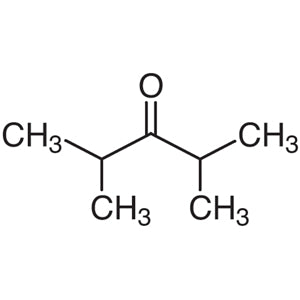
2,4-Dimethyl-3-pentanone TCI D0770
Regular price From Rp 637.350,00Regular price -
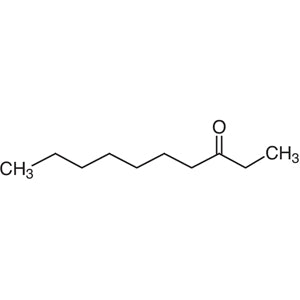
3-Decanone TCI D1162
Regular price Rp 2.068.500,00Regular price -
5-Dodecanone TCI D1536
Regular price Rp 1.670.550,00Regular price -
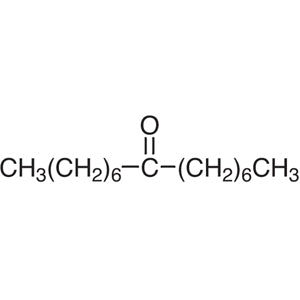
8-Pentadecanone TCI D1545
Regular price From Rp 2.466.450,00Regular price -
7-Tridecanone TCI D1546
Regular price From Rp 1.618.050,00Regular price -
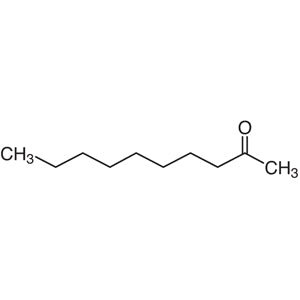
2-Decanone TCI D1643
Regular price Rp 1.431.150,00Regular price -
Dipivaloylmethane TCI D1678
Regular price From Rp 1.115.100,00Regular price