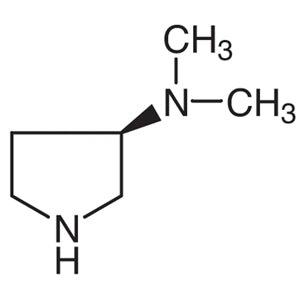
(3S)-(-)-3-(Dimethylamino)pyrrolidine is a chiral building block essential in asymmetric synthesis, playing a critical role in the creation of molecules with specific stereochemistry. This compound is widely used in chemical research to produce compounds with defined biological activities. Its importance lies in its ability to influence the stereochemical outcome of reactions, making it a valuable tool in the development of pharmaceuticals and organic compounds. In laboratory settings, it serves as a key reagent for synthesizing complex molecules with precise structural features.
The compound's optical activity and high purity make it a preferred choice for researchers aiming to achieve enantiomeric control in chemical reactions. Its chiral nature allows for the selective formation of specific isomers, which is crucial in drug development and other specialized chemical applications. The compound's reactivity and compatibility with various reagents further enhance its utility in synthetic processes. These properties ensure its reliability and effectiveness in producing compounds with desired biological properties.
In Indonesian laboratories, (3S)-(-)-3-(Dimethylamino)pyrrolidine is commonly used in organic chemistry research, particularly in pharmaceutical and asymmetric synthesis projects. It is a fundamental component in the development of new therapeutic agents and is utilized by academic institutions and research centers to advance chemical innovation. Its role in creating compounds with specific stereochemistry makes it an essential material for scientific exploration and drug discovery efforts.
TCI brochures (PDF)
- Chiral Building Blocks 2025-04-14 · p. 2
Related TCI products
- TCI D2149 132958-72-6 (3R)-(+)-3-(Dimethylamino)pyrrolidine
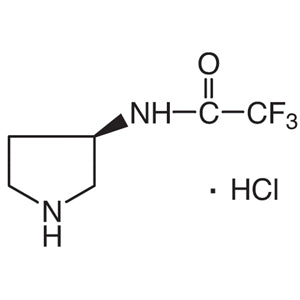
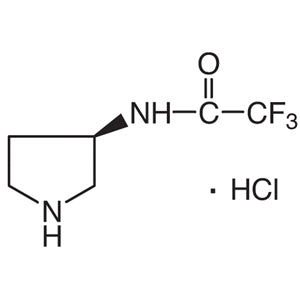
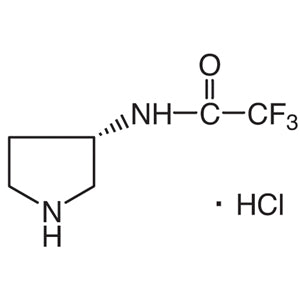
- TCI T1369 141043-16-5 (3R)-(+)-3-(Trifluoroacetamido)pyrrolidine Hydrochloride
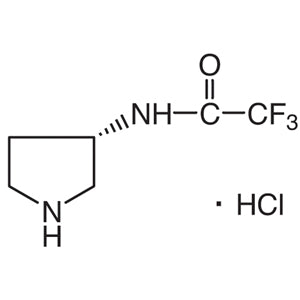
- TCI T1366 132883-43-3 (3S)-(-)-3-(Trifluoroacetamido)pyrrolidine Hydrochloride
- TCI B3662 61478-26-0 (2S,4R)-1-(tert-Butoxycarbonyl)-4-hydroxy-2-(hydroxymethyl)pyrrolidine
- TCI B1932 131878-23-4 (3R)-(+)-1-Benzyl-3-(tert-butoxycarbonylamino)pyrrolidine
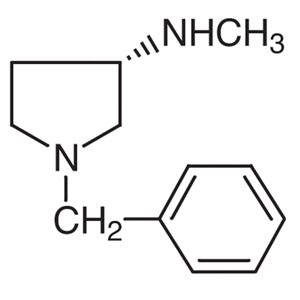
- TCI B1583 169749-99-9 (3S)-(+)-1-Benzyl-3-(methylamino)pyrrolidine
- Asymmetric Synthesis: This compound is ideal for asymmetric synthesis due to its chiral nature, enabling the selective formation of specific enantiomers with desired biological activities.
- Pharmaceutical Development: It is widely used in drug development to create compounds with precise stereochemistry, enhancing the efficacy and safety of new therapeutic agents.
- Organic Chemistry Research: Its role as a chiral building block makes it a key reagent in the synthesis of complex organic molecules, supporting advanced chemical research.
- Isomer Selectivity Studies: The compound's optical activity allows researchers to study and control isomer selectivity, which is critical in understanding molecular behavior and reactivity.
- Academic and Industrial Research: It is frequently used in both academic and industrial settings to develop new chemical compounds and improve existing synthetic methods.
| Brand | TCI |
|---|---|
| CAS number | 132883-44-4 |
| Molecular formula | — |
| Purity | — |
| Category | Chemistry > Asymmetric Synthesis > Chiral Building Blocks |
| Pack sizes | Available in various quantities as per supplier specifications |
| Physical form | Liquid or solid, depending on the specific product formulation |
| Storage | Store in a cool, dry place away from light and moisture |
This compound should be stored in a cool, dry environment, away from direct light and moisture to maintain its stability and purity. It is recommended to use airtight containers made of glass or high-density polyethylene to prevent contamination and degradation. Due to its chiral nature, it is important to handle the compound with care to avoid any unintended racemization or loss of optical activity. In laboratory settings, proper personal protective equipment should be worn when handling the material. Regular monitoring of storage conditions ensures the compound remains suitable for use in chemical synthesis and research applications.
—
Produk Terkait
-
(3R)-(+)-3-(Dimethylamino)pyrrolidine TCI D2149
Regular price Rp 3.365.250,00Regular priceRp 2.368.800,00Sale price Rp 3.365.250,00 -
(3R)-(+)-3-(Trifluoroacetamido)pyrrolidineHydrochloride TCI T1369
Regular price Rp 2.439.150,00Regular priceRp 1.720.950,00Sale price Rp 2.439.150,00 -
(3S)-(-)-3-(Trifluoroacetamido)pyrrolidineHydrochloride TCI T1366
Regular price Rp 1.351.350,00Regular priceRp 960.750,00Sale price Rp 1.351.350,00 -
(2S,4R)-1-(tert-Butoxycarbonyl)-4-hydroxy-2-(hydroxymethyl)pyrrolidine TCI B3662
Regular price Rp 1.326.150,00Regular priceRp 942.900,00Sale price Rp 1.326.150,00 -
(3R)-(+)-1-Benzyl-3-(tert-butoxycarbonylamino)pyrrolidine TCI B1932
Regular price Rp 2.121.000,00Regular priceRp 1.498.350,00Sale price Rp 2.121.000,00 -
(3S)-(+)-1-Benzyl-3-(methylamino)pyrrolidine TCI B1583
Regular price Rp 1.008.000,00Regular priceRp 720.300,00Sale price Rp 1.008.000,00 -
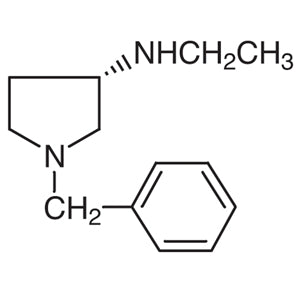
(3S)-(+)-1-Benzyl-3-(ethylamino)pyrrolidine TCI B1581
Regular price Rp 2.252.250,00Regular priceRp 1.590.750,00Sale price Rp 2.252.250,00 -
(3R)-(-)-1-Benzyl-3-(ethylamino)pyrrolidine TCI B1580
Regular price Rp 1.881.600,00Regular priceRp 1.331.400,00Sale price Rp 1.881.600,00