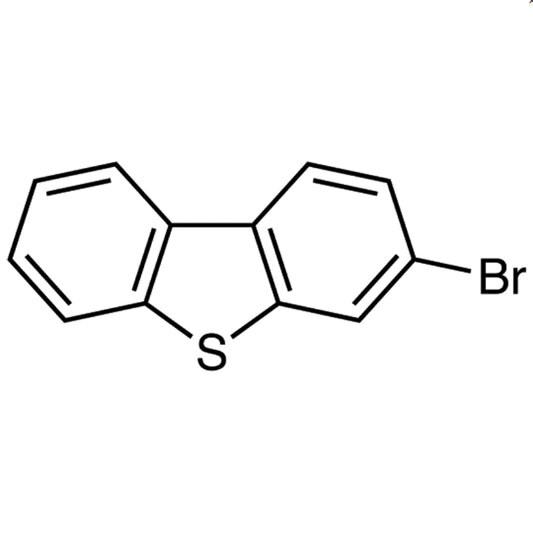
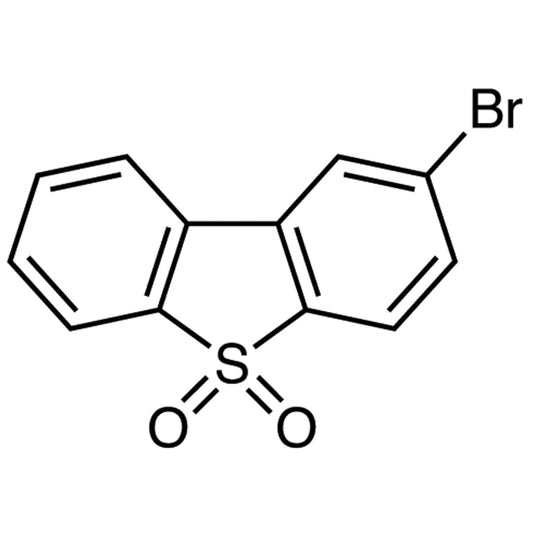
2,8-Dibromodibenzothiophene is a chemical compound widely used in scientific research within the fields of materials science and organic chemistry. As a building block for advanced materials, it plays a crucial role in the synthesis of complex compounds that find applications in semiconductor development, polymer engineering, and composite materials. Its unique molecular structure enables it to be a foundational element in creating materials with specific functional properties. This compound is particularly valued for its versatility in laboratory settings where precise chemical reactions are required.
The compound's aromatic structure and bromine substituents contribute to its chemical stability while allowing for controlled reactivity under specific conditions. These characteristics make it a preferred choice for researchers aiming to manipulate molecular structures with precision. Its ability to participate in various synthetic pathways enhances its utility in developing new materials with tailored properties. The compound’s chemical profile also makes it suitable for studies focused on reactivity and stability in organic systems.
In Indonesian laboratories, 2,8-Dibromodibenzothiophene is commonly used in research related to semiconductor materials and polymers. Local research institutions leverage this compound to advance technologies in electrochemistry and innovative material development. Its availability in the local market supports ongoing scientific endeavors, ensuring that researchers have access to essential materials for their work.
TCI brochures (PDF)
- Thiophenes 2026-06-29 · p. 12
- Building Blocks for Organic Semiconductor 2026-03-24 · p. 28
Related TCI products
- TCI D5052 83834-12-2 3,7-Dibromodibenzothiophene 5,5-Dioxide
- TCI T3236 912824-84-1 4-(4,4,5,5-Tetramethyl-1,3,2-dioxaborolan-2-yl)dibenzothiophene
- TCI B5452 97511-04-1 3-Bromodibenzothiophene
- TCI B5384 530402-77-8 4-(4-Bromophenyl)dibenzothiophene
- TCI B5268 116668-69-0 3-Bromodibenzothiophene 5,5-Dioxide
- TCI B5267 53846-85-8 2-Bromodibenzothiophene 5,5-Dioxide
- Semiconductor material development: This compound is used to synthesize advanced semiconductor materials due to its structural versatility and chemical reactivity.
- Polymer synthesis: It serves as a building block for creating specialized polymers with unique electronic and mechanical properties.
- Composite material research: Its chemical stability allows it to be integrated into composite formulations for enhanced performance.
- Organic reactivity studies: The compound's bromine groups make it ideal for investigating reaction mechanisms and stability under different conditions.
- Electrochemical applications: It is utilized in the development of electrochemical systems due to its ability to participate in controlled redox reactions.
| Brand | TCI |
|---|---|
| CAS number | 31574-87-5 |
| Molecular formula | — |
| Purity | — |
| Category | Materials Science > Material Building Blocks > Polymer/Macromolecule Semiconductor Building Blocks |
| Pack sizes | Available in standard laboratory quantities as per supplier specifications |
| Physical form | Solid |
| Storage | Store in a cool, dry place away from direct sunlight and moisture |
This compound should be stored in a cool, dry environment, away from direct sunlight and moisture to maintain its chemical stability. It is recommended to use airtight containers made of materials that are chemically inert, such as glass or high-density polyethylene, to prevent contamination and degradation. Due to its bromine content, it should be handled with care, ensuring proper ventilation in the laboratory to minimize exposure. Standard laboratory safety protocols should be followed, including the use of personal protective equipment when handling or disposing of the compound. Proper labeling and storage conditions are essential to ensure the compound remains safe and effective for research applications.
—
Product Categories
Produk Terkait
-
3,7-Dibromodibenzothiophene5,5-Dioxide TCI D5052
Regular price Rp 1.961.400,00Regular price -
4-(4,4,5,5-Tetramethyl-1,3,2-dioxaborolan-2-yl)dibenzothiophene TCI T3236
Regular price From Rp 1.220.100,00Regular price -
3-Bromodibenzothiophene TCI B5452
Regular price From Rp 3.100.650,00Regular price -
4-(4-Bromophenyl)dibenzothiophene TCI B5384
Regular price From Rp 1.326.150,00Regular price -
3-Bromodibenzothiophene5,5-Dioxide TCI B5268
Regular price Rp 2.757.300,00Regular price -
2-Bromodibenzothiophene5,5-Dioxide TCI B5267
Regular price From Rp 1.988.700,00Regular price -
4-Bromodibenzothiophene TCI B4449
Regular price From Rp 1.220.100,00Regular price -
2-Bromodibenzothiophene TCI B3525
Regular price From Rp 2.889.600,00Regular price