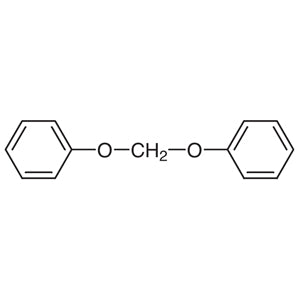
Diphenoxymethane is a chemical compound widely used in laboratory settings for the synthesis of complex molecules. As a building block in organic chemistry, it plays a crucial role in various synthetic pathways, particularly in reactions that require aromatic structures. Its chemical stability allows it to participate in substitution and other types of reactions, making it a versatile component in chemical research. This compound is especially valuable for its ability to contribute to the formation of intricate molecular architectures, which are essential in both academic and industrial applications.
The unique molecular structure of Diphenoxymethane, consisting of two aromatic rings connected by a methyl chain, makes it a preferred choice for chemists. This structure provides a stable platform for further functionalization, enabling the creation of a wide range of derivatives. Its relatively high melting and boiling points also make it suitable for use in high-temperature laboratory conditions. These properties ensure that it remains effective in a variety of experimental setups, from basic research to advanced synthetic processes.
In Indonesian laboratories, Diphenoxymethane is commonly used in chemical research, particularly in the synthesis of complex compounds and the development of new materials. It is highly relevant for educational and research institutions that focus on organic chemistry and molecular synthesis. Its availability and reliability make it a go-to compound for both teaching and experimental purposes, supporting the advancement of scientific knowledge in the region.
Related TCI products
- TCI P0905 724-98-1 2-Phenoxymethylbenzoic Acid
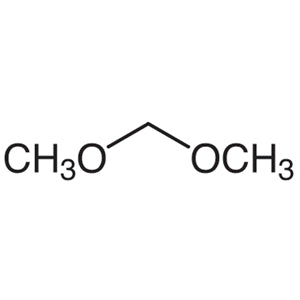
- TCI D0637 109-87-5 Dimethoxymethane
- TCI D1711 2568-90-3 Dibutoxymethane
- TCI D2662 3379-38-2 1,3-Diphenoxybenzene
- TCI D2017 3061-36-7 1,4-Diphenoxybenzene
- TCI H0987 4-(Hydroxymethyl)phenoxymethyl Polystyrene Resin cross-linked with 1% DVB (200-400mesh) (1.0-2.0mmol/g)
- Organic synthesis applications benefit from Diphenoxymethane due to its aromatic structure and reactivity, enabling the creation of complex organic molecules.
- It is ideal for substitution reactions where aromatic compounds are required, offering a stable and versatile building block for synthetic pathways.
- In material development, Diphenoxymethane contributes to the synthesis of new compounds with unique properties, supporting innovation in chemical research.
- Educational institutions use it to teach fundamental concepts in organic chemistry and molecular structure, enhancing student understanding.
- Research laboratories rely on Diphenoxymethane for its reliability in high-temperature conditions, making it suitable for advanced chemical experiments.
| Brand | TCI |
|---|---|
| CAS number | 4442-41-5 |
| Molecular formula | — |
| Purity | — |
| Category | Chemistry > Building Blocks > Non-Heterocyclic Building Blocks |
| Pack sizes | — |
| Physical form | — |
| Storage | Store in a cool, dry place away from light and incompatible materials. |
Diphenoxymethane should be stored in a cool, dry location away from direct sunlight and sources of heat. It is recommended to keep it in a sealed container to prevent exposure to moisture and air. Since it is a chemical compound, it should be stored separately from incompatible substances such as strong oxidizers or acids. Proper labeling of storage containers is essential for safety and identification. Laboratory personnel should always wear appropriate personal protective equipment when handling this compound to minimize exposure risks. Regular inspection of storage conditions ensures that the compound remains in optimal condition for use in research and educational settings.
—
Produk Terkait
-
2-PhenoxymethylbenzoicAcid TCI P0905
Regular price Rp 3.630.900,00Regular price -
Dimethoxymethane TCI D0637
Regular price From Rp 505.050,00Regular price -
Dibutoxymethane TCI D1711
Regular price Rp 1.856.400,00Regular price -
1,3-Diphenoxybenzene TCI D2662
Regular price From Rp 1.485.750,00Regular price -
1,4-Diphenoxybenzene TCI D2017
Regular price From Rp 1.298.850,00Regular price -
PolystyreneResincross-linkedwith1%DVB(200-400mesh)(1.0-2.0mmol/g) TCI H0987
Regular price Rp 3.525.900,00Regular price -
PolystyreneResincross-linkedwith1%DVB(200-400mesh)(0.5-1.0mmol/g) TCI H0986
Regular price Rp 3.525.900,00Regular price