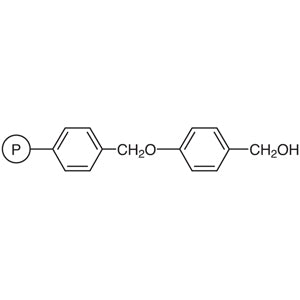
The TCI H0987 4-(Hydroxymethyl)phenoxymethyl Polystyrene Resin is a solid-supported synthesis material widely used in laboratory settings for chemical reactions that require efficient molecular binding. This resin is cross-linked with 1% DVB and is available in 200-400 mesh size, making it ideal for applications that demand stability and mechanical strength. It serves as a crucial component in solid-phase synthesis, allowing chemists to perform complex reactions with controlled conditions and high reproducibility. Its versatility makes it a preferred choice for various synthetic processes in both academic and industrial research environments.
This resin is prized for its high adsorption capacity, chemical stability, and mechanical robustness. The cross-linking with 1% DVB enhances its structural integrity, ensuring it remains intact during prolonged reaction times. Its porous structure allows for efficient molecule loading and interaction, while its resistance to a wide range of chemical conditions ensures reliability in diverse experimental setups. These properties make it particularly suitable for substitution reactions and other synthesis processes that require a stable and durable solid support.
In Indonesian laboratories, this resin is commonly used in small-scale synthesis and purification processes. Its ability to facilitate efficient molecular binding and its compatibility with various reaction conditions make it a popular choice among researchers. The 5-gram packaging is practical for laboratory use, offering flexibility in application while maintaining the required performance standards. Its widespread adoption in Indonesian research institutions highlights its effectiveness in accelerating synthesis and separation processes.
Related TCI products
- TCI B2372 N-(4-Benzyloxytrityl)-N'-(2-nitrobenzenesulfonyl)-1,4-diaminobutane Resin cross-linked with 1% DVB (200-400mesh) (0.9-1.1mmol/g)
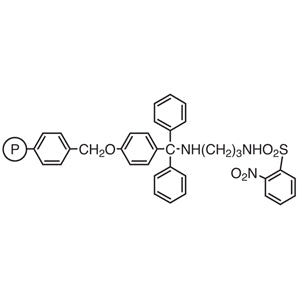
- TCI B2371 N-(4-Benzyloxytrityl)-N'-(2-nitrobenzenesulfonyl)-1,3-diaminopropane Resin cross-linked with 1% DVB (200-400mesh) (0.9-1.1mmol/g)
- TCI B2370 N-(4-Benzyloxytrityl)-N'-(2-nitrobenzenesulfonyl)-1,2-diaminoethane Resin cross-linked with 1% DVB (200-400mesh) (0.9-1.1mmol/g)
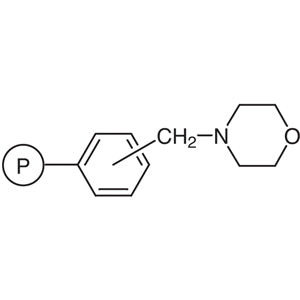
- TCI M1857 Morpholinomethyl Polystyrene Resin cross-linked with 1% DVB (50-100mesh) (2.9-3.5mmol/g)
- TCI H0986 4-(Hydroxymethyl)phenoxymethyl Polystyrene Resin cross-linked with 1% DVB (200-400mesh) (0.5-1.0mmol/g)
- TCI P1432 9003-70-7 Polystyrene Resin cross-linked with 1% DVB (100-200mesh)
- Solid-phase peptide synthesis due to its high binding capacity and chemical stability, allowing efficient coupling reactions.
- Functional group modification in organic chemistry, as its hydroxymethyl group enables selective chemical transformations.
- Purification of target molecules through selective adsorption, leveraging its porous structure and functional groups.
- Cross-linking reactions in polymer chemistry, where its DVB cross-linking provides mechanical strength and stability.
- Small-scale synthesis in academic and research laboratories, offering a reliable and scalable solid support for various chemical processes.
| Brand | TCI |
|---|---|
| CAS number | — |
| Molecular formula | — |
| Purity | — |
| Category | Chemistry > Specialty Synthesis > Solid Supported Synthesis |
| Pack sizes | 5 grams |
| Physical form | Polystyrene resin |
| Storage | Store in a cool, dry place away from direct sunlight and moisture |
This resin should be stored in a cool, dry environment to maintain its structural integrity and chemical stability. It is recommended to keep it in a sealed container to prevent exposure to moisture and contaminants. Avoid storing it in areas with high humidity or direct sunlight, as these conditions may affect its performance. When handling, use appropriate laboratory gloves and ensure proper ventilation to minimize any potential chemical exposure. The resin is generally stable under normal laboratory conditions and does not require special handling beyond standard safety protocols. Always ensure that the storage container is labeled clearly to prevent accidental misuse.
—
Produk Terkait
-
N-(4-Benzyloxytrityl)-N'-(2-nitrobenzenesulfonyl)-1,4-diaminobutaneResincross-linkedwith1%DVB(200-400mesh)(0.9-1.1mmol/g) TCI B2372
Regular price Rp 7.287.000,00Regular price -
N-(4-Benzyloxytrityl)-N'-(2-nitrobenzenesulfonyl)-1,3-diaminopropaneResincross-linkedwith1%DVB(200-400mesh)(0.9-1.1mmol/g) TCI B2371
Regular price Rp 6.599.250,00Regular price -
N-(4-Benzyloxytrityl)-N'-(2-nitrobenzenesulfonyl)-1,2-diaminoethaneResincross-linkedwith1%DVB(200-400mesh)(0.9-1.1mmol/g) TCI B2370
Regular price Rp 6.599.250,00Regular price -
MorpholinomethylPolystyreneResincross-linkedwith1%DVB(50-100mesh)(2.9-3.5mmol/g) TCI M1857
Regular price Rp 3.578.400,00Regular price -
PolystyreneResincross-linkedwith1%DVB(200-400mesh)(0.5-1.0mmol/g) TCI H0986
Regular price Rp 3.525.900,00Regular price -
PolystyreneResincross-linkedwith1%DVB(100-200mesh) TCI P1432
Regular price From Rp 2.359.350,00Regular price -
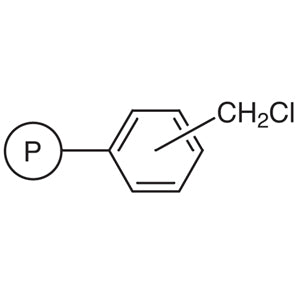
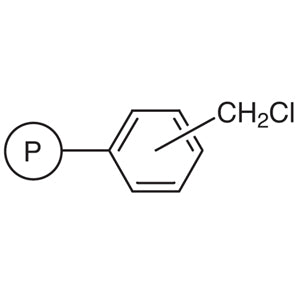
ChloromethylPolystyreneResincross-linkedwith2%DVB(100-200mesh)(0.8-1.2mmol/g) TCI C1751
Regular price From Rp 689.850,00Regular price -
ChloromethylPolystyreneResincross-linkedwith1%DVB(100-200mesh)(2.0-3.0mmol/g) TCI C1750
Regular price From Rp 1.193.850,00Regular price