This material is a solid resin used in solid-phase synthesis, particularly in peptide and complex compound synthesis. It serves as a versatile support for chemical reactions, enabling efficient coupling and purification processes. The resin is designed to facilitate reactions in the solid phase, reducing side reactions and simplifying product isolation. Its unique structure allows functional groups such as N-(4-benzyloxytrityl) and N’-(2-nitrobenzenesulfonyl) to be immobilized on its surface, making it ideal for controlled chemical transformations.
The resin is cross-linked with 1% DVB (divinylbenzene), enhancing its stability and resistance to chemical degradation. This cross-linking improves the mechanical strength and ensures uniform reactivity across the resin surface. The mesh size of 200-400 and particle diameter of 0.9-1.1 mmol/g contribute to optimal reagent absorption and reaction efficiency. These properties make it a preferred choice for researchers requiring reliable and reproducible results in solid-phase synthesis.
In Indonesian laboratories, this resin is widely used in organic chemistry research, especially in the synthesis of peptides, pharmacological compounds, and other complex molecules. Its role in solid-phase synthesis is critical for advancing research in drug development and chemical innovation. The resin is an essential component in laboratories that rely on solid-phase reactions for high-throughput and efficient synthesis processes.
Related TCI products
- TCI B2372 N-(4-Benzyloxytrityl)-N'-(2-nitrobenzenesulfonyl)-1,4-diaminobutane Resin cross-linked with 1% DVB (200-400mesh) (0.9-1.1mmol/g)
- TCI B2370 N-(4-Benzyloxytrityl)-N'-(2-nitrobenzenesulfonyl)-1,2-diaminoethane Resin cross-linked with 1% DVB (200-400mesh) (0.9-1.1mmol/g)
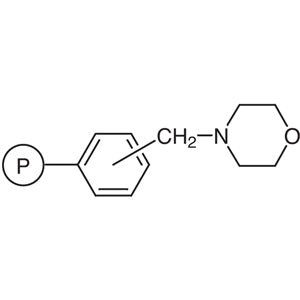
- TCI M1857 Morpholinomethyl Polystyrene Resin cross-linked with 1% DVB (50-100mesh) (2.9-3.5mmol/g)
- TCI H0987 4-(Hydroxymethyl)phenoxymethyl Polystyrene Resin cross-linked with 1% DVB (200-400mesh) (1.0-2.0mmol/g)
- TCI H0986 4-(Hydroxymethyl)phenoxymethyl Polystyrene Resin cross-linked with 1% DVB (200-400mesh) (0.5-1.0mmol/g)
- TCI P1432 9003-70-7 Polystyrene Resin cross-linked with 1% DVB (100-200mesh)
- Peptide Synthesis: Ideal for solid-phase peptide synthesis due to its functional group compatibility and efficient coupling.
- Complex Compound Synthesis: Supports the synthesis of complex organic molecules through controlled solid-phase reactions.
- Solid-Phase Organic Chemistry: Provides a stable and reactive support for various organic transformations in laboratory settings.
- Drug Development Research: Facilitates the synthesis of pharmacological compounds with high purity and reproducibility.
- High-Throughput Screening: Enables efficient synthesis and purification processes for large-scale compound testing.
| Brand | TCI |
|---|---|
| CAS number | — |
| Molecular formula | — |
| Purity | — |
| Category | Chemistry > Specialty Synthesis > Solid Supported Synthesis |
| Pack sizes | — |
| Physical form | Resin |
| Storage | Store in a cool, dry place away from light and moisture |
This resin should be stored in a cool, dry environment to maintain its chemical integrity and reactivity. It is recommended to use airtight containers to prevent moisture absorption and contamination. Avoid exposure to direct sunlight or high humidity, as these conditions can degrade the resin’s performance. When handling, ensure proper laboratory safety practices are followed, including the use of gloves and protective eyewear. The resin is generally stable under normal laboratory conditions but should be kept away from strong acids or bases to prevent unwanted chemical interactions. Regular inspection of storage conditions is advised to ensure optimal performance during synthesis processes.
—
Produk Terkait
-
N-(4-Benzyloxytrityl)-N'-(2-nitrobenzenesulfonyl)-1,4-diaminobutaneResincross-linkedwith1%DVB(200-400mesh)(0.9-1.1mmol/g) TCI B2372
Regular price Rp 7.287.000,00Regular priceRp 5.095.650,00Sale price Rp 7.287.000,00 -
N-(4-Benzyloxytrityl)-N'-(2-nitrobenzenesulfonyl)-1,2-diaminoethaneResincross-linkedwith1%DVB(200-400mesh)(0.9-1.1mmol/g) TCI B2370
Regular price Rp 6.599.250,00Regular priceRp 4.614.750,00Sale price Rp 6.599.250,00 -
MorpholinomethylPolystyreneResincross-linkedwith1%DVB(50-100mesh)(2.9-3.5mmol/g) TCI M1857
Regular price Rp 3.578.400,00Regular priceRp 2.502.150,00Sale price Rp 3.578.400,00 -
PolystyreneResincross-linkedwith1%DVB(200-400mesh)(1.0-2.0mmol/g) TCI H0987
Regular price Rp 3.525.900,00Regular priceRp 2.465.400,00Sale price Rp 3.525.900,00 -
PolystyreneResincross-linkedwith1%DVB(200-400mesh)(0.5-1.0mmol/g) TCI H0986
Regular price Rp 3.525.900,00Regular priceRp 2.465.400,00Sale price Rp 3.525.900,00 -
PolystyreneResincross-linkedwith1%DVB(100-200mesh) TCI P1432
Regular price From Rp 2.359.350,00Regular priceRp 1.649.550,00Sale price From Rp 2.359.350,00 -
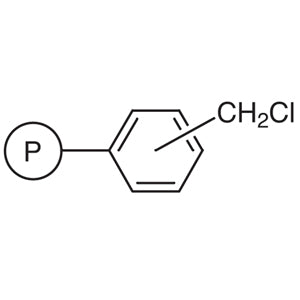
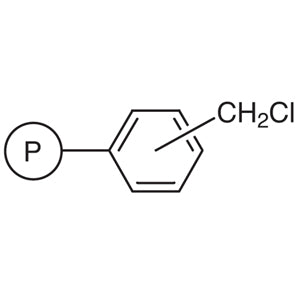
ChloromethylPolystyreneResincross-linkedwith2%DVB(100-200mesh)(0.8-1.2mmol/g) TCI C1751
Regular price From Rp 689.850,00Regular priceRp 481.950,00Sale price From Rp 689.850,00 -
ChloromethylPolystyreneResincross-linkedwith1%DVB(100-200mesh)(2.0-3.0mmol/g) TCI C1750
Regular price From Rp 1.193.850,00Regular priceRp 834.750,00Sale price From Rp 1.193.850,00