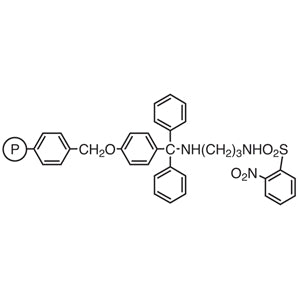
This material is a solid resin used in chemical synthesis, particularly in peptide and complex compound reactions. It serves as a solid support for molecular binding through chemical interactions on its surface. The TCI B2370 resin is specifically designed for efficient coupling of target molecules to the resin, making it a versatile tool in synthetic chemistry. In laboratory settings, it is widely used for the synthesis of compounds that require a solid-phase support for chemical reactions. Its unique structure enhances reactivity and selectivity, making it a preferred choice for advanced synthetic processes.
The resin is crosslinked with 1% DVB, which significantly improves its stability and resistance to chemical reactions. This crosslinking ensures that the resin maintains its structural integrity during prolonged use, making it suitable for multiple reaction cycles. Additionally, the resin has a mesh size of 200-400, ensuring uniform distribution and effective reaction efficiency. Its physical properties, including a loading capacity of 0.9-1.1 mmol/g, contribute to its reliability in synthetic applications. These characteristics make it highly sought after in modern chemical synthesis.
In Indonesian laboratories, this resin is particularly relevant for research in organic chemistry, pharmaceuticals, and biochemistry. It is commonly used in academic and research institutions for the synthesis of complex compounds. Its applicability in both small-scale experiments and larger projects makes it an essential tool for chemists working on advanced synthetic projects. The resin’s performance in various experimental setups supports its widespread use in both educational and industrial research environments.
Related TCI products
- TCI B2372 N-(4-Benzyloxytrityl)-N'-(2-nitrobenzenesulfonyl)-1,4-diaminobutane Resin cross-linked with 1% DVB (200-400mesh) (0.9-1.1mmol/g)
- TCI B2371 N-(4-Benzyloxytrityl)-N'-(2-nitrobenzenesulfonyl)-1,3-diaminopropane Resin cross-linked with 1% DVB (200-400mesh) (0.9-1.1mmol/g)
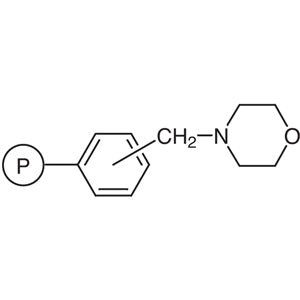
- TCI M1857 Morpholinomethyl Polystyrene Resin cross-linked with 1% DVB (50-100mesh) (2.9-3.5mmol/g)
- TCI H0987 4-(Hydroxymethyl)phenoxymethyl Polystyrene Resin cross-linked with 1% DVB (200-400mesh) (1.0-2.0mmol/g)
- TCI H0986 4-(Hydroxymethyl)phenoxymethyl Polystyrene Resin cross-linked with 1% DVB (200-400mesh) (0.5-1.0mmol/g)
- TCI P1432 9003-70-7 Polystyrene Resin cross-linked with 1% DVB (100-200mesh)
- Peptide Synthesis: This resin is ideal for solid-phase peptide synthesis due to its efficient coupling properties and stability during multiple reaction cycles.
- Complex Compound Synthesis: The resin’s crosslinked structure and uniform mesh size make it suitable for the synthesis of complex organic molecules requiring precise control.
- Solid-Phase Organic Reactions: Its high loading capacity and chemical resistance make it a preferred support for various organic reactions in solid-phase synthesis.
- Drug Discovery Research: The resin’s compatibility with functional groups and its ability to support multiple reaction steps make it valuable in pharmaceutical research.
- Educational Research: Its consistent performance and reliability make it a popular choice for teaching and experimental research in academic institutions.
| Brand | TCI |
|---|---|
| CAS number | — |
| Molecular formula | — |
| Purity | — |
| Category | Chemistry > Specialty Synthesis > Solid Supported Synthesis |
| Pack sizes | 1 gram |
| Physical form | Resin |
| Storage | Store in a cool, dry place away from light and moisture |
This resin should be stored in a cool, dry environment, away from direct light and moisture to maintain its chemical integrity. It is recommended to use airtight containers to prevent contamination and degradation. The resin is non-hazardous under normal conditions but should be handled with care to avoid exposure to incompatible substances. In laboratory settings, it is important to maintain proper ventilation and follow standard safety protocols when working with chemical reagents. The resin is stable under normal storage conditions and does not require refrigeration unless specified otherwise. Regular inspection of storage containers is advised to ensure the resin remains in optimal condition for use.
—
Produk Terkait
-
N-(4-Benzyloxytrityl)-N'-(2-nitrobenzenesulfonyl)-1,4-diaminobutaneResincross-linkedwith1%DVB(200-400mesh)(0.9-1.1mmol/g) TCI B2372
Regular price Rp 7.287.000,00Regular priceRp 5.095.650,00Sale price Rp 7.287.000,00 -
N-(4-Benzyloxytrityl)-N'-(2-nitrobenzenesulfonyl)-1,3-diaminopropaneResincross-linkedwith1%DVB(200-400mesh)(0.9-1.1mmol/g) TCI B2371
Regular price Rp 6.599.250,00Regular priceRp 4.614.750,00Sale price Rp 6.599.250,00 -
MorpholinomethylPolystyreneResincross-linkedwith1%DVB(50-100mesh)(2.9-3.5mmol/g) TCI M1857
Regular price Rp 3.578.400,00Regular priceRp 2.502.150,00Sale price Rp 3.578.400,00 -
PolystyreneResincross-linkedwith1%DVB(200-400mesh)(1.0-2.0mmol/g) TCI H0987
Regular price Rp 3.525.900,00Regular priceRp 2.465.400,00Sale price Rp 3.525.900,00 -
PolystyreneResincross-linkedwith1%DVB(200-400mesh)(0.5-1.0mmol/g) TCI H0986
Regular price Rp 3.525.900,00Regular priceRp 2.465.400,00Sale price Rp 3.525.900,00 -
PolystyreneResincross-linkedwith1%DVB(100-200mesh) TCI P1432
Regular price From Rp 2.359.350,00Regular priceRp 1.649.550,00Sale price From Rp 2.359.350,00 -
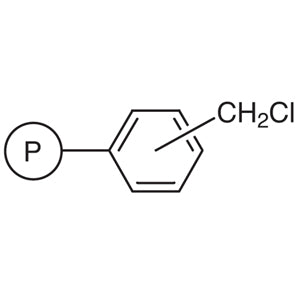
ChloromethylPolystyreneResincross-linkedwith2%DVB(100-200mesh)(0.8-1.2mmol/g) TCI C1751
Regular price From Rp 689.850,00Regular priceRp 481.950,00Sale price From Rp 689.850,00 -
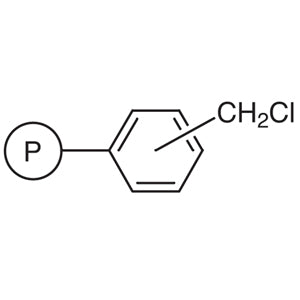
ChloromethylPolystyreneResincross-linkedwith1%DVB(100-200mesh)(2.0-3.0mmol/g) TCI C1750
Regular price From Rp 1.193.850,00Regular priceRp 834.750,00Sale price From Rp 1.193.850,00