Polystyrene Resin cross-linked with 1% DVB (100-200 mesh) from TCI, product code P1432, consists of polystyrene beads cross-linked with 1% divinylbenzene (DVB). It is the most classic base material for solid-phase chemical synthesis. In the laboratory, the resin acts as an insoluble solid support. Once functionalized, for example by chloromethylation, it can anchor molecules so that reactions can be carried out step by step, while excess reagents and by-products are simply washed away by filtration.
The 1% DVB cross-linking level is chosen because it gives a good balance between the mechanical strength of the beads and their ability to swell. In suitable solvents such as dichloromethane, tetrahydrofuran, toluene, or DMF, the resin swells considerably, so reagents can reach the reactive sites inside each bead. In contrast, the resin barely swells in water and alcohols, a property often used during washing and precipitation steps. The 100-200 mesh particle size provides adequate surface area while keeping filtration easy and practical.
In Indonesia, this resin suits organic chemistry, peptide chemistry, and polymer chemistry laboratories at universities and research institutions. Research groups working on solid-phase synthesis can use it as a starting support for preparing their own functionalized resins, while teaching laboratories can use it to show the principles of solid-supported reactions. Its well-known behaviour makes it a reliable reference material for method development, comparison studies, and student research projects that need a dependable, classic polystyrene support.
Related TCI products
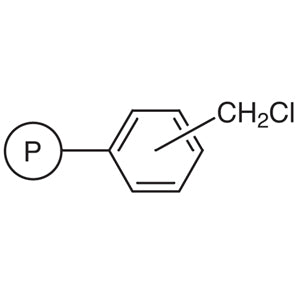
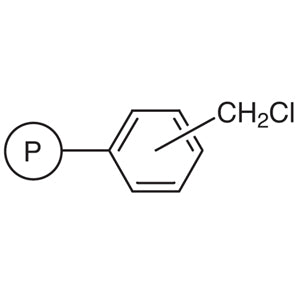
- TCI C1751 55844-94-5 Chloromethyl Polystyrene Resin cross-linked with 2% DVB (100-200mesh) (0.8-1.2mmol/g)
- TCI C1750 55844-94-5 Chloromethyl Polystyrene Resin cross-linked with 1% DVB (100-200mesh) (2.0-3.0mmol/g)
- TCI B2372 N-(4-Benzyloxytrityl)-N'-(2-nitrobenzenesulfonyl)-1,4-diaminobutane Resin cross-linked with 1% DVB (200-400mesh) (0.9-1.1mmol/g)
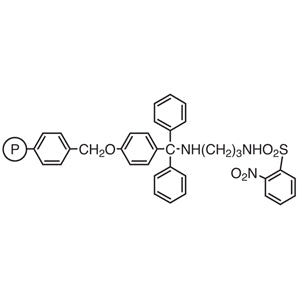
- TCI B2371 N-(4-Benzyloxytrityl)-N'-(2-nitrobenzenesulfonyl)-1,3-diaminopropane Resin cross-linked with 1% DVB (200-400mesh) (0.9-1.1mmol/g)
- TCI B2370 N-(4-Benzyloxytrityl)-N'-(2-nitrobenzenesulfonyl)-1,2-diaminoethane Resin cross-linked with 1% DVB (200-400mesh) (0.9-1.1mmol/g)
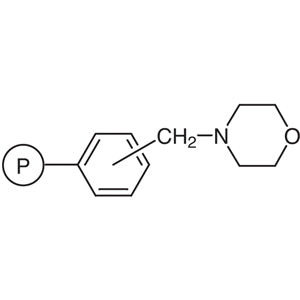
- TCI M1857 Morpholinomethyl Polystyrene Resin cross-linked with 1% DVB (50-100mesh) (2.9-3.5mmol/g)
- Solid-phase organic synthesis: the insoluble cross-linked beads let chemists run multi-step reactions and remove excess reagents and by-products by simple filtration and washing.
- Preparation of functionalized resins: the polystyrene backbone can be functionalized, for example by chloromethylation, to create supports that anchor substrates for later synthetic steps.
- Peptide chemistry research: as a classic polystyrene support, once functionalized it gives peptide laboratories a base for stepwise chain assembly with easy purification between steps.
- Solvent swelling studies: its strong swelling in dichloromethane, THF, toluene, and DMF and poor swelling in water and alcohols make it useful for studying how solvents affect access to reactive sites.
- Polymer chemistry teaching and research: the well-defined 1% DVB cross-linked structure is a clear example for showing how cross-link density affects mechanical strength and swelling behaviour.
| Brand | TCI (product code P1432) |
|---|---|
| CAS number | 9003-70-7 |
| Molecular formula | — |
| Purity | — |
| Category | Chemistry > Specialty Synthesis > Solid Supported Synthesis |
| Pack sizes | available in the pack sizes listed by TCI; please confirm with our team when ordering |
| Physical form | polystyrene beads cross-linked with 1% DVB, 100-200 mesh |
| Storage | keep tightly closed in a cool, dry place, following the manufacturer's label and SDS |
Store the resin in its original, tightly closed container in a cool, dry, well-ventilated area, away from direct sunlight, heat sources, and strong oxidizing agents. Keep the container closed when not in use to protect the beads from moisture and dust. Use clean, dry spatulas and glassware when weighing to avoid contamination. Avoid creating airborne dust while handling the fine beads, and wear standard laboratory protection such as safety glasses, gloves, and a lab coat. Handle the organic solvents used for swelling inside a fume hood. Always check the product label and Safety Data Sheet (SDS) from TCI for specific handling, disposal, and safety instructions before use.
—
Product Categories
Produk Terkait
-
ChloromethylPolystyreneResincross-linkedwith2%DVB(100-200mesh)(0.8-1.2mmol/g) TCI C1751
Regular price From Rp 689.850,00Regular priceRp 481.950,00Sale price From Rp 689.850,00 -
ChloromethylPolystyreneResincross-linkedwith1%DVB(100-200mesh)(2.0-3.0mmol/g) TCI C1750
Regular price From Rp 1.193.850,00Regular priceRp 834.750,00Sale price From Rp 1.193.850,00 -
N-(4-Benzyloxytrityl)-N'-(2-nitrobenzenesulfonyl)-1,4-diaminobutaneResincross-linkedwith1%DVB(200-400mesh)(0.9-1.1mmol/g) TCI B2372
Regular price Rp 7.287.000,00Regular priceRp 5.095.650,00Sale price Rp 7.287.000,00 -
N-(4-Benzyloxytrityl)-N'-(2-nitrobenzenesulfonyl)-1,3-diaminopropaneResincross-linkedwith1%DVB(200-400mesh)(0.9-1.1mmol/g) TCI B2371
Regular price Rp 6.599.250,00Regular priceRp 4.614.750,00Sale price Rp 6.599.250,00 -
N-(4-Benzyloxytrityl)-N'-(2-nitrobenzenesulfonyl)-1,2-diaminoethaneResincross-linkedwith1%DVB(200-400mesh)(0.9-1.1mmol/g) TCI B2370
Regular price Rp 6.599.250,00Regular priceRp 4.614.750,00Sale price Rp 6.599.250,00 -
MorpholinomethylPolystyreneResincross-linkedwith1%DVB(50-100mesh)(2.9-3.5mmol/g) TCI M1857
Regular price Rp 3.578.400,00Regular priceRp 2.502.150,00Sale price Rp 3.578.400,00 -
PolystyreneResincross-linkedwith1%DVB(200-400mesh)(1.0-2.0mmol/g) TCI H0987
Regular price Rp 3.525.900,00Regular priceRp 2.465.400,00Sale price Rp 3.525.900,00 -
PolystyreneResincross-linkedwith1%DVB(200-400mesh)(0.5-1.0mmol/g) TCI H0986
Regular price Rp 3.525.900,00Regular priceRp 2.465.400,00Sale price Rp 3.525.900,00