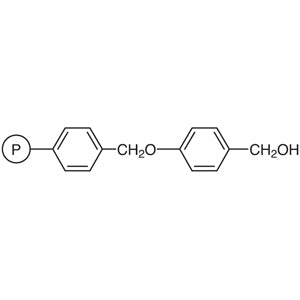
This material is a polystyrene resin cross-linked with 1% divinylbenzene (DVB), designed for solid-supported synthesis in chemical laboratories. It is available in a mesh size of 200–400 and has a loading capacity of 0.5–1.0 mmol/g. The resin serves as a versatile support for various chemical reactions, particularly those requiring a solid phase. Its ability to adsorb and retain reagents efficiently makes it an essential component in synthetic processes. This resin is widely used in organic chemistry for its reliability and performance in complex reaction systems.
The resin’s chemical stability and resistance to a wide range of reaction conditions, including varying pH levels and temperatures, make it a preferred choice for laboratory applications. The cross-linking with DVB enhances its structural integrity, improving its mechanical strength and adsorption capacity. These properties ensure that the resin remains functional under demanding synthetic conditions, making it suitable for both routine and advanced chemical synthesis. Its consistent performance and reliability have made it a staple in modern chemical laboratories.
In Indonesian laboratories, this resin is extensively used in organic chemistry research, especially in the synthesis of complex compounds. It is a common material in academic and research institutions, supporting a wide range of experimental protocols. Its popularity stems from its adaptability and effectiveness in various synthetic reactions, making it a go-to material for researchers and chemists in Indonesia.
Related TCI products
- TCI B2372 N-(4-Benzyloxytrityl)-N'-(2-nitrobenzenesulfonyl)-1,4-diaminobutane Resin cross-linked with 1% DVB (200-400mesh) (0.9-1.1mmol/g)
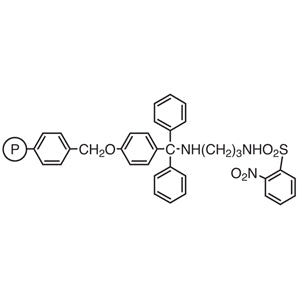
- TCI B2371 N-(4-Benzyloxytrityl)-N'-(2-nitrobenzenesulfonyl)-1,3-diaminopropane Resin cross-linked with 1% DVB (200-400mesh) (0.9-1.1mmol/g)
- TCI B2370 N-(4-Benzyloxytrityl)-N'-(2-nitrobenzenesulfonyl)-1,2-diaminoethane Resin cross-linked with 1% DVB (200-400mesh) (0.9-1.1mmol/g)
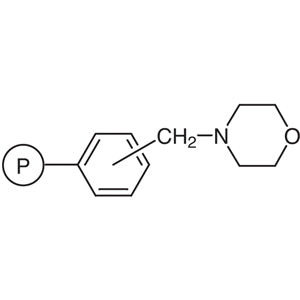
- TCI M1857 Morpholinomethyl Polystyrene Resin cross-linked with 1% DVB (50-100mesh) (2.9-3.5mmol/g)
- TCI H0987 4-(Hydroxymethyl)phenoxymethyl Polystyrene Resin cross-linked with 1% DVB (200-400mesh) (1.0-2.0mmol/g)
- TCI P1432 9003-70-7 Polystyrene Resin cross-linked with 1% DVB (100-200mesh)
- Solid-phase synthesis is ideal for this resin due to its high loading capacity and mesh size, allowing efficient coupling and reaction optimization.
- Organic synthesis benefits from the resin’s stability and adsorption properties, supporting a wide range of functional group transformations.
- Catalytic reactions are well-suited to this material because of its inert surface and ability to withstand harsh reaction conditions.
- Substitution reactions take advantage of the resin’s capacity to hold reagents, facilitating controlled and selective chemical transformations.
- Peptide synthesis relies on the resin’s ability to support multiple reaction steps, making it a key component in solid-phase peptide synthesis protocols.
| Brand | TCI |
|---|---|
| CAS number | — |
| Molecular formula | — |
| Purity | — |
| Category | Chemistry > Specialty Synthesis > Solid Supported Synthesis |
| Pack sizes | — |
| Physical form | Resin in mesh form |
| Storage | Store in a cool, dry place away from direct sunlight and moisture |
This resin should be stored in a cool, dry environment to maintain its chemical stability and structural integrity. It is recommended to keep it in a sealed container to prevent exposure to moisture and contaminants. The material is inert and generally safe to handle, but standard laboratory precautions should be followed, such as wearing gloves and safety goggles. Avoid contact with strong acids or bases, as they may affect the resin’s properties. Proper storage ensures the resin remains effective for its intended applications in chemical synthesis.
—
Produk Terkait
-
N-(4-Benzyloxytrityl)-N'-(2-nitrobenzenesulfonyl)-1,4-diaminobutaneResincross-linkedwith1%DVB(200-400mesh)(0.9-1.1mmol/g) TCI B2372
Regular price Rp 7.287.000,00Regular price -
N-(4-Benzyloxytrityl)-N'-(2-nitrobenzenesulfonyl)-1,3-diaminopropaneResincross-linkedwith1%DVB(200-400mesh)(0.9-1.1mmol/g) TCI B2371
Regular price Rp 6.599.250,00Regular price -
N-(4-Benzyloxytrityl)-N'-(2-nitrobenzenesulfonyl)-1,2-diaminoethaneResincross-linkedwith1%DVB(200-400mesh)(0.9-1.1mmol/g) TCI B2370
Regular price Rp 6.599.250,00Regular price -
MorpholinomethylPolystyreneResincross-linkedwith1%DVB(50-100mesh)(2.9-3.5mmol/g) TCI M1857
Regular price Rp 3.578.400,00Regular price -
PolystyreneResincross-linkedwith1%DVB(200-400mesh)(1.0-2.0mmol/g) TCI H0987
Regular price Rp 3.525.900,00Regular price -
PolystyreneResincross-linkedwith1%DVB(100-200mesh) TCI P1432
Regular price From Rp 2.359.350,00Regular price -
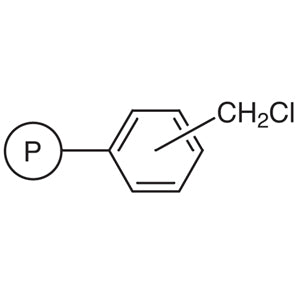
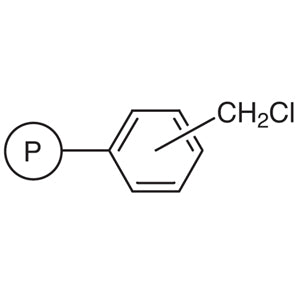
ChloromethylPolystyreneResincross-linkedwith2%DVB(100-200mesh)(0.8-1.2mmol/g) TCI C1751
Regular price From Rp 689.850,00Regular price -
ChloromethylPolystyreneResincross-linkedwith1%DVB(100-200mesh)(2.0-3.0mmol/g) TCI C1750
Regular price From Rp 1.193.850,00Regular price