2,3-Dichloro-5,8-dihydroxy-1,4-naphthoquinone is a chemical compound widely used in laboratory settings for the synthesis of complex molecules. As a building block in organic chemistry, it plays a key role in various synthetic pathways, enabling the creation of compounds with specific functional groups and structural features. Its versatility makes it an essential reagent for researchers working in both academic and industrial environments. This compound is particularly valued for its ability to participate in multiple reaction types, including substitution, reduction, and oxidation, which allows for the development of diverse chemical structures.
The compound's aromatic structure, combined with two chlorine atoms and two hydroxyl groups, gives it high reactivity and polarity. These properties make it suitable for interactions with a wide range of reagents, enabling the formation of complex chemical intermediates. Its stability under controlled conditions further enhances its reliability as a laboratory material. The combination of reactivity and stability ensures that it remains a preferred choice for those requiring consistent and predictable chemical behavior in their experiments.
In Indonesian laboratories, 2,3-Dichloro-5,8-dihydroxy-1,4-naphthoquinone is commonly used in organic chemistry research and the synthesis of bioactive compounds. It is also employed in pharmaceutical and food chemistry studies due to its potential applications in drug development and functional food ingredient creation. Its broad utility across multiple scientific disciplines makes it a valuable resource for researchers in Indonesia.
Related TCI products
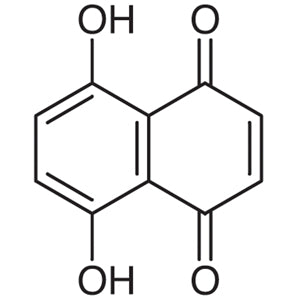
- TCI D2070 475-38-7 5,8-Dihydroxy-1,4-naphthoquinone
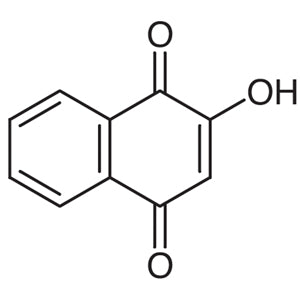
- TCI H0285 83-72-7 2-Hydroxy-1,4-naphthoquinone
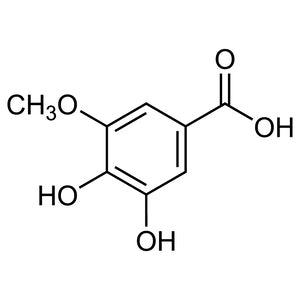
- TCI M3669 3934-84-7 3,4-Dihydroxy-5-methoxybenzoic Acid
- TCI M2794 24093-81-0 Methyl 3,5-Dihydroxy-4-methoxybenzoate
- TCI D6071 4707-47-5 Methyl 2,4-Dihydroxy-3,6-dimethylbenzoate
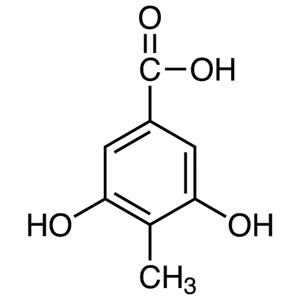
- TCI D4712 28026-96-2 3,5-Dihydroxy-4-methylbenzoic Acid
- Organic synthesis applications benefit from this compound's ability to participate in multiple reaction types, enabling the creation of complex molecular structures.
- Pharmaceutical research utilizes its reactivity to develop new drug compounds with specific functional groups and biological activity.
- Bioactive compound synthesis relies on its structural versatility for the preparation of molecules with therapeutic potential.
- Food chemistry studies use it as a building block for the development of functional food ingredients with specific chemical properties.
- Analytical chemistry applications take advantage of its stability and reactivity for the identification and characterization of complex chemical systems.
| Brand | TCI |
|---|---|
| CAS number | 14918-69-5 |
| Molecular formula | — |
| Purity | — |
| Category | Chemistry > Building Blocks > Non-Heterocyclic Building Blocks |
| Pack sizes | Available in various quantities as per standard laboratory supply options |
| Physical form | Solid |
| Storage | Store in a cool, dry place away from light and moisture |
This compound should be stored in a cool, dry environment, away from direct light and moisture to maintain its stability and reactivity. It is recommended to use airtight containers made of materials that are chemically inert to prevent contamination or degradation. Due to its polar nature and potential reactivity, it should be handled with appropriate personal protective equipment, such as gloves and safety goggles. Proper ventilation is also advised when working with this compound to minimize exposure. In laboratory settings, it is important to follow standard safety protocols to ensure safe handling and storage practices.
—
Produk Terkait
-
5,8-Dihydroxy-1,4-naphthoquinone TCI D2070
Regular price Rp 10.705.800,00Regular price -
2-Hydroxy-1,4-naphthoquinone TCI H0285
Regular price From Rp 1.538.250,00Regular price -
3,4-Dihydroxy-5-methoxybenzoicAcid TCI M3669
Regular price From Rp 3.578.400,00Regular price -
Methyl3,5-Dihydroxy-4-methoxybenzoate TCI M2794
Regular price Rp 3.630.900,00Regular price -
Methyl2,4-Dihydroxy-3,6-dimethylbenzoate TCI D6071
Regular price From Rp 1.273.650,00Regular price -
3,5-Dihydroxy-4-methylbenzoicAcid TCI D4712
Regular price From Rp 1.431.150,00Regular price -
3,4-Dihydroxy-5-methoxybenzaldehyde TCI D4479
Regular price From Rp 3.021.900,00Regular price -
3,4-Dihydroxy-5-nitrobenzaldehyde TCI D3645
Regular price Rp 2.862.300,00Regular price