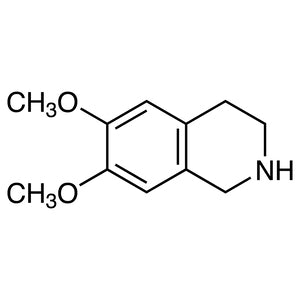


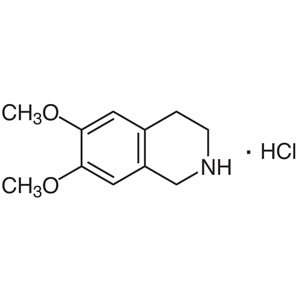
6,7-Dimethoxy-1,2,3,4-tetrahydroisoquinoline Hydrochloride from TCI is the hydrochloride salt of a tetrahydroisoquinoline that carries two methoxy groups on its aromatic ring. It is an important heterocyclic building block because the tetrahydroisoquinoline skeleton appears in many natural alkaloids and pharmacologically active compounds. In the laboratory it serves as a starting material for building isoquinoline derivatives by functionalising the secondary nitrogen atom. Those products are used in medicinal chemistry, natural product synthesis and pharmacological studies.
The hydrochloride salt form makes this amine easier to handle and store than its free base, which tends to be more sensitive to air. When a reaction calls for the free base, it can be released with a simple base treatment before use. The 6,7-dimethoxy groups reproduce a substitution pattern that is common in natural isoquinoline alkaloids, so the compound is especially useful for synthesising analogues. Its secondary nitrogen also reacts readily in alkylation, acylation, reductive amination and sulfonylation, which gives chemists several dependable ways to diversify the core structure.
Indonesia's wide range of medicinal plants drives a lot of alkaloid research at pharmacy faculties and research institutes across the country. In these laboratories, researchers use this compound to prepare synthetic analogues of isoquinoline alkaloids they have isolated, to support structure-activity studies, and to build compound libraries for pharmacological screening. Organic chemistry groups at universities also use it in synthetic methodology work and in advanced teaching of heterocyclic chemistry, where a well-defined, easy-to-handle amine building block helps produce consistent results.
Related TCI products
- TCI D6150 1745-07-9 6,7-Dimethoxy-1,2,3,4-tetrahydroisoquinoline
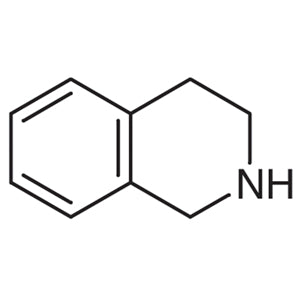
- TCI T1676 91-21-4 1,2,3,4-Tetrahydroisoquinoline
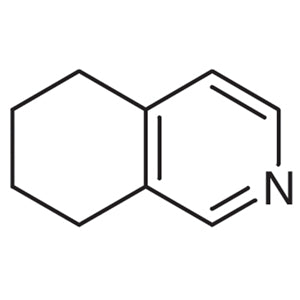
- TCI T1230 36556-06-6 5,6,7,8-Tetrahydroisoquinoline
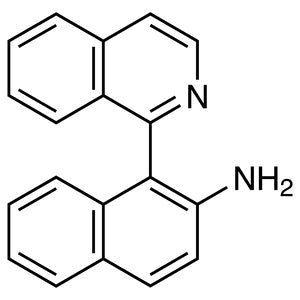
- TCI A2221 664302-70-9 1-(2-Amino-1-naphthyl)isoquinoline
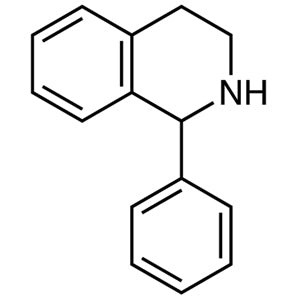
- TCI P2056 22990-19-8 1-Phenyl-1,2,3,4-tetrahydroisoquinoline
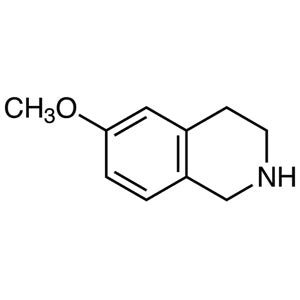
- TCI M2781 42923-77-3 6-Methoxy-1,2,3,4-tetrahydroisoquinoline
- Isoquinoline derivative synthesis: the reactive secondary nitrogen allows straightforward functionalisation, so the compound works well as a starting material for building a wide range of isoquinoline derivatives.
- Medicinal chemistry research: the tetrahydroisoquinoline skeleton is found in many pharmacologically active compounds, which makes this building block a natural choice for designing and preparing new candidate molecules.
- Natural product and alkaloid analogue synthesis: its 6,7-dimethoxy pattern matches the substitution commonly seen in natural isoquinoline alkaloids, so analogues prepared from it stay structurally close to the natural targets.
- Nitrogen functionalisation studies: the secondary amine takes part in alkylation, acylation, reductive amination and sulfonylation, so a single starting material can lead to many different derivatives.
- Pharmacological studies and screening libraries: derivatives prepared from this compound support pharmacological research, and the stable salt form helps keep starting material quality consistent across a series of syntheses.
| Brand | TCI (product code D2472) |
|---|---|
| CAS number | 2328-12-3 |
| Molecular formula | — |
| Purity | — |
| Category | Chemistry > Building Blocks > Heterocyclic Building Blocks |
| Pack sizes | available in the pack sizes listed for this product |
| Physical form | hydrochloride salt; refer to the TCI certificate of analysis for detailed physical data |
| Storage | keep tightly closed and follow the storage conditions on the TCI label and safety data sheet |
Store this compound in its original, tightly closed container in a cool, dry, well-ventilated place, away from moisture and incompatible materials such as strong oxidising agents and strong bases. Always follow the storage conditions printed on the TCI label and in the safety data sheet. Reseal the container promptly after each use to limit exposure to air and humidity. Handle the material in a fume hood or a well-ventilated area, wear suitable gloves, safety glasses and a laboratory coat, and avoid creating or breathing in dust. If the free base is released for a reaction, prepare it just before use, because it is more sensitive to air than the hydrochloride salt. Dispose of waste according to local regulations and your institution's procedures.
—
Produk Terkait
-
6,7-Dimethoxy-1,2,3,4-tetrahydroisoquinoline TCI D6150
Regular price From Rp 925.050,00Regular priceRp 645.750,00Sale price From Rp 925.050,00 -
1,2,3,4-Tetrahydroisoquinoline TCI T1676
Regular price From Rp 1.388.100,00Regular priceRp 960.750,00Sale price From Rp 1.388.100,00 -
5,6,7,8-Tetrahydroisoquinoline TCI T1230
Regular price Rp 3.077.550,00Regular priceRp 2.109.450,00Sale price Rp 3.077.550,00 -
1-(2-Amino-1-naphthyl)isoquinoline TCI A2221
Regular price Rp 7.705.950,00Regular priceRp 5.259.450,00Sale price Rp 7.705.950,00 -
1-Phenyl-1,2,3,4-tetrahydroisoquinoline TCI P2056
Regular price From Rp 979.650,00Regular priceRp 683.550,00Sale price From Rp 979.650,00 -
6-Methoxy-1,2,3,4-tetrahydroisoquinoline TCI M2781
Regular price Rp 3.103.800,00Regular priceRp 2.128.350,00Sale price Rp 3.103.800,00 -
Isoquinoline-3-carboxylicAcid TCI I1246
Regular price From Rp 2.940.000,00Regular priceRp 2.017.050,00Sale price From Rp 2.940.000,00 -
Isoquinoline-5-carboxaldehyde TCI I0942
Regular price From Rp 3.948.000,00Regular priceRp 2.702.700,00Sale price From Rp 3.948.000,00