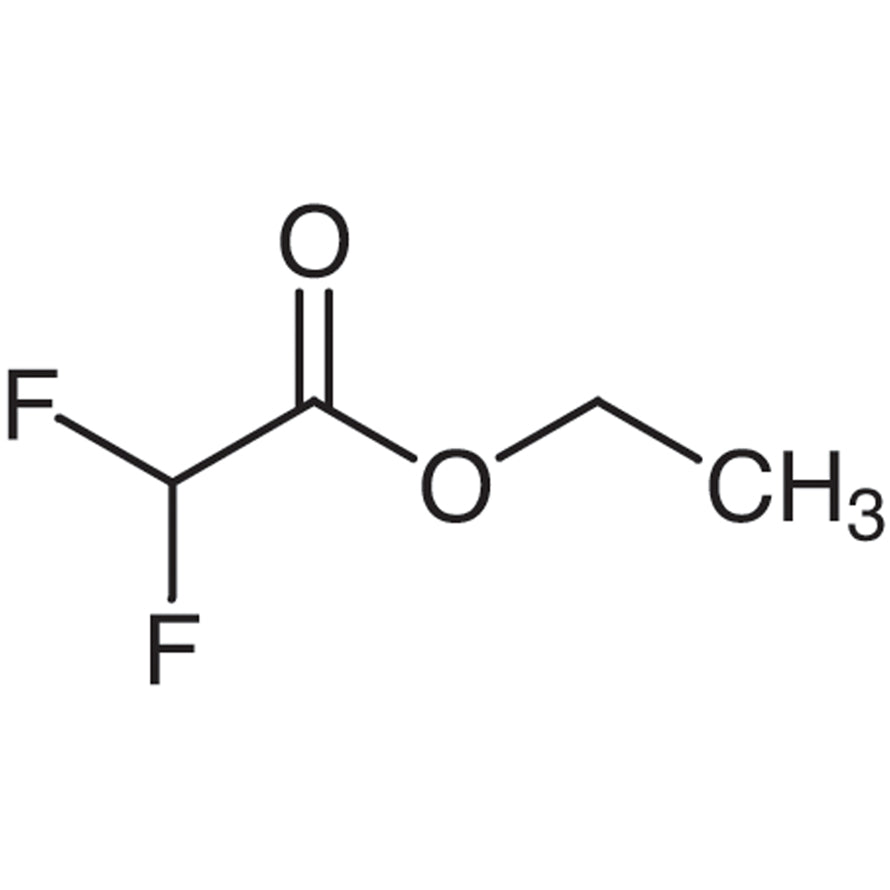
Ethyl Difluoroacetate (EDFA), with the CAS number 454-31-9, is a fluorinated building block widely used in organic chemistry laboratories. It serves as a key reagent in the synthesis of fluorinated compounds, offering versatility in various chemical reactions such as nucleophilic substitution and electrophilic addition. Its role in laboratory settings is crucial for researchers aiming to develop complex molecular structures with controlled fluorine content. EDFA is particularly valued for its ability to participate in multiple synthetic pathways, making it an essential component in modern chemical research.
The chemical properties of EDFA make it a preferred choice for laboratory applications. Its stable molecular structure and controlled reactivity allow for precise manipulation in synthetic processes. The presence of fluorine atoms enhances the compound's stability while maintaining reactivity, which is vital for achieving desired chemical outcomes. Additionally, EDFA has a relatively high boiling point, facilitating efficient heating during reactions. Its solubility in organic solvents further simplifies handling and integration into experimental protocols. These characteristics contribute to its popularity among chemists working on fluorinated compound synthesis.
In Indonesian laboratories, Ethyl Difluoroacetate is commonly used in organic chemistry research, particularly in the synthesis of fluorinated compounds. Its application is prevalent in academic and industrial settings where precision and control over chemical reactions are essential. The compound’s reliability and performance in various synthetic processes make it a go-to reagent for researchers aiming to produce complex fluorinated molecules. Its use supports advancements in chemical innovation and pharmaceutical development in the region.
TCI brochures (PDF)
- Difluoromethylated Compounds 2025-05-01 · p. 1
- Fluorous Chemistry 2025-01-21 · p. 7
- Fluorination Reagents, Fluorinated Building Blocks 2026-03-18 · p. 51
- Fluorinated Compound Synthesis: EDFA is ideal for creating fluorinated molecules due to its reactivity and stability, enabling controlled fluorination in organic reactions.
- Organic Reaction Mediation: Its participation in nucleophilic and substitution reactions makes it a valuable tool in diverse synthetic pathways.
- Pharmaceutical Research: EDFA is used in the development of fluorinated pharmaceuticals, where precise molecular control is essential for drug efficacy.
- Analytical Chemistry: The compound’s unique properties aid in the analysis of fluorinated compounds, supporting accurate identification and quantification.
- Green Chemistry Initiatives: EDFA’s controlled reactivity and efficiency in reactions align with sustainable chemical practices, reducing waste and byproducts.
| Brand | TCI |
|---|---|
| CAS number | 454-31-9 |
| Molecular formula | — |
| Purity | — |
| Category | Chemistry > Building Blocks > Fluorinated Building Blocks |
| Pack sizes | Available in standard laboratory quantities |
| Physical form | Liquid |
| Storage | Store in a cool, dry place away from light and incompatible materials |
Ethyl Difluoroacetate should be stored in a cool, dry environment, away from direct sunlight and sources of heat. It is recommended to use sealed, airtight containers to prevent exposure to moisture and air. Due to its chemical nature, it should be kept away from incompatible substances such as strong bases and oxidizing agents. Proper ventilation is essential when handling the compound to minimize inhalation risks. Laboratory personnel should wear appropriate personal protective equipment, including gloves and safety goggles, to ensure safe handling. Regular monitoring of storage conditions helps maintain the compound’s integrity and ensures safe usage in laboratory settings.
—
Produk Terkait
-
MethylDifluoroacetate TCI M2021
Regular price From Rp 1.008.000,00Regular price -
CesiumTrifluoroacetate TCI T4207
Regular price From Rp 2.625.000,00Regular price -
IsopropylTrifluoroacetate TCI T1761
Regular price Rp 1.618.050,00Regular price -
2,2,2-TrifluoroethylTrifluoroacetate TCI T1697
Regular price Rp 2.094.750,00Regular price -
SodiumTrifluoroacetate TCI T1336
Regular price From Rp 637.350,00Regular price -
EthylBromofluoroacetate TCI B1673
Regular price From Rp 1.060.500,00Regular price -
EthylBromodifluoroacetate TCI B1463
Regular price From Rp 717.150,00Regular price -
PhenylTrifluoroacetate TCI T0741
Regular price Rp 1.246.350,00Regular price