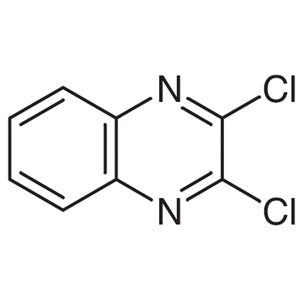
2,3-Dichloroquinoxaline is a chemical compound widely used as a building block in the synthesis of heterocyclic compounds. Its complex molecular structure enables a variety of chemical reactions, including substitution, reduction, and oxidation, making it a versatile reagent in synthetic chemistry. In the laboratory, this compound plays a crucial role in the development of complex molecules with applications in pharmaceuticals, materials science, and organic chemistry. It is particularly valued for its stability and controlled reactivity, allowing researchers to manipulate its properties to create compounds with specific functions.
The compound’s high reactivity towards various reagents, such as alkali metals, acids, and bases, makes it a preferred choice for synthetic chemists. It dissolves well in organic solvents like ethyl acetate and acetone, which simplifies reaction processes and product isolation. These characteristics ensure that it is a reliable and efficient material for use in diverse chemical applications. Its non-toxic and non-degradable nature also contributes to its safety profile, making it suitable for use in laboratories that adhere to standard safety protocols.
In Indonesian laboratories, 2,3-Dichloroquinoxaline is commonly used in research and development projects focused on drug discovery, polymer synthesis, and functional material creation. Its availability and reliability make it a go-to compound for scientists working on complex chemical structures. The compound’s consistent performance and compatibility with various experimental conditions further support its widespread use in both academic and industrial settings.
- Drug synthesis and pharmaceutical research due to its role in creating complex heterocyclic structures essential for medicinal compounds.
- Organic chemistry experiments involving oxidation, reduction, and substitution reactions because of its reactivity with various reagents.
- Material science applications for the development of advanced polymers and functional materials through chemical modification.
- Analytical chemistry for use in compound characterization and structural analysis due to its well-defined molecular properties.
- Research in synthetic chemistry for the production of novel compounds with specific functional groups and molecular frameworks.
| Brand | TCI |
|---|---|
| CAS number | 2213-63-0 |
| Molecular formula | — |
| Purity | — |
| Category | Chemistry > Building Blocks > Heterocyclic Building Blocks |
| Pack sizes | Available in various quantities as per supplier specifications |
| Physical form | Solid |
| Storage | Store in a cool, dry place away from light and moisture |
2,3-Dichloroquinoxaline should be stored in a cool, dry environment, away from direct light and moisture to maintain its chemical integrity. It is recommended to use airtight containers made of glass or polyethylene to prevent contamination and degradation. Due to its reactivity with certain reagents, it should be handled with appropriate personal protective equipment, such as gloves and safety goggles. In laboratory settings, it is important to ensure proper ventilation and to follow standard safety protocols to minimize exposure. The compound’s non-toxic and stable nature reduces the risk of hazardous reactions, but careful handling is still essential to maintain a safe working environment.
—
Produk Terkait
-
2,6-Dichloroquinoxaline TCI D5697
Regular price Rp 2.757.300,00Regular priceRp 1.943.550,00Sale price Rp 2.757.300,00 -
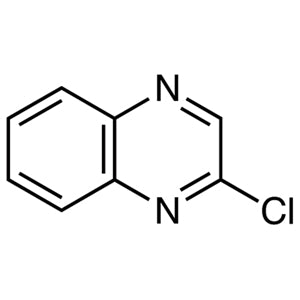
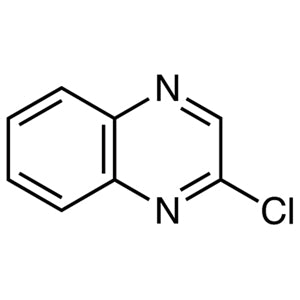
2-Chloroquinoxaline TCI C3492
Regular price From Rp 848.400,00Regular price -
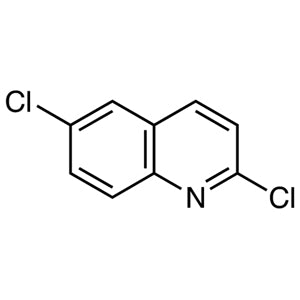
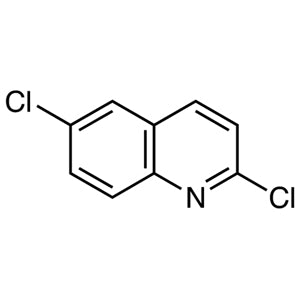
2,6-Dichloroquinoline TCI D5429
Regular price From Rp 1.829.100,00Regular price -
4,8-Dichloroquinoline TCI D5094
Regular price From Rp 2.174.550,00Regular price -
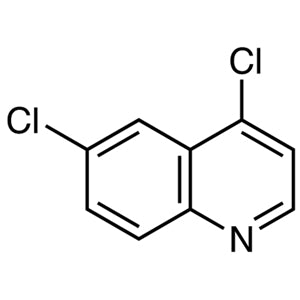
4,6-Dichloroquinoline TCI D4627
Regular price From Rp 2.174.550,00Regular price -
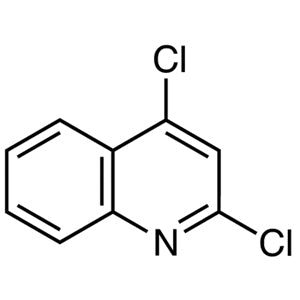
2,4-Dichloroquinoline TCI D4452
Regular price From Rp 1.988.700,00Regular price -
4,7-Dichloroquinoline TCI D1100
Regular price Rp 1.035.300,00Regular price -
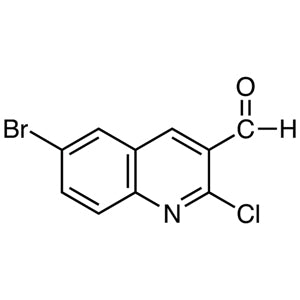
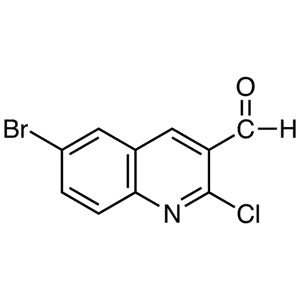
6-Bromo-2-chloroquinoline-3-carboxaldehyde TCI B5242
Regular price Rp 5.327.700,00Regular price