

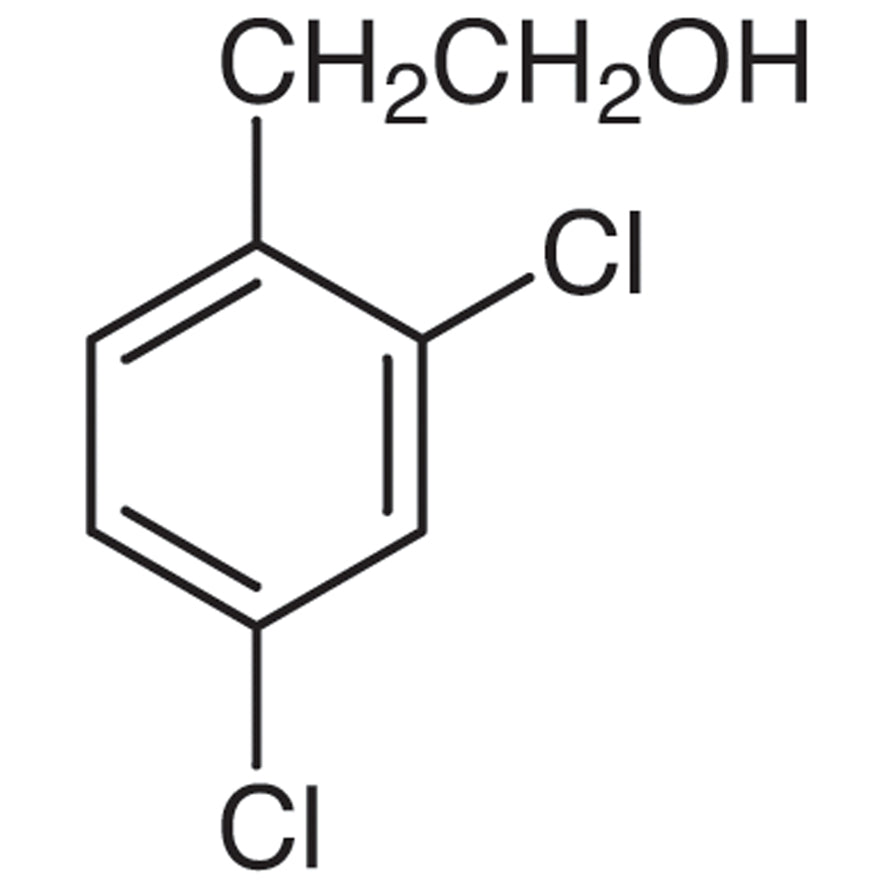
2-(2,4-Dichlorophenyl)ethanol is a chemical compound widely used in laboratory settings for its versatility in organic synthesis. This building block plays a crucial role in the development of complex organic molecules by enabling chemists to construct larger structures through various chemical reactions. Its presence in the synthesis of compounds containing phenyl and alcohol groups makes it an essential component in chemical research. As a non-heterocyclic compound, it offers stability and reactivity, making it a valuable tool for researchers aiming to explore different chemical pathways.
The compound’s high reactivity and stable molecular structure make it a preferred choice for a range of chemical processes. It is particularly well-suited for substitution reactions, esterification, and other reactions requiring active chemical interactions. Its ability to interact with various reagents enhances its utility in synthetic chemistry. Additionally, its non-heterocyclic nature ensures structural stability, which is advantageous in applications where molecular integrity is critical. These properties collectively make it a reliable and efficient material for laboratory use.
In Indonesian laboratories, 2-(2,4-Dichlorophenyl)ethanol is commonly used in pure chemical research, pharmaceutical development, and industrial compound synthesis. Its availability in the local market supports researchers in conducting experiments without the need for international imports. This accessibility enhances its practicality for both academic and industrial applications, ensuring that it remains a key component in the chemical research landscape of Indonesia.
Related TCI products
- Organic synthesis of complex compounds due to its reactivity and structural versatility.
- Pharmaceutical research for the development of new drugs and therapeutic agents.
- Industrial chemical production where stable and reactive building blocks are required.
- Teaching and research in chemistry laboratories for experimental learning and innovation.
- Compound modification processes requiring substitution and esterification reactions.
| Brand | TCI |
|---|---|
| CAS number | 81156-68-5 |
| Molecular formula | — |
| Purity | — |
| Category | Chemistry > Building Blocks > Non-Heterocyclic Building Blocks |
| Pack sizes | Available in standard laboratory quantities |
| Physical form | Liquid |
| Storage | Store in a cool, dry place away from direct sunlight |
This compound should be stored in a cool, dry location, away from direct sunlight and sources of heat. It is recommended to use airtight containers to prevent contamination and maintain its chemical integrity. Due to its reactivity, it should be handled with care, using appropriate personal protective equipment such as gloves and safety goggles. It should not be exposed to incompatible substances or stored near flammable materials. Proper ventilation is essential when handling this compound to ensure a safe laboratory environment. Regular monitoring of storage conditions helps maintain the quality and effectiveness of the material for laboratory use.
—
Produk Terkait
-
2-(3,4-Dichlorophenyl)ethanol TCI D2923
Regular price Rp 2.969.400,00Regular price -
2-(2,6-Dichlorophenyl)ethanol TCI D2922
Regular price Rp 2.094.750,00Regular price -
3,5-Dichloro-N-(3,4-dichlorophenyl)-2-hydroxybenzamide TCI T4359
Regular price From Rp 1.167.600,00Regular price -
2-(Benzyloxy)ethanol TCI B0426
Regular price From Rp 557.550,00Regular price -
1-(2-Naphthyl)ethanol TCI N0788
Regular price From Rp 1.936.200,00Regular price -
2-(1-Naphthyl)ethanol TCI N0575
Regular price From Rp 1.326.150,00Regular price -
2-(4-Nitrophenyl)ethanol TCI N0569
Regular price From Rp 1.353.450,00Regular price -
1-(1-Naphthyl)ethanol TCI N0395
Regular price From Rp 2.016.000,00Regular price


