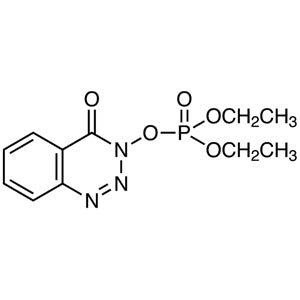
3-(Diethoxyphosphoryloxy)-1,2,3-benzotriazin-4(3H)-one is a synthetic reagent widely used in laboratory settings for its unique chemical properties. This compound plays a crucial role in coupling reactions, where it facilitates the formation of specific chemical bonds between molecules. Its complex structure allows for high reactivity and specificity, making it an essential component in organic synthesis. Due to its ability to interact with various molecular structures, it is highly valued in chemical research and development.
The compound’s high reactivity and structural versatility make it a preferred choice for researchers seeking precision in their synthetic processes. Its stability under controlled conditions ensures reliable performance during experiments, reducing the risk of unwanted side reactions. Additionally, its compatibility with a range of solvents and reaction conditions enhances its utility across different laboratory applications. These characteristics contribute to its popularity among scientists working in both academic and industrial environments.
In Indonesian laboratories, this reagent is commonly used in organic chemistry research and the development of new compounds. Its role in synthetic reactions is vital for advancing chemical studies and innovation. Due to its effectiveness and reliability, it is a sought-after material for researchers and practitioners in educational institutions and research facilities across Indonesia.
TCI brochures (PDF)
- Condensing Agents 2025-11-18 · p. 5
- Amino Acids and Peptide Synthesis Reagents 2025-08-14 · p. 37
Related TCI products
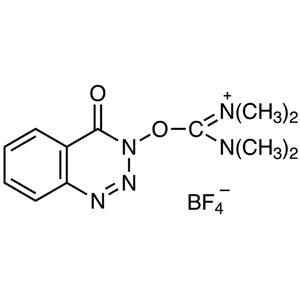
- TCI D3263 125700-69-8 O-(3,4-Dihydro-4-oxo-1,2,3-benzotriazin-3-yl)-N,N,N',N'-tetramethyluronium Tetrafluoroborate
- TCI H1454 26198-21-0 1-Hydroxy-6-(trifluoromethyl)benzotriazole
- TCI K0003 90-16-4 3,4-Dihydro-4-oxo-1,2,3-benzotriazine
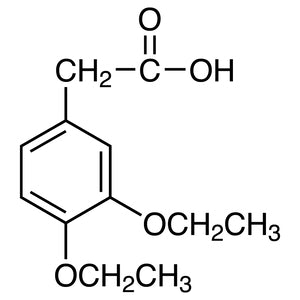
- TCI D3419 38464-04-9 3,4-Diethoxyphenylacetic Acid
- TCI T1985 2232-08-8 1-(p-Toluenesulfonyl)imidazole
- TCI T1593 25753-16-6 4-Trifluoromethylbenzoic Anhydride
- Organic synthesis reactions benefit from this reagent due to its ability to facilitate specific bond formations and its high reactivity in coupling processes.
- It is ideal for developing new chemical compounds as it enables controlled and efficient synthetic pathways in research settings.
- In pharmaceutical research, it supports the creation of complex molecular structures necessary for drug development and testing.
- It is used in analytical chemistry for its role in modifying and stabilizing compounds during various experimental procedures.
- Its stability under controlled conditions makes it suitable for long-term storage and use in multiple laboratory protocols.
| Brand | TCI |
|---|---|
| CAS number | 165534-43-0 |
| Molecular formula | — |
| Purity | — |
| Category | Chemistry > Synthetic Reagents > Coupling [Synthetic Reagents] |
| Pack sizes | Available in various quantities as per supplier specifications |
| Physical form | Solid or powder, depending on formulation |
| Storage | Store in a cool, dry place away from direct sunlight and moisture |
This reagent should be stored in a cool, dry environment to maintain its stability and effectiveness. It is recommended to keep it in a sealed container to prevent exposure to moisture and air, which could affect its chemical integrity. Due to its reactivity, it should be handled with care, using appropriate personal protective equipment such as gloves and goggles. It is advisable to store it away from incompatible substances to avoid any potential chemical interactions. Proper labeling of storage containers is essential for safety and easy identification. Regular inspection of storage conditions ensures that the reagent remains in optimal condition for use in laboratory applications.
—
Produk Terkait
-
O-(3,4-Dihydro-4-oxo-1,2,3-benzotriazin-3-yl)-N,N,N',N'-tetramethyluroniumTetrafluoroborate TCI D3263
Regular price From Rp 1.298.850,00Regular price -
1-Hydroxy-6-(trifluoromethyl)benzotriazole TCI H1454
Regular price From Rp 1.140.300,00Regular price -
3,4-Dihydro-4-oxo-1,2,3-benzotriazine TCI K0003
Regular price From Rp 928.200,00Regular price -
3,4-DiethoxyphenylaceticAcid TCI D3419
Regular price Rp 1.167.600,00Regular price -
1-(p-Toluenesulfonyl)imidazole TCI T1985
Regular price From Rp 1.087.800,00Regular price -
4-TrifluoromethylbenzoicAnhydride TCI T1593
Regular price Rp 4.797.450,00Regular price -
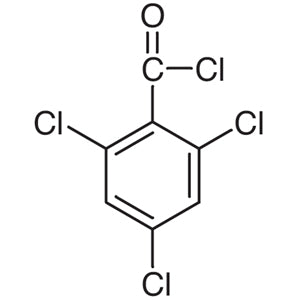
2,4,6-TrichlorobenzoylChloride TCI T1413
Regular price From Rp 2.466.450,00Regular price -
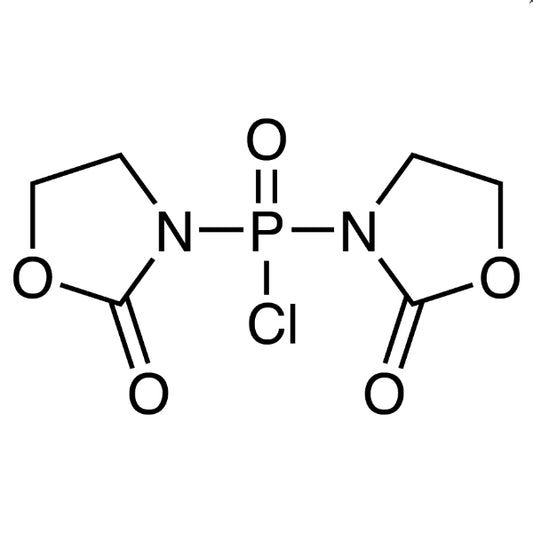
Bis(2-oxo-3-oxazolidinyl)phosphinicChloride TCI B1213
Regular price From Rp 1.644.300,00Regular price