TCI D3810, CAS No. 4569-45-3, is 9,9-Dimethylfluorene that has been purified by sublimation. The compound is a polycyclic aromatic hydrocarbon built on a fluorene skeleton, carrying two methyl groups on the bridging carbon at position nine. In the laboratory it serves as a building block: a rigid-framework starting material that is subsequently functionalised and elaborated into larger molecules. Because the fluorene skeleton appears widely in organic materials for electronics, the availability of this compound in a genuinely pure form has a direct bearing on the quality of advanced materials research.
What distinguishes this grade is the sublimation purification itself. Sublimation separates compounds according to differences in vapour pressure, so non-volatile impurities are left behind and the product is recovered as a solid of high purity with no residual solvent. In research on organic electronic materials, even the smallest traces of impurity can act as charge traps and degrade device performance, which is why sublimed material is the preferred choice. Structurally, the two methyl groups at the C-9 position prevent oxidation to fluorenone and at the same time improve solubility in organic solvents.
In Indonesian laboratories this material typically appears in university and research-institute settings working on synthetic organic chemistry and functional materials. It is used where a clean, well-defined aromatic core is needed as the first step of a multi-stage synthesis, and where the reproducibility of subsequent results depends on the starting material being free of solvent residue and non-volatile contaminants. Its role is that of a foundation reagent rather than a finished formulation.
- Organic electronic materials synthesis — the fluorene skeleton is a recurring motif in this field, and the sublimed grade avoids impurities that could act as charge traps in the finished device.
- Building-block functionalisation — the rigid fluorene framework provides a defined starting point that can be selectively derivatised and extended into larger target molecules during multi-step synthesis.
- Device-grade material preparation — because sublimation leaves no residual solvent behind, the compound is suited to work where solvent traces would compromise subsequent film formation or measurement.
- Structure-property studies on fluorene derivatives — the two C-9 methyl groups block oxidation to fluorenone, giving a stable reference core for comparing the behaviour of related derivatives.
- Solution-phase synthetic chemistry — the methyl substitution at the bridging carbon improves solubility in organic solvents, which makes handling and reaction work-up in standard glassware more straightforward.
| Brand | TCI |
|---|---|
| CAS number | 4569-45-3 |
| Molecular formula | — |
| Purity | — |
| Category | Chemistry > Building Blocks > Non-Heterocyclic Building Blocks |
| Pack sizes | available on request; storage in a cool, dry place away from light and moisture |
| Physical form | solid, purified by sublimation |
| Storage | — |
- Chemical name: 9,9-Dimethylfluorene (purified by sublimation)
Store the container in a cool, dry, well-ventilated place, tightly closed and protected from light and moisture so that the purity achieved by sublimation is preserved. Original supplier packaging or amber glass containers with well-fitting closures are appropriate; keep the compound away from oxidising agents and sources of ignition. Handle the solid in a fume hood to avoid inhaling dust, and wear a laboratory coat, safety glasses, and chemically resistant gloves. Weigh out quantities promptly and reseal the container to limit exposure to air. Consult the manufacturer's safety data sheet before use, and follow institutional procedures for chemical waste disposal.
—
Produk Terkait
-
9-([1,1'-Biphenyl]-4-yl)anthracene TCI B5717
Regular price From Rp 1.358.700,00Regular price -
4-(3-Buten-1-yl)-4'-methylbiphenyl TCI B5872
Regular price From Rp 2.333.100,00Regular price -
4,4'-Bis(trans-4-propylcyclohexyl)biphenyl TCI B5881
Regular price Rp 1.741.950,00Regular price -
Biphenylene TCI B6284
Regular price From Rp 3.099.600,00Regular price -
Benzo[k]fluoranthene TCI B6317
Regular price From Rp 3.541.650,00Regular price -
Benzo[j]fluoranthene TCI B6424
Regular price From Rp 3.246.600,00Regular price -
Benzo[c]phenanthrene TCI B6541
Regular price From Rp 2.038.050,00Regular price -
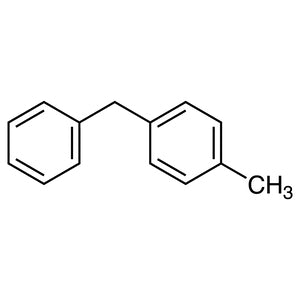
1-Benzyl-4-methylbenzene TCI B6623
Regular price From Rp 2.657.550,00Regular price
![9-([1,1'-Biphenyl]-4-yl)anthracene (CAS 323195-31-9) - TCI B5717 - AMI Scientific](http://amiscientific.com/cdn/shop/files/TCI2510B5717.jpg?v=1768815871&width=533)


![Benzo[k]fluoranthene (CAS 207-08-9) - TCI B6317 - AMI Scientific](http://amiscientific.com/cdn/shop/files/TCI2510B6317_9797284f-a326-4c13-8c48-43bc162551a1.jpg?v=1767865252&width=533)
![Benzo[j]fluoranthene (CAS 205-82-3) - TCI B6424 - AMI Scientific](http://amiscientific.com/cdn/shop/files/TCI2510B6424.jpg?v=1768193711&width=533)
![Benzo[c]phenanthrene (CAS 195-19-7) - TCI B6541 - AMI Scientific](http://amiscientific.com/cdn/shop/files/TCI2510B6541.jpg?v=1767093862&width=533)