2,3-Dihydro-1,3-dimethyl-2-phenylbenzimidazole is a chemical compound widely used in materials science research, particularly in the development of perovskite solar cells (PSCs). This compound plays a crucial role in the fabrication of active layers within PSCs, contributing to enhanced device performance and stability. Its unique chemical structure allows for effective interaction with other materials in the perovskite system, making it an essential component in the synthesis of optoelectronic materials. In laboratory settings, it is frequently employed to create materials with optimized optical and electronic properties, supporting advancements in renewable energy technologies.
The compound is preferred due to its ability to function as an electronic linker or interfacial layer, which improves charge transfer efficiency and minimizes energy loss. Its molecular design enables compatibility with various perovskite formulations, allowing for fine-tuning of device characteristics. Additionally, its chemical stability and solubility properties make it suitable for integration into complex material systems. These features make it a reliable choice for researchers aiming to develop high-performance solar cells with improved efficiency and longevity.
In Indonesian laboratories, this compound is commonly used in applied energy research, especially in the development of cost-effective and efficient perovskite solar cells. Researchers from academic and research institutions utilize it in experimental setups aimed at enhancing the performance of photovoltaic devices. Its role in advancing clean energy solutions makes it a valuable resource in the field of renewable energy technologies.
TCI brochures (PDF)
- Solar Cell Materials 2026-04-21 · p. 10
Related TCI products
- TCI D6194 2376423-07-1 N,N-Dimethyl-4-(1,3,5,6-tetramethyl-2,3-dihydro-1H-benzimidazol-2-yl)aniline
- TCI D6182 1400191-57-2 4-(1,3-Dimethyl-2,3-dihydro-1H-benzimidazol-2-yl)-N,N-diphenylaniline
- TCI D6596 3418-46-0 1,3-Dimethyl-1,3-dihydro-2H-benzo[d]imidazole-2-thione
- TCI D6193 3652-93-5 2-(1,3-Dimethyl-2,3-dihydro-1H-benzimidazol-2-yl)phenol
- TCI D5944 302818-73-1 4-(1,3-Dimethyl-2,3-dihydro-1H-benzimidazol-2-yl)-N,N-dimethylaniline
- TCI D5423 255901-50-9 3,3-Dimethyl-3,4-dihydro-2H-thieno[3,4-b][1,4]dioxepine
- Perovskite Solar Cell Fabrication: This compound is ideal for creating active layers in PSCs due to its ability to improve charge transport and device stability.
- Optoelectronic Material Synthesis: Its chemical structure allows for the development of materials with optimized optical and electronic properties.
- Interfacial Layer Development: It functions as an effective electronic linker, enhancing the performance of perovskite-based devices.
- Renewable Energy Research: It supports the development of next-generation solar cells, contributing to sustainable energy solutions.
- Material Compatibility Testing: Its compatibility with various perovskite formulations makes it useful for studying material interactions in photovoltaic systems.
| Brand | TCI |
|---|---|
| CAS number | 3652-92-4 |
| Molecular formula | — |
| Purity | — |
| Category | Materials Science > Electronic Materials > Perovskite Solar Cell (PSC) Materials |
| Pack sizes | Available in standard laboratory quantities |
| Physical form | Solid |
| Storage | Store in a cool, dry place away from direct sunlight |
This compound should be stored in a cool, dry environment, away from direct sunlight and sources of heat. It is recommended to use airtight containers to prevent moisture absorption and maintain chemical integrity. Proper ventilation should be ensured when handling the material to minimize exposure. Due to its chemical nature, it should be handled with appropriate personal protective equipment, such as gloves and safety goggles. Avoid contact with skin and eyes, and ensure that spillage is cleaned up promptly to prevent contamination. Regular monitoring of storage conditions is advised to ensure the material remains stable and suitable for research applications.
—
Produk Terkait
-
N,N-Dimethyl-4-(1,3,5,6-tetramethyl-2,3-dihydro-1H-benzimidazol-2-yl)aniline TCI D6194
Regular price From Rp 4.796.400,00Regular priceRp 3.369.450,00Sale price From Rp 4.796.400,00 -
4-(1,3-Dimethyl-2,3-dihydro-1H-benzimidazol-2-yl)-N,N-diphenylaniline TCI D6182
Regular price From Rp 5.062.050,00Regular priceRp 3.555.300,00Sale price From Rp 5.062.050,00 -
1,3-Dimethyl-1,3-dihydro-2H-benzo[d]imidazole-2-thione TCI D6596
Regular price From Rp 4.161.150,00Regular priceRp 2.925.300,00Sale price From Rp 4.161.150,00 -
2-(1,3-Dimethyl-2,3-dihydro-1H-benzimidazol-2-yl)phenol TCI D6193
Regular price From Rp 4.743.900,00Regular priceRp 3.332.700,00Sale price From Rp 4.743.900,00 -
4-(1,3-Dimethyl-2,3-dihydro-1H-benzimidazol-2-yl)-N,N-dimethylaniline TCI D5944
Regular price From Rp 5.485.200,00Regular priceRp 3.851.400,00Sale price From Rp 5.485.200,00 -
3,3-Dimethyl-3,4-dihydro-2H-thieno[3,4-b][1,4]dioxepine TCI D5423
Regular price From Rp 2.093.700,00Regular priceRp 1.479.450,00Sale price From Rp 2.093.700,00 -
2,3-Dihydro-2,2-dimethyl-7-hydroxybenzofuran TCI D2154
Regular price From Rp 637.350,00Regular priceRp 460.950,00Sale price From Rp 637.350,00 -
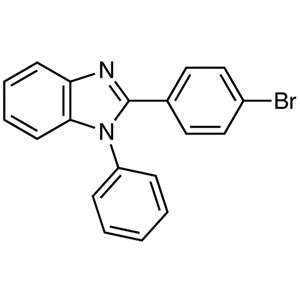
2-(4-Bromophenyl)-1-phenylbenzimidazole TCI B4479
Regular price Rp 1.351.350,00Regular priceRp 960.750,00Sale price Rp 1.351.350,00


![1,3-Dimethyl-1,3-dihydro-2H-benzo[d]imidazole-2-thione (CAS 3418-46-0) - TCI D6596 - AMI Scientific](http://amiscientific.com/cdn/shop/files/TCI2510D6596.jpg?v=1768818611&width=533)


![3,3-Dimethyl-3,4-dihydro-2H-thieno[3,4-b][1,4]dioxepine (CAS 255901-50-9) - TCI D5423 - AMI Scientific](http://amiscientific.com/cdn/shop/files/TCI2510D5423.jpg?v=1768818413&width=533)