


2,7-Dibromo-9-(9-heptadecyl)carbazole is a chemical compound used as a foundational building block in the synthesis of complex heterocyclic compounds. This material plays a crucial role in laboratory settings where the development of organic materials is required. Its unique molecular structure, combining a carbazole core with a long alkyl chain, provides specific physical and chemical properties that are essential for advanced chemical applications. The compound is widely utilized in research focused on molecular design and functional material development.
The compound’s chemical stability and controlled reactivity make it a preferred choice for synthetic chemists. Its long alkyl chain contributes to favorable solubility in organic solvents, which is vital for efficient reaction processes. These properties allow for precise molecular modifications and synthesis of target compounds. The ability to maintain stability under various reaction conditions enhances its utility in laboratory experiments. Additionally, its structural complexity supports its use in the creation of specialized materials with tailored properties.
In Indonesian laboratories, this compound is commonly used in scientific research related to the development of new materials, particularly in the fields of information technology and energy. It is also a key component in organic chemistry studies that require complex structures and specific chemical behaviors. Its versatility and reliability make it an essential reagent for researchers working on advanced chemical projects.
TCI brochures (PDF)
- Carbazoles 2025-06-27 · p. 4
- Building Blocks for Organic Semiconductor 2026-03-24 · p. 35
Related TCI products
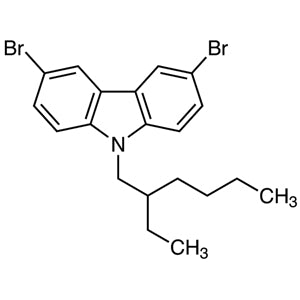
- TCI D4830 173063-52-0 3,6-Dibromo-9-(2-ethylhexyl)carbazole
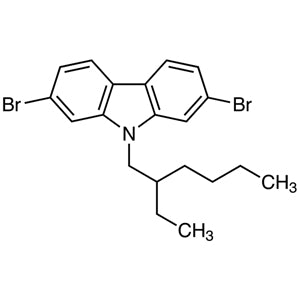
- TCI D4735 544436-46-6 2,7-Dibromo-9-(2-ethylhexyl)carbazole
- TCI D4563 73087-83-9 3,6-Dibromo-9-(4-bromophenyl)carbazole
- TCI B5462 1384281-49-5 9-Benzyl-2,7-dibromo-9H-carbazole
- TCI D6528 1796549-32-0 3,11-Dibromo-7H-dibenzo[c,g]carbazole
- TCI D5546 1221237-83-7 3,6-Dibromo-9-(2-naphthalenyl)-9H-carbazole
- Organic synthesis of complex heterocyclic compounds due to its structural versatility and reactivity.
- Development of organic materials for optoelectronic applications because of its chemical stability and solubility.
- Research in electrochemical systems where controlled reactivity and molecular modification are essential.
- Creation of new materials for information technology applications due to its unique molecular architecture.
- Investigation of advanced chemical structures in organic chemistry research requiring precise functional groups.
| Brand | TCI |
|---|---|
| CAS number | 955964-73-5 |
| Molecular formula | — |
| Purity | — |
| Category | Chemistry > Building Blocks > Heterocyclic Building Blocks |
| Pack sizes | Available in various quantities as per standard laboratory supply |
| Physical form | Solid |
| Storage | Store in a cool, dry place away from light and moisture |
This compound should be stored in a cool, dry environment, away from direct light and moisture to maintain its chemical stability. It is recommended to use airtight containers made of glass or polyethylene to prevent contamination and degradation. Due to its reactivity, it should be handled with appropriate personal protective equipment, such as gloves and safety goggles, to ensure laboratory safety. Avoid exposure to heat or open flames, as it may pose a fire hazard. Proper ventilation is also important when working with this compound to minimize inhalation risks. Always follow standard laboratory safety protocols when handling and storing chemical substances.
—
Produk Terkait
-
3,6-Dibromo-9-(2-ethylhexyl)carbazole TCI D4830
Regular price From Rp 2.147.250,00Regular price -
2,7-Dibromo-9-(2-ethylhexyl)carbazole TCI D4735
Regular price Rp 2.386.650,00Regular price -
3,6-Dibromo-9-(4-bromophenyl)carbazole TCI D4563
Regular price From Rp 664.650,00Regular price -
9-Benzyl-2,7-dibromo-9H-carbazole TCI B5462
Regular price From Rp 2.862.300,00Regular price -
3,11-Dibromo-7H-dibenzo[c,g]carbazole TCI D6528
Regular price From Rp 2.359.350,00Regular price -
3,6-Dibromo-9-(2-naphthalenyl)-9H-carbazole TCI D5546
Regular price From Rp 795.900,00Regular price -
3,6-Dibromo-9-(m-tolyl)-9H-carbazole TCI D5424
Regular price Rp 2.466.450,00Regular price -
3,6-Dibromo-9-(3,5-dimethylphenyl)-9H-carbazole TCI D5421
Regular price From Rp 1.060.500,00Regular price


![3,11-Dibromo-7H-dibenzo[c,g]carbazole (CAS 1796549-32-0) - TCI D6528 - AMI Scientific](http://amiscientific.com/cdn/shop/files/TCI2510D6528.jpg?v=1767110368&width=533)


