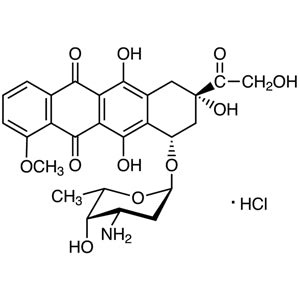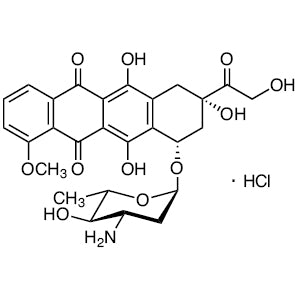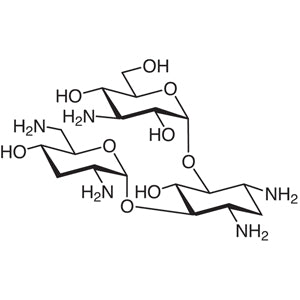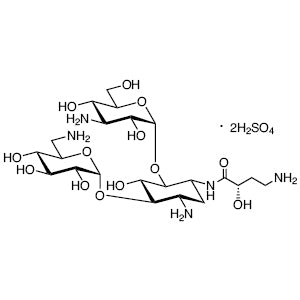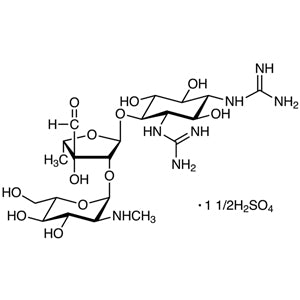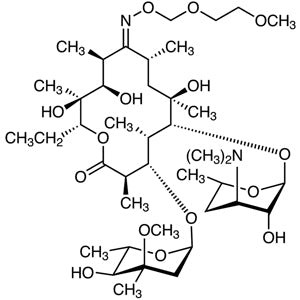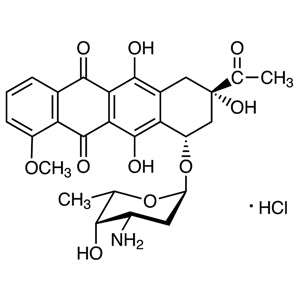
Daunorubicin Hydrochloride is a chemical compound widely used in chemical biology and glycoscience research. As a key reagent in laboratory settings, it plays a crucial role in studying antitumor compounds and the mechanisms of cancer treatments. Its ability to interact with DNA and RNA makes it essential for investigating molecular interactions, biological activity, and toxic effects. This compound is frequently employed in experiments aimed at understanding the pharmacological and biochemical properties of therapeutic agents.
The compound’s unique chemical structure allows for specific interactions with nucleic acids, making it a preferred choice for researchers in pharmacology and biotechnology. Its stability under certain conditions ensures reliable results across various experimental setups. Additionally, its effectiveness in biological assays contributes to its popularity in both academic and industrial research environments. These properties make it an indispensable tool for scientists working on cancer therapy development and related fields.
In Indonesian laboratories, Daunorubicin Hydrochloride is commonly used in scientific studies focused on the efficacy of cancer treatments and the development of new therapeutic approaches. It is also integral to research projects involving molecular biology, drug discovery, and biochemical analysis. Its presence in these studies highlights its importance in advancing medical research and innovation within the region.
TCI brochures (PDF)
- Antimicrobials and Antitumor Agents for Research and Experimental Use 2025-04-24 · p. 5
- Reagents for Glyco Chemistry & Biology 5th Edition · p. 121
- Pharmaceutical Ingredients for Research and Experimental Use 2026-03-09 · p. 5
- Reagents for Biological Research 2025-03-11 · p. 35
- Cancer drug development research utilizes Daunorubicin Hydrochloride to evaluate the efficacy and mechanism of action of chemotherapeutic agents in vitro and in vivo.
- Molecular biology studies benefit from its ability to interact with DNA and RNA, enabling investigations into gene expression and cellular processes.
- Toxicology experiments rely on this compound to assess the biological effects and potential side effects of antitumor drugs on living systems.
- Pharmacological research employs Daunorubicin Hydrochloride to study drug metabolism, absorption, and interaction with biological targets.
- Biochemical assays use the compound to analyze enzyme activity and protein binding, contributing to the understanding of cellular functions.
| Brand | TCI |
|---|---|
| CAS number | 23541-50-6 |
| Molecular formula | — |
| Purity | — |
| Category | Chemistry > Chemical Biology > Glycoscience |
| Pack sizes | Available in various quantities as per supplier specifications |
| Physical form | Powder |
| Storage | Store in a cool, dry place away from light and moisture |
Daunorubicin Hydrochloride should be stored in a cool, dry environment, away from direct light and moisture to maintain its stability and potency. It is recommended to use airtight containers to prevent exposure to humidity and contaminants. Due to its potential biological activity, it should be handled with appropriate personal protective equipment, such as gloves and safety goggles, to ensure laboratory safety. The compound should be kept in a secure location, away from incompatible substances to prevent chemical reactions. Regular monitoring of storage conditions is essential to ensure the integrity of the material during long-term use. Proper labeling and documentation are also important for safe handling and regulatory compliance in laboratory settings.
—
Product Categories
- GlycoscienceSugars (Other) [Glycoscience]
- Biochemicals and ReagentsAntibioticsAntibiotics (Chemical Structure Class)
- Biochemicals and ReagentsAntibody-Drug Conjugates (ADC) Preparation Research ReagentsPayload (Drug) Candidates [ADC Preparation Research Reagents]
- Biochemicals and ReagentsPharmaceutical Research Reagents (for Experimental Use)Antimicrobial Ingredients (for Research and Experimental Use)
- Biochemicals and ReagentsPharmaceutical Research Reagents (for Experimental Use)Antitumor Research Reagents (for Experimental Use)
- Cell BiologyApoptosisApoptosis Inducers
- MicrobiologyAntibioticsAntibiotics (Chemical Structure Class)
- Pharmaceutical Development and Drug Discovery ResearchAntibody-Drug Conjugates (ADC) Preparation Research ReagentsPayload (Drug) Candidates [ADC Preparation Research Reagents]
- Pharmaceutical Development and Drug Discovery ResearchPharmaceutical Research Reagents (for Experimental Use)Antimicrobial Ingredients (for Research and Experimental Use)
- Pharmaceutical Development and Drug Discovery ResearchPharmaceutical Research Reagents (for Experimental Use)Antitumor Research Reagents (for Experimental Use)
- Pharmaceutical Development and Drug Discovery ResearchAntibioticsAntibiotics (Chemical Structure Class)
Produk Terkait
-
DoxorubicinHydrochloride TCI D4193
Regular price From Rp 6.095.250,00Regular priceRp 4.277.700,00Sale price From Rp 6.095.250,00 -
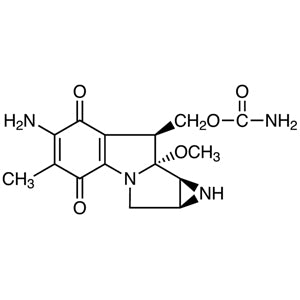
Ametycin TCI M2320
Regular price From Rp 2.914.800,00Regular priceRp 2.053.800,00Sale price From Rp 2.914.800,00 -
EpirubicinHydrochloride TCI E0840
Regular price From Rp 3.815.700,00Regular priceRp 2.683.800,00Sale price From Rp 3.815.700,00 -
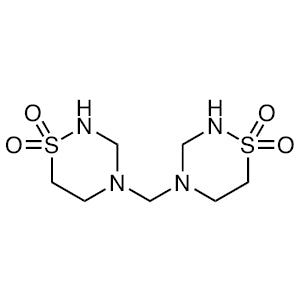
Taurolidine TCI T3980
Regular price Rp 4.081.350,00Regular priceRp 2.869.650,00Sale price Rp 4.081.350,00 -
Tobramycin TCI T2503
Regular price From Rp 2.942.100,00Regular priceRp 2.072.700,00Sale price From Rp 2.942.100,00 -
AmikacinSulfate TCI A2281
Regular price From Rp 1.483.650,00Regular priceRp 1.053.150,00Sale price From Rp 1.483.650,00 -
StreptomycinSulfate TCI S0585
Regular price From Rp 822.150,00Regular priceRp 590.100,00Sale price From Rp 822.150,00 -
Roxithromycin TCI R0164
Regular price From Rp 1.776.600,00Regular priceRp 1.257.900,00Sale price From Rp 1.776.600,00