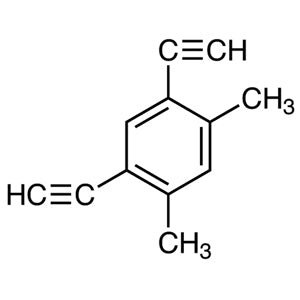
1,5-Diethynyl-2,4-dimethylbenzene is a chemical compound widely used as a building block in organic synthesis. It serves as a foundational material for constructing complex molecular structures, making it essential in laboratory settings where precision and reactivity are critical. This compound is particularly valuable for its ability to participate in various chemical reactions, including coupling and cyclization, which are fundamental in the development of new chemical entities. Its presence in the laboratory supports the creation of advanced materials and pharmaceutical compounds, contributing to scientific innovation.
The compound’s high reactivity and unique structure make it a preferred choice for researchers. It features an aromatic ring with two triple bonds at positions 1 and 5, enhancing its ability to undergo chemical transformations. This reactivity allows it to be a versatile tool in synthetic pathways, especially when designing molecules with specific functional groups or ring systems. Its chemical stability under controlled conditions further ensures its reliability in laboratory applications, making it a trusted component in organic chemistry research.
In Indonesian laboratories, 1,5-Diethynyl-2,4-dimethylbenzene is commonly used in academic and industrial research settings. It is a key reagent in the synthesis of heterocyclic compounds and organic materials, supporting advancements in pharmaceutical and material sciences. Its use is prevalent in educational institutions and research centers, where it is employed to teach and develop new chemical methodologies. This compound plays a vital role in the scientific community, enabling the exploration of novel chemical structures and applications.
- Synthesis of heterocyclic compounds for the development of new pharmaceuticals, as its triple bonds enable efficient cyclization reactions.
- Creation of organic materials with specific structural requirements, due to its aromatic framework and reactivity.
- Educational experiments in organic chemistry, where it serves as a model for understanding molecular building blocks and synthetic pathways.
- Research into advanced materials, as its structure can be modified to produce polymers and nanomaterials with unique properties.
- Development of new chemical entities in drug discovery, where its reactivity supports the formation of complex molecular architectures.
| Brand | TCI |
|---|---|
| CAS number | 1379822-09-9 |
| Molecular formula | — |
| Purity | — |
| Category | Chemistry > Building Blocks > Non-Heterocyclic Building Blocks |
| Pack sizes | Available in various quantities as per standard laboratory supply |
| Physical form | Solid or liquid, depending on the specific product variant |
| Storage | Store in a cool, dry place away from light and moisture |
This compound should be stored in a cool, dry environment, away from direct sunlight and moisture to maintain its chemical integrity. It is recommended to use airtight containers made of glass or high-density polyethylene to prevent contamination and degradation. Due to its reactivity, it should be handled with care, using appropriate personal protective equipment such as gloves and safety goggles. It is important to ensure proper ventilation in the laboratory to minimize exposure to vapors. Avoid contact with incompatible substances to prevent unwanted chemical reactions. Regular inspection of storage conditions is advised to ensure the material remains in optimal condition for use.
—
Produk Terkait
-
9-([1,1'-Biphenyl]-4-yl)anthracene TCI B5717
Regular price From Rp 1.220.100,00Regular price -
4-(3-Buten-1-yl)-4'-methylbiphenyl TCI B5872
Regular price Rp 2.094.750,00Regular price -
4,4'-Bis(trans-4-propylcyclohexyl)biphenyl TCI B5881
Regular price Rp 1.565.550,00Regular price -
Biphenylene TCI B6284
Regular price From Rp 2.782.500,00Regular price -
Benzo[k]fluoranthene TCI B6317
Regular price From Rp 3.180.450,00Regular price -
Benzo[j]fluoranthene TCI B6424
Regular price From Rp 2.916.900,00Regular price -
Benzo[c]phenanthrene TCI B6541
Regular price From Rp 1.829.100,00Regular price -
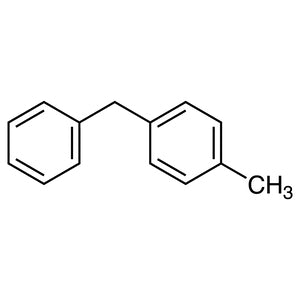
1-Benzyl-4-methylbenzene TCI B6623
Regular price From Rp 2.386.650,00Regular price
![9-([1,1'-Biphenyl]-4-yl)anthracene (CAS 323195-31-9) - TCI B5717 - AMI Scientific](http://amiscientific.com/cdn/shop/files/TCI2510B5717.jpg?v=1768815871&width=533)


![Benzo[k]fluoranthene (CAS 207-08-9) - TCI B6317 - AMI Scientific](http://amiscientific.com/cdn/shop/files/TCI2510B6317_9797284f-a326-4c13-8c48-43bc162551a1.jpg?v=1767865252&width=533)
![Benzo[j]fluoranthene (CAS 205-82-3) - TCI B6424 - AMI Scientific](http://amiscientific.com/cdn/shop/files/TCI2510B6424.jpg?v=1768193711&width=533)
![Benzo[c]phenanthrene (CAS 195-19-7) - TCI B6541 - AMI Scientific](http://amiscientific.com/cdn/shop/files/TCI2510B6541.jpg?v=1767093862&width=533)