2,4-Dichloro-1,3,5-triazine is a chemical compound widely used as a building block in the synthesis of heterocyclic compounds. Its complex molecular structure makes it highly relevant in various chemical reactions, especially those involving the formation of heterocyclic rings. In the laboratory, this compound serves as a key precursor for the production of a wide range of chemicals with applications in pharmaceuticals, materials science, and organic chemistry. Due to its reactivity, it is a preferred choice in experiments requiring high reactivity and versatility.
The compound’s chemical properties, including its reactivity and stability under specific conditions, make it a favored material for synthetic chemists. It is particularly effective in substitution reactions, hydrolysis, and condensation reactions. Its ability to participate in multiple types of chemical reactions enhances its utility in laboratory settings. The compound’s reactivity allows it to be tailored for different synthetic pathways, offering flexibility in experimental design.
In Indonesian laboratories, 2,4-Dichloro-1,3,5-triazine is commonly used in organic chemistry research, especially in pharmaceutical and materials science applications. It is a valuable resource for researchers working on the development of new compounds and materials. Its widespread use reflects its importance in both academic and industrial research environments in Indonesia.
Related TCI products
- TCI D4814 6601-22-5 2,4-Dichloro-6-morpholino-1,3,5-triazine
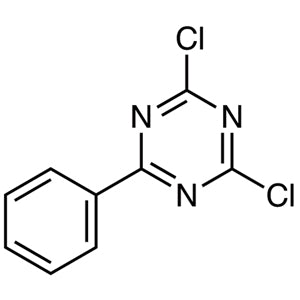
- TCI D4805 1700-02-3 2,4-Dichloro-6-phenyl-1,3,5-triazine
- TCI D3747 3638-04-8 2,4-Dichloro-6-methoxy-1,3,5-triazine
- TCI B5796 1402225-89-1 2-([1,1'-Biphenyl]-3-yl)-4,6-dichloro-1,3,5-triazine
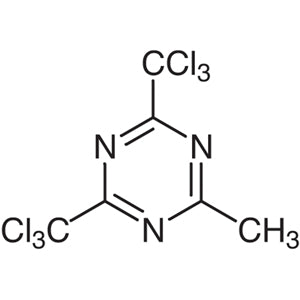
- TCI M2137 949-42-8 2-Methyl-4,6-bis(trichloromethyl)-1,3,5-triazine
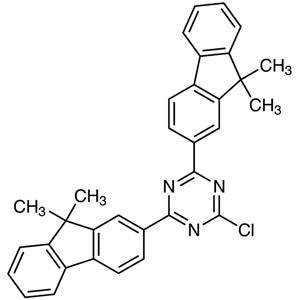
- TCI C3543 1459162-69-6 2-Chloro-4,6-bis(9,9-dimethyl-9H-fluoren-2-yl)-1,3,5-triazine
- Organic synthesis for the development of pharmaceutical compounds due to its reactivity and versatility in forming heterocyclic structures.
- Material science research for the creation of advanced polymers and functional materials through chemical modification.
- Heterocyclic compound synthesis as a key intermediate in the production of various chemical derivatives.
- Chemical reaction testing in academic and industrial laboratories for studying reaction mechanisms and pathways.
- Research in synthetic chemistry for the exploration of new chemical transformations and reaction conditions.
| Brand | TCI |
|---|---|
| CAS number | 2831-66-5 |
| Molecular formula | — |
| Purity | — |
| Category | Chemistry > Building Blocks > Heterocyclic Building Blocks |
| Pack sizes | Available in standard laboratory quantities |
| Physical form | Solid |
| Storage | Store in a cool, dry place away from direct sunlight and incompatible substances |
This compound should be stored in a cool, dry environment, away from direct sunlight and sources of heat. It is recommended to use airtight containers made of materials compatible with its chemical properties, such as glass or high-density polyethylene. Due to its reactivity, it should be kept separate from strong acids, bases, and oxidizing agents to prevent unwanted reactions. Proper ventilation is essential when handling the compound to minimize exposure. Always wear appropriate personal protective equipment, including gloves, goggles, and a lab coat, to ensure safety during handling and experimentation.
—
Produk Terkait
-
2,4-Dichloro-6-morpholino-1,3,5-triazine TCI D4814
Regular price From Rp 689.850,00Regular price -
2,4-Dichloro-6-phenyl-1,3,5-triazine TCI D4805
Regular price From Rp 1.510.950,00Regular price -
2,4-Dichloro-6-methoxy-1,3,5-triazine TCI D3747
Regular price From Rp 1.378.650,00Regular price -
2-([1,1'-Biphenyl]-3-yl)-4,6-dichloro-1,3,5-triazine TCI B5796
Regular price Rp 2.704.800,00Regular price -
2-Methyl-4,6-bis(trichloromethyl)-1,3,5-triazine TCI M2137
Regular price Rp 3.896.550,00Regular price -
2-Chloro-4,6-bis(9,9-dimethyl-9H-fluoren-2-yl)-1,3,5-triazine TCI C3543
Regular price From Rp 3.207.750,00Regular price -
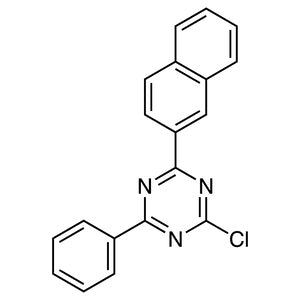
2-Chloro-4-(naphthalen-2-yl)-6-phenyl-1,3,5-triazine TCI C3520
Regular price Rp 1.936.200,00Regular price -
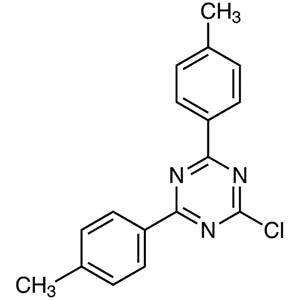
2-Chloro-4,6-di-p-tolyl-1,3,5-triazine TCI C3514
Regular price From Rp 2.199.750,00Regular price



![2-([1,1'-Biphenyl]-3-yl)-4,6-dichloro-1,3,5-triazine (CAS 1402225-89-1) - TCI B5796 - AMI Scientific](http://amiscientific.com/cdn/shop/files/TCI2510B5796.jpg?v=1768815898&width=533)