

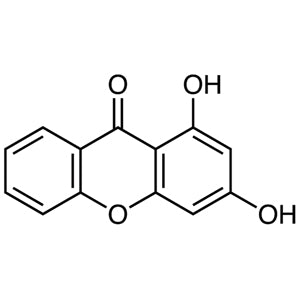
1,3-Dihydroxy-9H-xanthen-9-one is a chemical compound widely used in organic reactions and the synthesis of complex molecules. As a heterocyclic building block, it plays a crucial role in laboratory settings where the development of new compounds is essential. Its unique structure allows for various chemical transformations, making it a valuable tool for researchers in both academic and industrial environments. This compound is particularly important in the creation of functionalized molecules with specific properties.
The compound’s two hydroxyl groups at positions 1 and 3 contribute to its polarity and reactivity, enabling it to participate in substitution and oxidation reactions. These properties make it a preferred choice for chemists seeking to modify molecular structures with high efficiency. The xanthene ring system also provides structural stability, allowing the compound to remain active under a range of reaction conditions. Its reactivity and versatility are key factors in its widespread use across different chemical applications.
In Indonesian laboratories, 1,3-Dihydroxy-9H-xanthen-9-one is commonly used in organic chemistry research, especially in pharmaceutical and industrial chemical development. It is a key component in the synthesis of various compounds, including dyes, pharmaceutical intermediates, and other specialty chemicals. Its availability and reliability make it a staple in many research facilities across the country.
Related TCI products
- TCI D5869 1214-24-0 3,6-Dihydroxy-9H-xanthen-9-one
- TCI B6193 500286-36-2 3-Bromo-9H-xanthen-9-one
- TCI D4599 6623-81-0 2,4-Dihydroxy-5-methoxypyrimidine
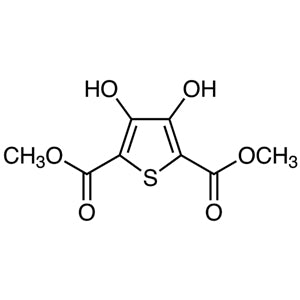
- TCI D3682 58416-04-9 Dimethyl 3,4-Dihydroxy-2,5-thiophenedicarboxylate
- TCI D2589 40497-30-1 4,6-Dihydroxy-2-methylpyrimidine
- TCI D1960 2164-83-2 4,6-Dihydroxy-5-nitropyrimidine
- Organic synthesis is a primary application where this compound serves as a versatile building block for creating complex molecules with specific functional groups.
- Pharmaceutical research benefits from its ability to participate in oxidation and substitution reactions, aiding in the development of drug candidates.
- Dye and pigment synthesis relies on its structural features, allowing for the creation of colored compounds with desired properties.
- Industrial chemical production utilizes its reactivity to generate intermediates for a wide range of applications in manufacturing.
- Analytical chemistry uses it as a reference standard for identifying and quantifying similar compounds in various samples.
| Brand | TCI |
|---|---|
| CAS number | 3875-68-1 |
| Molecular formula | — |
| Purity | — |
| Category | Chemistry > Building Blocks > Heterocyclic Building Blocks |
| Pack sizes | Available in various quantities as per standard laboratory supply |
| Physical form | Solid, crystalline appearance |
| Storage | Store in a cool, dry place away from direct sunlight |
This compound should be stored in a cool, dry environment to maintain its chemical integrity. It is recommended to keep it in a tightly sealed container to prevent moisture absorption and contamination. Due to its reactivity, it should be handled with care, using appropriate personal protective equipment such as gloves and safety goggles. Avoid exposure to strong oxidizing agents or incompatible substances. Proper ventilation is essential when working with this compound to ensure a safe laboratory environment. Regular inspection of storage conditions is advised to ensure long-term stability and usability.
—
Produk Terkait
-
3,6-Dihydroxy-9H-xanthen-9-one TCI D5869
Regular price From Rp 1.298.850,00Regular price -
3-Bromo-9H-xanthen-9-one TCI B6193
Regular price Rp 4.638.900,00Regular price -
2,4-Dihydroxy-5-methoxypyrimidine TCI D4599
Regular price From Rp 452.550,00Regular price -
Dimethyl3,4-Dihydroxy-2,5-thiophenedicarboxylate TCI D3682
Regular price From Rp 2.837.100,00Regular price -
4,6-Dihydroxy-2-methylpyrimidine TCI D2589
Regular price From Rp 823.200,00Regular price -
4,6-Dihydroxy-5-nitropyrimidine TCI D1960
Regular price Rp 1.829.100,00Regular price -
2,5-Dihydroxy-1,4-dithiane TCI D1761
Regular price From Rp 823.200,00Regular price -
4,4,5,5-Tetramethyl-2-(spiro[fluorene-9,9'-xanthen]-4-yl)-1,3,2-dioxaborolane TCI T4407
Regular price From Rp 955.500,00Regular price




![1609484-75-4 4,4,5,5-Tetramethyl-2-(spiro[fluorene-9,9'-xanthen]-4-yl)-1,3,2-dioxaborolane - AMI Scientific](http://amiscientific.com/cdn/shop/files/TCI2510T4407.jpg?v=1768206674&width=533)