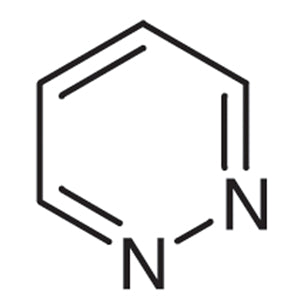
3,6-Dibromopyridazine is an aromatic heterocyclic compound with CAS number 17973-86-3, built around a pyridazine ring — a six-membered ring containing two adjacent nitrogen atoms — and carrying two bromine atoms at the 3 and 6 positions. In organic synthesis laboratories, this compound serves as a building block: a starting framework that is ready to be elaborated into far more complex molecules. Its two bromine groups act as reactive connection points, allowing researchers to install aryl, alkynyl, amine, or thiol groups in a stepwise and controlled manner at positions that are already clearly defined.
The characteristics that make this material a frequent choice are its symmetry and the clarity of its reaction sites. Because both bromine atoms sit at equivalent positions relative to the two ring nitrogen atoms, researchers can design symmetrical double substitutions or stepwise, non-symmetrical substitutions simply by adjusting stoichiometry and reaction conditions. The pyridazine ring is nitrogen-rich and relatively electron-poor, which supports nucleophilic aromatic substitution reactions in addition to transition-metal-catalysed coupling reactions. This property also gives the ring the ability to bind metals through the lone electron pairs on its nitrogen atoms.
In Indonesian laboratories, 3,6-dibromopyridazine is typically used in university and institutional research settings where heterocyclic scaffolds are prepared for further study. It is handled in synthetic organic chemistry groups, medicinal chemistry programmes, and coordination chemistry work, where a well-defined dihalogenated heterocycle shortens the route to a target structure. Researchers generally weigh out the quantity needed for a given reaction and return the remainder to controlled storage, which suits laboratories that run multiple small-scale syntheses.
- Transition-metal-catalysed cross-coupling — the two bromine atoms serve as reliable reactive handles for attaching aryl or alkynyl groups at positions that are structurally defined in advance.
- Nucleophilic aromatic substitution — the relatively electron-poor, nitrogen-rich pyridazine ring supports displacement of bromine by nucleophiles such as amines and thiols under controlled conditions.
- Symmetrical disubstitution chemistry — because both bromine positions are equivalent with respect to the ring nitrogen atoms, researchers can install two identical groups in a single designed step.
- Stepwise non-symmetrical elaboration — by adjusting stoichiometry and reaction conditions, one bromine can be replaced first, leaving the second available for a different substituent later.
- Coordination chemistry and ligand preparation — the lone electron pairs on the two adjacent ring nitrogen atoms give this scaffold the ability to bind metal centres in complex construction.
| Brand | TCI |
|---|---|
| CAS number | 17973-86-3 |
| Molecular formula | — |
| Purity | — |
| Category | Chemistry > Building Blocks > Heterocyclic Building Blocks |
| Pack sizes | available in standard TCI catalogue pack sizes; please confirm the size required when ordering |
| Physical form | — |
| Storage | store under the conditions stated on the manufacturer label and accompanying documentation |
- Product code: D5466
Store this compound in a tightly closed original container, kept in a cool, dry, well-ventilated area away from direct sunlight, moisture, and incompatible materials, following the conditions stated on the manufacturer label and safety data sheet. Handle the material inside a fume hood using appropriate personal protective equipment, including safety glasses, gloves, and a laboratory coat. Avoid generating dust, avoid contact with skin and eyes, and avoid inhalation. Weigh out only the quantity required and reseal the container promptly to limit exposure to air and humidity. Keep the container clearly labelled, record its receipt and use in the laboratory chemical inventory, and dispose of residues and contaminated materials as chemical waste according to institutional procedures and applicable regulations.
—
Produk Terkait
-
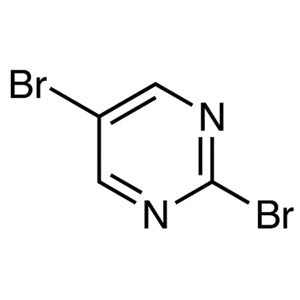
2,5-Dibromopyrimidine TCI D4225
Regular price From Rp 1.060.500,00Regular price -
Imidazo[1,2-b]pyridazine TCI I0742
Regular price From Rp 689.850,00Regular price -
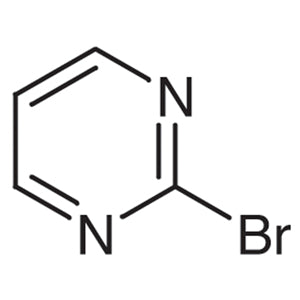
2-Bromopyrimidine TCI B2832
Regular price From Rp 1.618.050,00Regular price -
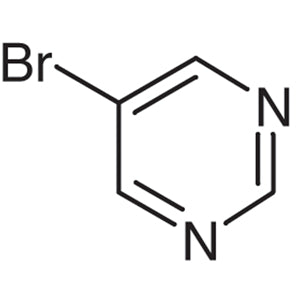
5-Bromopyrimidine TCI B2229
Regular price From Rp 1.458.450,00Regular price -
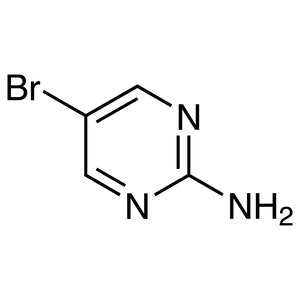
2-Amino-5-bromopyrimidine TCI A1920
Regular price From Rp 1.431.150,00Regular price -
Pyridazine-4-carboxylicAcid TCI P1907
Regular price Rp 3.180.450,00Regular price -
Pyridazine TCI P0616
Regular price From Rp 1.510.950,00Regular price -
Methyl5-Bromopyrimidine-2-carboxylate TCI M2910
Regular price From Rp 689.850,00Regular price
![766-55-2 Imidazo[1,2-b]pyridazine - AMI Scientific](http://amiscientific.com/cdn/shop/files/TCI2510I0742.jpg?v=1769180941&width=533)