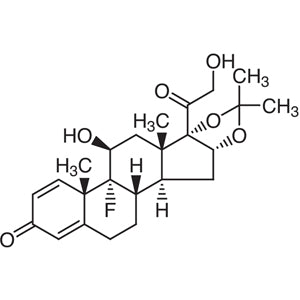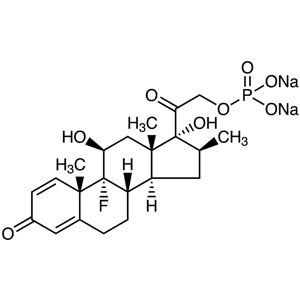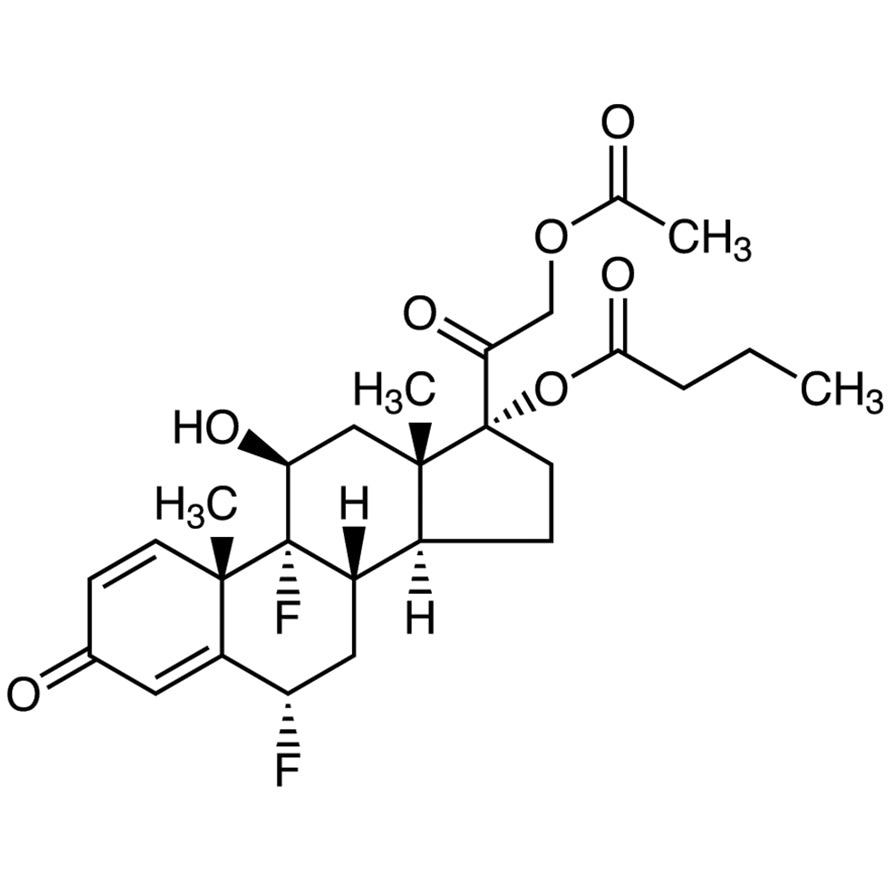
Difluprednate is a steroid compound widely used in scientific experiments related to pharmacology and biochemistry. As a derivative of corticosteroids, it exhibits strong anti-inflammatory and immunosuppressive properties, making it a valuable tool in laboratory research. This compound is commonly employed to study biological responses to steroid-based drugs, offering insights into the mechanisms of action and therapeutic potential. Its versatility allows it to be used in various experimental setups, contributing to advancements in both basic and applied research.
Difluprednate is favored for its chemical stability and good solubility in organic solvents, which simplifies its handling and application in different experimental conditions. These properties ensure consistent performance and reliable results, making it a preferred choice for researchers. The compound’s well-defined chemical structure also facilitates accurate analysis, enabling scientists to monitor concentration levels and biological effects with precision. This combination of stability, solubility, and analytical clarity enhances its utility in laboratory settings.
In Indonesian laboratories, Difluprednate is frequently used in pharmacological, immunological, and biochemical research. It is commonly found in university research labs and scientific institutions focused on drug development and biological mechanisms. Its role in studying steroid-based therapies and immune responses makes it an essential component in many experimental protocols across various scientific disciplines.
TCI brochures (PDF)
- Steroids 2026-07-28 · p. 5
- Pharmacological research utilizes Difluprednate to evaluate the anti-inflammatory and immunosuppressive effects of steroid-based drugs.
- Biochemical studies often incorporate this compound to investigate steroid receptor interactions and cellular response mechanisms.
- Immunological experiments benefit from Difluprednate’s ability to modulate immune responses, aiding in the study of autoimmune diseases and inflammation.
- Drug development projects use Difluprednate as a model compound to test the efficacy and safety of new therapeutic agents.
- Analytical research employs Difluprednate for calibration and validation of analytical methods in biochemistry and pharmacology.
| Brand | TCI |
|---|---|
| CAS number | 23674-86-4 |
| Molecular formula | — |
| Purity | — |
| Category | Life Science > Biochemicals and Reagents > Steroids |
| Pack sizes | Available in various quantities as per supplier specifications |
| Physical form | Solid |
| Storage | Store in a cool, dry place away from light |
Difluprednate should be stored in a cool, dry environment, away from direct sunlight and moisture to maintain its chemical stability. It is recommended to use airtight containers to prevent contamination and degradation. Due to its potential reactivity, it should be handled with appropriate personal protective equipment, such as gloves and safety goggles. In laboratory settings, it should be stored separately from incompatible substances to ensure safety. Proper labeling and secure storage are essential to prevent accidental exposure and maintain the integrity of the compound. Regular monitoring of storage conditions ensures that the material remains suitable for use in scientific experiments.
—
Produk Terkait
-
TriamcinoloneDiacetate TCI T3676
Regular price From Rp 2.439.150,00Regular price -
TriamcinoloneAcetonide TCI T2308
Regular price From Rp 1.378.650,00Regular price -
Triamcinolone TCI T2303
Regular price Rp 3.763.200,00Regular price -
BeclometasoneDipropionate TCI B4464
Regular price From Rp 2.359.350,00Regular price -
BetamethasoneValerate TCI B4157
Regular price From Rp 1.353.450,00Regular price -
Betamethasone21-PhosphateDisodiumSalt TCI B4110
Regular price Rp 4.691.400,00Regular price -
Budesonide TCI B3909
Regular price From Rp 2.199.750,00Regular price -
Betamethasone17,21-Dipropionate TCI B3166
Regular price From Rp 1.378.650,00Regular price