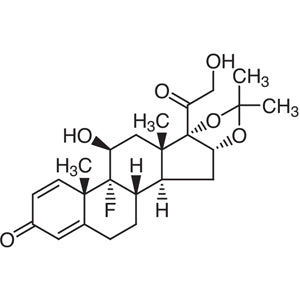
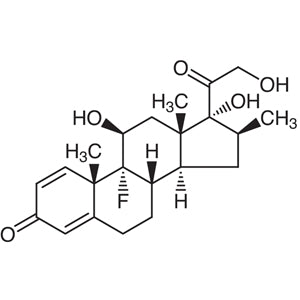
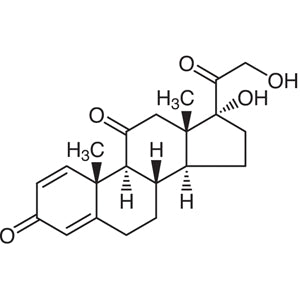
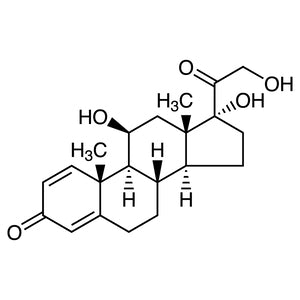
Budesonide is a pharmacological compound widely used in pharmaceutical research for various applications such as testing biological effects and drug development. As a derivative of glucocorticoids, it exhibits strong anti-inflammatory and immunosuppressive properties, making it a key reagent in studies related to respiratory diseases and allergic reactions. This compound plays a crucial role in laboratories focused on drug research and clinical testing, enabling scientists to investigate the mechanisms of drug action and their effects on the human body. Its presence in experimental settings supports the advancement of therapeutic solutions for a range of medical conditions.
Budesonide is valued for its chemical stability and compatibility with organic solvents, which facilitates processing and application in diverse experimental setups. Its non-toxic nature and relatively safe handling profile make it an ideal choice for high-security research environments. These properties ensure that it remains a reliable and consistent material for use in both basic and applied research. The compound’s solubility in specific organic solvents further enhances its versatility, allowing for precise control in experimental formulations and assays.
In Indonesian laboratories, budesonide is commonly used in pharmaceutical research, particularly in the development of drugs for respiratory conditions and pharmacological effect testing. Its role in advancing therapeutic options and understanding drug mechanisms is vital for both academic and industrial research sectors in the country.
TCI brochures (PDF)
- Steroids 2026-07-28 · p. 5
- Immune System, Inflammation, Allergy Research Reagents 2025-05-26 · p. 2
- Immunology Research Reagents 2026-06-03 · p. 6
- Pharmaceutical Ingredients for Research and Experimental Use 2026-03-09 · p. 31
- Reagents for Biological Research 2025-03-11 · p. 46
- Pharmaceutical research for developing treatments related to respiratory diseases due to its anti-inflammatory properties.
- Drug development projects requiring immunosuppressive agents for testing in preclinical trials.
- Allergy research applications to study the biological effects of glucocorticoid derivatives.
- Clinical testing environments where controlled drug effects on human physiology are required.
- Biochemical experiments involving the study of corticosteroid mechanisms and their interactions in cellular processes.
| Brand | TCI |
|---|---|
| CAS number | 51333-22-3 |
| Molecular formula | — |
| Purity | — |
| Category | Life Science > Biochemicals and Reagents > Pharmaceutical Research Reagents |
| Pack sizes | As per standard commercial availability |
| Physical form | Powder |
| Storage | Store in a cool, dry place away from direct light |
Budesonide should be stored in a cool, dry place, away from direct light and moisture to maintain its chemical stability. It is recommended to use airtight containers to prevent exposure to air and contaminants. Due to its non-toxic nature, it is generally safe to handle with standard laboratory precautions, but gloves and proper ventilation should be used when working with large quantities. The compound is compatible with most organic solvents, so appropriate safety measures should be taken when dissolving or mixing. Regular monitoring of storage conditions ensures the material remains effective for research purposes.
—
Product Categories
- Biochemicals and ReagentsPharmaceutical Research Reagents (for Experimental Use)Anti-inflammatory Ingredients (for Research and Experimental Use)
- Biochemicals and Reagents
- Biochemicals and ReagentsSteroidsPregnanes (Corticoids) [Steroids]
- Cell BiologyCancer ResearchChemopreventive Agents [Cancer Research]
- Cell BiologyCell Signaling and NeuroscienceCytokines, Growth Factors and Hormones
- Cell BiologyCell Signaling and NeuroscienceNeuroscience
- Cell BiologyImmune System, Inflammation, Allergy ResearchAdrenocortical Hormones
- Pharmaceutical Development and Drug Discovery ResearchPharmaceutical Research Reagents (for Experimental Use)Anti-inflammatory Ingredients (for Research and Experimental Use)
Produk Terkait
-
TriamcinoloneAcetonide TCI T2308
Regular price From Rp 1.431.150,00Regular priceRp 1.016.400,00Sale price From Rp 1.431.150,00 -
Triamcinolone TCI T2303
Regular price Rp 3.815.700,00Regular priceRp 2.683.800,00Sale price Rp 3.815.700,00 -
Dexamethasone TCI D1961
Regular price Rp 1.988.700,00Regular priceRp 1.405.950,00Sale price Rp 1.988.700,00 -
Betamethasone TCI B1837
Regular price From Rp 1.405.950,00Regular priceRp 998.550,00Sale price From Rp 1.405.950,00 -
Prednisone TCI P1276
Regular price From Rp 1.643.250,00Regular priceRp 1.164.450,00Sale price From Rp 1.643.250,00 -
Prednisolone TCI P0637
Regular price From Rp 1.431.150,00Regular priceRp 1.016.400,00Sale price From Rp 1.431.150,00 -
MometasoneFuroate TCI M2354
Regular price From Rp 2.013.900,00Regular priceRp 1.423.800,00Sale price From Rp 2.013.900,00 -
Hydrocortisone TCI H0533
Regular price From Rp 822.150,00Regular priceRp 590.100,00Sale price From Rp 822.150,00