![Diquinoxalino[2,3-a:2',3'-c]phenazine (CAS 214-83-5) - TCI D6085 - AMI Scientific](http://amiscientific.com/cdn/shop/files/TCI2510D6085.jpg?v=1769142164&width=1946)
![Diquinoxalino[2,3-a:2',3'-c]phenazine (CAS 214-83-5) - TCI D6085 - AMI Scientific](http://amiscientific.com/cdn/shop/files/TCI2510D6085.jpg?v=1769142164&width=1445)
Diquinoxalino[2,3-a:2',3'-c]phenazine is an organic compound widely used in electronic materials research, particularly in the development of organic field-effect transistor (OFET) materials. This compound plays a crucial role in laboratory settings where researchers are working on advanced electronic devices and optoelectronic applications. Its unique molecular structure enables it to exhibit favorable electronic properties, making it a key component in the fabrication of high-performance organic semiconductors. As a foundational material, it supports the creation of active layers in OFET devices, contributing to the overall efficiency and functionality of these systems.
The compound is valued for its ability to form stable molecular structures with tunable conductivity. Its complex architecture allows for precise control over electronic behavior, which is essential for applications requiring high performance and adaptability. Researchers appreciate its versatility in creating materials that can respond to external stimuli such as light or electric fields. These properties make it a preferred choice for developing next-generation electronic materials with enhanced functionality and reliability.
In Indonesian laboratories, Diquinoxalino[2,3-a:2',3'-c]phenazine is commonly used in material science and electronic research. It is a key component in studies focused on organic semiconductors and optoelectronic devices. Many research institutions and universities in Indonesia rely on this compound for advancing their work in electronic materials. Its application is widespread in both academic and industrial research environments, supporting innovation in the field of electronic devices.
TCI brochures (PDF)
- Organic Transistor (OFET) Materials 2026-05-07 · p. 17
- Organic Field-Effect Transistor (OFET) Development: This compound is ideal for creating active layers in OFETs due to its stable molecular structure and tunable conductivity, enabling efficient charge transport and device performance.
- Optoelectronic Material Research: Its ability to respond to light and electric fields makes it suitable for studying materials used in sensors and display technologies.
- Electronic Device Fabrication: It serves as a foundational material for building high-performance organic semiconductors used in flexible electronics and wearable devices.
- Material Characterization Studies: Its well-defined properties allow researchers to analyze electronic behavior and optimize material performance under various conditions.
- Advanced Semiconductor Development: The compound supports the creation of novel semiconductor materials with enhanced electronic and optical properties for next-generation devices.
| Brand | TCI |
|---|---|
| CAS number | 214-83-5 |
| Molecular formula | — |
| Purity | — |
| Category | Materials Science > Electronic Materials > Organic Transistor (OFET) Materials |
| Pack sizes | Available in various quantities as per standard laboratory supply |
| Physical form | Solid |
| Storage | Store in a cool, dry place away from light and moisture |
This compound should be stored in a cool, dry environment, away from direct sunlight and sources of moisture. It is recommended to use airtight containers to prevent exposure to air and humidity, which can affect its stability. Proper labeling of storage containers is essential for safety and traceability. Laboratory personnel should handle the compound with care, using appropriate personal protective equipment such as gloves and safety goggles. It is important to ensure that the compound is kept in a secure location, away from incompatible materials. Regular monitoring of storage conditions helps maintain the integrity and effectiveness of the compound for research applications.
—
Produk Terkait
-
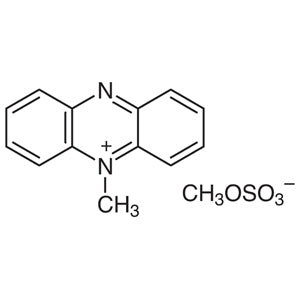
PhenazineMethylSulfate[forBiochemicalResearch] TCI P1872
Regular price Rp 903.000,00Regular price -
PhenazineMethylSulfate TCI P0083
Regular price From Rp 795.900,00Regular price -
Phenazine TCI P0082
Regular price Rp 530.250,00Regular price -
Dibenzo[a,c]phenazine TCI D6117
Regular price From Rp 2.889.600,00Regular price -
Phenazine-2,3-diamine TCI D4492
Regular price From Rp 2.359.350,00Regular price -
Dipyrido[3,2-a:2',3'-c]phenazine TCI D4379
Regular price From Rp 1.881.600,00Regular price -
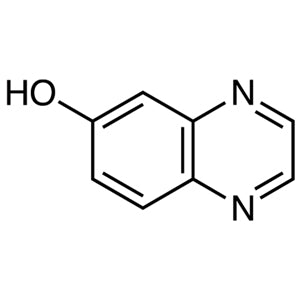
6-Quinoxalinol TCI Q0101
Regular price From Rp 2.704.800,00Regular price -
5-Quinoxalinol TCI Q0095
Regular price From Rp 717.150,00Regular price
![299-11-6 Phenazine Methyl Sulfate [for Biochemical Research] - AMI Scientific](http://amiscientific.com/cdn/shop/files/TCI2510P1872.jpg?v=1769057457&width=533)

![Dibenzo[a,c]phenazine (CAS 215-64-5) - TCI D6117 - AMI Scientific](http://amiscientific.com/cdn/shop/files/TCI2510D6117.jpg?v=1768818556&width=533)

![Dipyrido[3,2-a:2',3'-c]phenazine (CAS 19535-47-8) - TCI D4379 - AMI Scientific](http://amiscientific.com/cdn/shop/files/TCI2510D4379.jpg?v=1767107483&width=533)