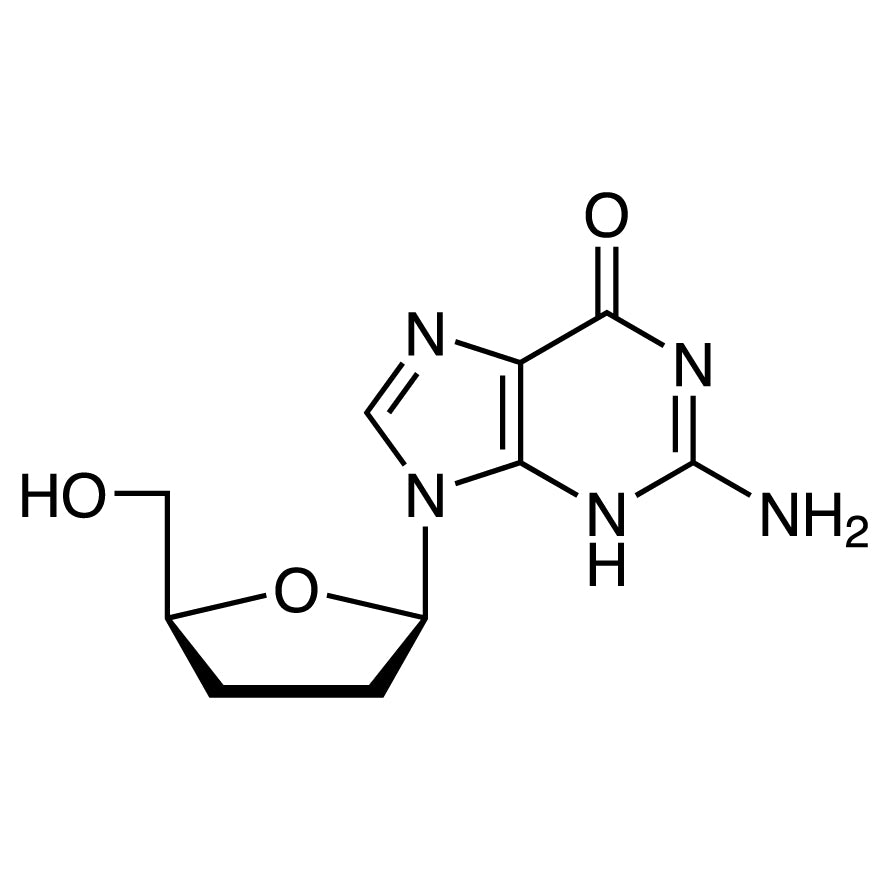
2',3'-Dideoxyguanosine is a chemical compound classified under nucleosides, widely used in biochemical and biomedical research. It is a modified form of guanosine, with oxygen atoms at positions 2 and 3 replaced, resulting in a unique molecular structure. This structural change significantly alters its chemical properties, making it a valuable tool in laboratory settings. Its role extends beyond being a simple reagent; it serves as a building block for the synthesis of other compounds and as a substrate in enzymatic reactions.
The compound is known for its high stability against various chemical reactions and enzymatic degradation. This stability ensures that it remains effective throughout experimental procedures, making it a preferred choice for researchers. Additionally, its ability to interact with other nucleotides allows for the study of molecular interactions, which is crucial in understanding biological processes. These properties make it an essential component in many advanced research applications.
In Indonesian laboratories, 2',3'-Dideoxyguanosine is commonly used in biomedical, pharmacological, and genetic research. Local researchers rely on this compound for studies involving drug mechanisms, gene therapy development, and molecular analysis for disease diagnosis. Its availability and reliability make it a go-to material for a wide range of scientific investigations.
- Biomedical Research: This compound is ideal for studying cellular processes and disease mechanisms due to its stability and reactivity.
- Pharmacological Studies: It is used to investigate drug interactions and the effects of compounds on biological systems.
- Genetic Research: Its role in nucleotide interactions makes it useful for gene expression studies and molecular biology experiments.
- Enzymatic Reaction Substrates: Its structure allows it to be a suitable substrate for various enzymatic reactions in biochemical assays.
- Molecular Interaction Studies: The compound's ability to bind with other nucleotides aids in analyzing molecular interactions in biological systems.
| Brand | TCI |
|---|---|
| CAS number | 85326-06-3 |
| Molecular formula | — |
| Purity | — |
| Category | Life Science > Biochemicals and Reagents > Nucleosides, Nucleotides, Oligonucleotides |
| Pack sizes | Available in standard laboratory quantities |
| Physical form | Solid powder |
| Storage | Store in a cool, dry place away from light |
This compound should be stored in a cool, dry environment, away from direct light and moisture. It is recommended to use airtight containers to prevent exposure to humidity and contaminants. Due to its chemical stability, it does not require refrigeration but should be kept in a secure location to avoid accidental spills or contamination. Laboratory personnel should handle it with care, using appropriate personal protective equipment when necessary. Proper labeling and storage practices ensure the compound remains effective and safe for use in research applications.
—
Produk Terkait
-
2'-Deoxyguanosine TCI D0052
Regular price From Rp 955.500,00Regular price -
N2-Isobutyryl-2'-deoxyguanosine TCI I0700
Regular price From Rp 1.060.500,00Regular price -
N2-Isobutyryl-5'-O-(4,4'-dimethoxytrityl)-2'-deoxyguanosine TCI I0697
Regular price From Rp 3.155.250,00Regular price -
8-Hydroxyguanosine TCI O0661
Regular price Rp 10.838.100,00Regular price -
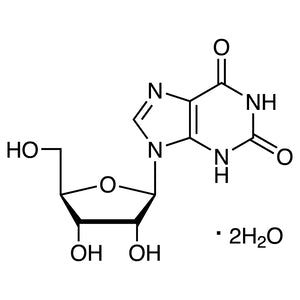
XanthosineDihydrate TCI X0008
Regular price Rp 1.115.100,00Regular price -
ValacyclovirHydrochloride TCI V0111
Regular price From Rp 2.094.750,00Regular price -
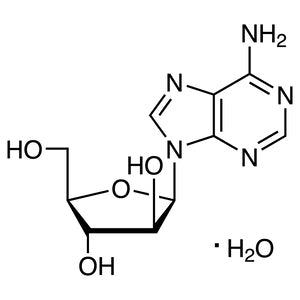
VidarabineMonohydrate TCI V0098
Regular price From Rp 3.658.200,00Regular price -
2',3',5'-Tri-O-acetyl-6-chloro-2-iodopurineRiboside TCI T2691
Regular price From Rp 6.520.500,00Regular price