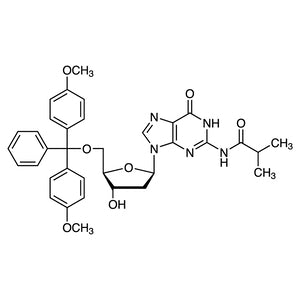
N2-Isobutyryl-5'-O-(4,4'-dimethoxytrityl)-2'-deoxyguanosine is a complex chemical compound widely used in chemical biology, particularly in nucleic acid chemistry research. This compound is a derivative of guanosine, modified with an isobutyryl group at the N2 position and a dimethoxytrityl group at the 5’ hydroxyl. It plays a crucial role in laboratory settings where precise molecular modifications are required. Its unique structure makes it an essential reagent for various biochemical processes, supporting both fundamental and applied research in molecular biology.
The compound's high stability and specific reactivity make it a preferred choice for advanced chemical synthesis. The dimethoxytrityl group significantly enhances its resistance to hydrolysis, ensuring it remains intact under rigorous experimental conditions. This stability is vital for maintaining the integrity of nucleic acid structures during synthesis and modification. Additionally, its reactivity allows for further chemical modifications, making it adaptable to a wide range of experimental needs. These properties contribute to its effectiveness in both academic and industrial research environments.
In Indonesian laboratories, this compound is commonly used in molecular biology and chemical biology research. It is particularly relevant in the development of molecular probes, nucleic acid synthesis, and the study of DNA and RNA mechanisms. Its application is widespread in academic institutions and research centers where nucleic acid chemistry is a focus. The compound’s reliability and performance make it a valuable asset in the pursuit of scientific discovery and innovation.
- Molecular Probe Development: This compound is ideal for creating molecular probes due to its stability and reactivity, enabling precise detection and analysis of nucleic acids in complex biological samples.
- Oligonucleotide Synthesis: Its structure allows for efficient synthesis of oligonucleotides, which are essential in genetic research and biotechnology applications.
- Nucleotide Modification Studies: The compound supports the study of nucleotide modifications, aiding in the understanding of DNA and RNA structure and function.
- Drug Development Research: Its use in nucleic acid chemistry contributes to the development of therapeutic agents targeting genetic disorders and diseases.
- Transcription and Replication Mechanism Studies: It is used to investigate the mechanisms of nucleic acid replication and transcription, providing insights into genetic processes.
| Brand | TCI |
|---|---|
| CAS number | 68892-41-1 |
| Molecular formula | — |
| Purity | — |
| Category | Chemistry > Chemical Biology > Nucleic Acid Chemistry |
| Pack sizes | — |
| Physical form | — |
| Storage | Store in a cool, dry place away from light |
This compound should be stored in a cool, dry environment, away from direct light and sources of heat. It is recommended to use airtight containers to prevent exposure to moisture and contaminants. Due to its chemical complexity, it is important to handle it with care, using appropriate personal protective equipment such as gloves and safety goggles. Proper ventilation should be maintained in the laboratory to minimize inhalation risks. The compound is best stored in a controlled environment to maintain its stability and effectiveness for long-term use. Always follow standard laboratory safety protocols when handling and storing chemical reagents.
—
Produk Terkait
-
TCI B5774 5,10-Bis(4,4,5,5-tetramethyl-1,3,2-dioxaborolan-2-yl)naphtho[1,2-c:5,6-c']bis([1,2,5]oxadiazole)
Regular price Rp 10.255.350,00Regular price -
Dihydroiodide TCI B6569
Regular price From Rp 1.936.200,00Regular price -
Trifluoromethanesulfonate TCI B7003
Regular price From Rp 1.936.200,00Regular price
![5,10-Bis(4,4,5,5-tetramethyl-1,3,2-dioxaborolan-2-yl)naphtho[1,2-c:5,6-c']bis([1,2,5]oxadiazole) - TCI B5774 - AMI Scientific](http://amiscientific.com/cdn/shop/files/TCI2510B5774.jpg?v=1769180228&width=533)