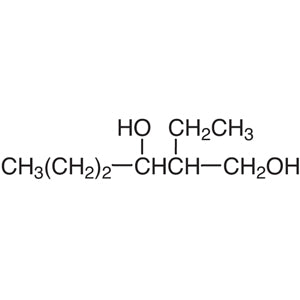
TCI E0119 2-Ethyl-1,3-hexanediol is a branched diol supplied as a mixture of diastereoisomers, consistent with the presence of two stereogenic centres on its hexanediol skeleton. The compound carries two hydroxyl groups at the 1 and 3 positions together with a single ethyl branch on the second carbon atom. In the laboratory, the combination of two hydroxyl groups and a branched framework makes it useful as a building block for polyesters and polyurethanes, as a solvent or coalescing aid in formulation work, and as a research material for repellents, a role for which it has historically been widely known.
The properties that lead researchers to select this diol begin with the ethyl branch, which interrupts the regularity of the chain, so that derivatives prepared from it tend to be more flexible, less prone to crystallisation, and more readily soluble than derivatives of linear diols. The 1,3 spacing between the two hydroxyl groups permits the formation of cyclic acetals and of chelate complexes with certain metal ions, a property that is frequently exploited in protecting-group chemistry. As a liquid of appreciable viscosity that evaporates slowly, the compound also acts as a co-solvent that helps polymer particles coalesce during film formation.
In Indonesian laboratories, this material is encountered where branched diols are needed for synthetic and formulation work rather than as a bulk commodity. It appears in academic and institutional research settings that prepare polyester and polyurethane intermediates, in formulation laboratories evaluating coalescing aids for coating systems, and in groups continuing research on repellent chemistry, where a well-defined branched diol from a recognised catalogue supplier supports comparable and repeatable results.
Related TCI products
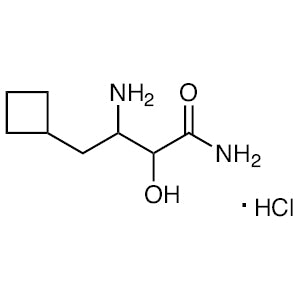
- TCI A3314 394735-23-0 3-Amino-4-cyclobutyl-2-hydroxybutanamide Hydrochloride (mixture of diastereoisomers)
- TCI E1417 6290-17-1 Ethyl 2-(2,4-Dimethyl-1,3-dioxolan-2-yl)acetate (mixture of diastereoisomers)
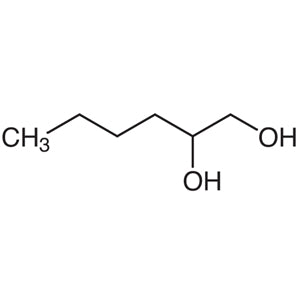
- TCI H0688 6920-22-5 1,2-Hexanediol
- TCI H0100 2935-44-6 2,5-Hexanediol
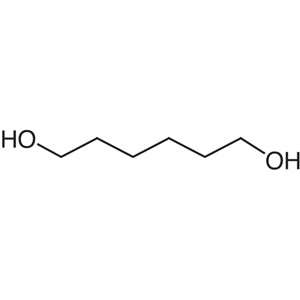
- TCI H0099 629-11-8 1,6-Hexanediol
- TCI D1167 110-03-2 2,5-Dimethyl-2,5-hexanediol
- Polyester and polyurethane building block: the two hydroxyl groups allow the diol to be incorporated as a chain unit, while the ethyl branch gives the resulting polymer segments greater flexibility and reduced crystallinity.
- Coalescing aid in coating formulations: its slow evaporation and appreciable viscosity let it remain in the wet film long enough to soften polymer particles and assist their fusion into a continuous layer.
- Cyclic acetal formation in protecting-group chemistry: the 1,3 arrangement of the hydroxyl groups makes it a convenient diol partner for masking carbonyl functions during multi-step synthetic sequences.
- Metal chelation studies: the same 1,3 hydroxyl spacing supports the formation of chelate complexes with certain metal ions, giving coordination chemists a simple branched ligand framework to work with.
- Repellent research: the compound is historically well known in this field, so it serves as a reference material for laboratories examining repellent activity, formulation behaviour, and comparative performance.
| Brand | TCI (Tokyo Chemical Industry) |
|---|---|
| CAS number | 94-96-2 |
| Molecular formula | — |
| Purity | — |
| Category | Chemistry > Building Blocks > Non-Heterocyclic Building Blocks |
| Pack sizes | available in the catalogue pack sizes offered by TCI for this item; please confirm the size required when ordering |
| Physical form | — |
| Storage | keep in a tightly closed original container in a cool, dry, well-ventilated place |
- Product form: liquid of appreciable viscosity with slow evaporation; supplied as a mixture of diastereoisomers
Store the container tightly closed in a cool, dry and well-ventilated area, away from heat sources, ignition sources and incompatible oxidising agents. The original supplier bottle is the preferred container; where transfer is necessary, use clean, dry glass or otherwise chemically compatible vessels and label them clearly with the product name and CAS number. Handle in a fume hood or a well-ventilated workspace and wear safety glasses, chemically resistant gloves and a laboratory coat. Because the material is a slow-evaporating liquid, wipe spills promptly to avoid persistent residues on bench surfaces, and keep the closure sealed between uses to prevent moisture pick-up. Always consult the manufacturer's safety data sheet before use and follow your institution's chemical waste procedures for disposal.
—
Produk Terkait
-
3-Amino-4-cyclobutyl-2-hydroxybutanamideHydrochloride(mixtureofdiastereoisomers) TCI A3314
Regular price From Rp 955.500,00Regular price -
Ethyl2-(2,4-Dimethyl-1,3-dioxolan-2-yl)acetate(mixtureofdiastereoisomers) TCI E1417
Regular price From Rp 610.050,00Regular price -
1,2-Hexanediol TCI H0688
Regular price From Rp 955.500,00Regular price -
2,5-Hexanediol TCI H0100
Regular price From Rp 1.298.850,00Regular price -
1,6-Hexanediol TCI H0099
Regular price From Rp 477.750,00Regular price -
2,5-Dimethyl-2,5-hexanediol TCI D1167
Regular price From Rp 505.050,00Regular price -
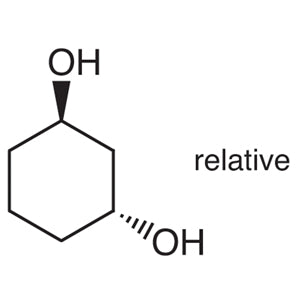
trans-1,3-Cyclohexanediol TCI C2323
Regular price Rp 10.229.100,00Regular price -
cis-1,3-Cyclohexanediol TCI C2322
Regular price From Rp 6.413.400,00Regular price