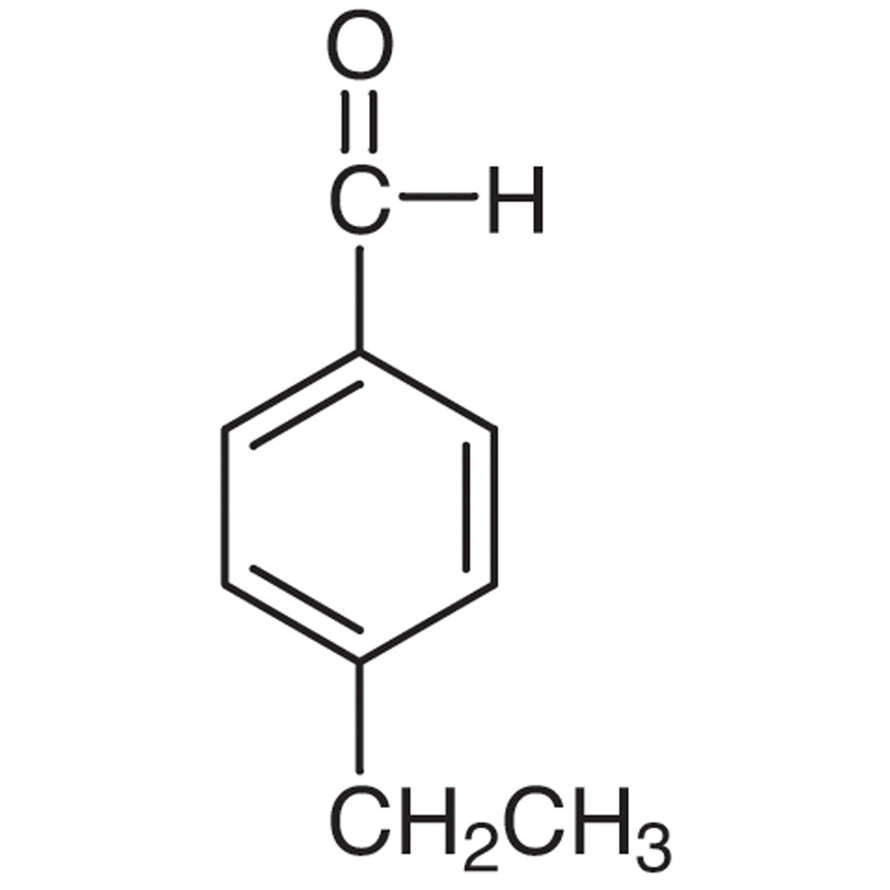
4-Ethylbenzaldehyde is a chemical compound widely used as a foundational material in various laboratory reactions. It serves as a key building block in organic chemistry, enabling the synthesis of more complex molecules. This compound is particularly valued for its ability to participate in multiple chemical reactions, making it a versatile reagent in both academic and industrial research settings. Its role in the laboratory extends beyond mere reactivity, as it is essential for creating compounds with specific molecular structures, such as fragrances, pharmaceuticals, and industrial chemicals.
The chemical properties of 4-Ethylbenzaldehyde make it a preferred choice for laboratory use. It exhibits a stable molecular structure while maintaining reactivity, allowing it to engage in reactions such as reduction, oxidation, and substitution. Its well-defined physical properties, including a specific boiling point and melting point, ensure predictable behavior during experimental procedures. These characteristics contribute to the accuracy and reproducibility of chemical experiments, which are critical in scientific research.
In Indonesian laboratories, 4-Ethylbenzaldehyde is commonly used in organic chemistry research, chemical development, and the production of aromatic compounds. Its reliability and consistency in performance make it a trusted material for scientists and researchers working on a wide range of chemical applications. The compound’s availability and compatibility with various laboratory techniques further enhance its utility in both academic and industrial contexts.
- Organic synthesis reactions benefit from 4-Ethylbenzaldehyde due to its reactivity and ability to form complex molecular structures.
- Aroma compound development relies on this compound for creating fragrances and flavoring agents with specific molecular profiles.
- Pharmaceutical research utilizes 4-Ethylbenzaldehyde as a precursor for synthesizing active pharmaceutical ingredients.
- Industrial chemical production employs this compound for manufacturing specialty chemicals with tailored properties.
- Research in chemical modification processes uses 4-Ethylbenzaldehyde for its compatibility with various functional group transformations.
| Brand | TCI |
|---|---|
| CAS number | 4748-78-1 |
| Molecular formula | — |
| Purity | — |
| Category | Chemistry > Building Blocks > Non-Heterocyclic Building Blocks |
| Pack sizes | Available in various quantities as per standard laboratory supply |
| Physical form | Liquid |
| Storage | Store in a cool, dry place away from direct sunlight and incompatible materials |
4-Ethylbenzaldehyde should be stored in a cool, dry environment to maintain its chemical stability. It is recommended to keep the compound in a tightly sealed container to prevent exposure to air and moisture. Suitable storage containers include glass or high-density polyethylene bottles that are resistant to chemical degradation. Due to its reactivity, it should be kept away from strong oxidizing agents and incompatible substances. Laboratory personnel should handle the compound with appropriate personal protective equipment, such as gloves and safety goggles, to ensure safe usage. Regular monitoring of storage conditions is essential to preserve the integrity and effectiveness of the compound in experimental applications.
—
Produk Terkait
-
4-Butylbenzaldehyde TCI B1014
Regular price From Rp 3.551.100,00Regular price -
3-Dodecylbenzaldehyde TCI D5682
Regular price Rp 11.025.000,00Regular price -
2,4,5-Trimethylbenzaldehyde TCI T1411
Regular price Rp 1.961.400,00Regular price -
2,4,6-Trimethylbenzaldehyde TCI T1368
Regular price Rp 2.147.250,00Regular price -
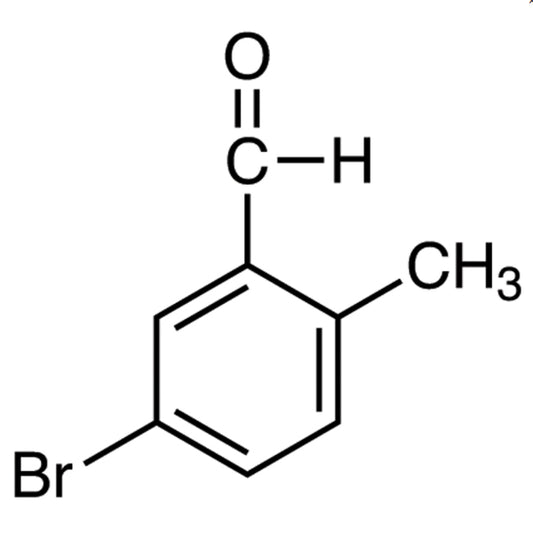
5-Bromo-2-methylbenzaldehyde TCI B5036
Regular price From Rp 2.677.500,00Regular price -
Pentamethylbenzaldehyde TCI P1351
Regular price Rp 1.008.000,00Regular price -
4-Hydroxy-3-methylbenzaldehyde TCI H1419
Regular price From Rp 2.016.000,00Regular price -
4-Hydroxy-3,5-dimethylbenzaldehyde TCI H1023
Regular price From Rp 637.350,00Regular price