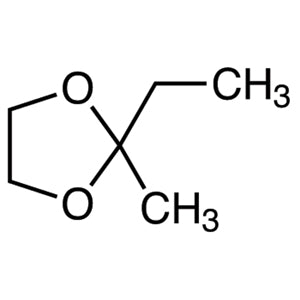
2-Ethyl-2-methyl-1,3-dioxolane is an organic compound widely used in chemical reactions as a building block or solvent. It plays a crucial role in laboratory settings by serving as a versatile reagent for the synthesis of complex molecules. Its structure, which includes a 1,3-dioxolan ring with two oxygen atoms and two carbon atoms, provides stability and reactivity that make it suitable for various synthetic pathways. This compound is particularly valuable in reactions requiring controlled reactivity and specific functional group transformations.
The compound’s polar nature allows it to dissolve well in organic solvents such as ethyl acetate and ethanol, making it ideal for homogeneous reactions. Its solubility characteristics facilitate efficient mixing and reaction conditions, enhancing the reproducibility of experimental results. Additionally, its relatively stable nature under normal conditions ensures that it can be stored and used over extended periods without significant degradation. This stability contributes to its reliability in both research and industrial applications.
In Indonesian laboratories, 2-Ethyl-2-methyl-1,3-dioxolane is commonly used in both pure and applied chemical research. It is a preferred choice for developing pharmaceutical compounds and industrial chemicals due to its reactivity and solubility. Its non-toxic and easy-to-handle properties make it a safe and practical option for laboratory use, supporting a wide range of chemical investigations and syntheses.
Related TCI products
- TCI T2575 1193-11-9 2,2,4-Trimethyl-1,3-dioxolane
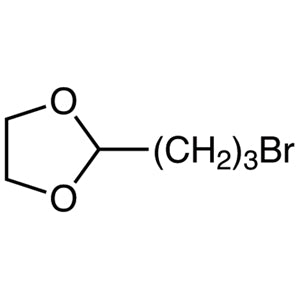
- TCI B3463 62563-07-9 2-(3-Bromopropyl)-1,3-dioxolane
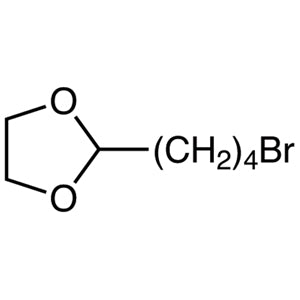
- TCI B2128 87227-41-6 2-(4-Bromobutyl)-1,3-dioxolane
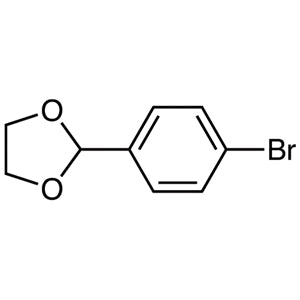
- TCI B2100 10602-01-4 2-(4-Bromophenyl)-1,3-dioxolane
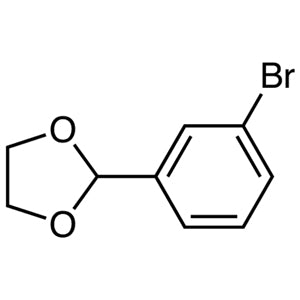
- TCI B2098 17789-14-9 2-(3-Bromophenyl)-1,3-dioxolane
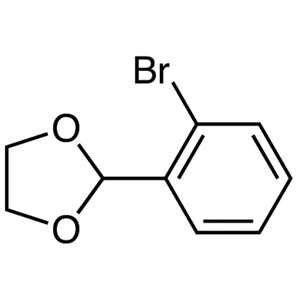
- TCI B2084 34824-58-3 2-(2-Bromophenyl)-1,3-dioxolane
- Synthetic chemistry applications benefit from its reactivity and solubility, enabling efficient molecule construction.
- Pharmaceutical research utilizes it for the synthesis of complex drug molecules due to its structural versatility.
- Industrial chemical production relies on its stability and solubility for consistent and scalable reactions.
- Organic solvent applications take advantage of its polarity and compatibility with various organic solvents.
- Analytical chemistry uses it as a solvent for dissolving and analyzing organic compounds in solution.
| Brand | TCI |
|---|---|
| CAS number | 126-39-6 |
| Molecular formula | — |
| Purity | — |
| Category | Chemistry > Building Blocks > Non-Heterocyclic Building Blocks |
| Pack sizes | Available in various sizes as per standard chemical supply practices |
| Physical form | Liquid |
| Storage | Store in a cool, dry place away from direct sunlight |
This compound should be stored in a cool, dry place, away from direct sunlight and sources of heat. It is recommended to use airtight containers made of glass or polyethylene to prevent contamination and evaporation. Due to its polar nature, it is important to handle it with care to avoid spills and ensure proper ventilation in the laboratory. While it is considered non-toxic, standard laboratory safety protocols should be followed when handling and using it. Proper labeling of containers is essential to ensure safe handling and prevent accidental exposure. Its stability under normal conditions makes it suitable for long-term storage, provided it is kept in appropriate conditions.
—
Produk Terkait
-
2,2,4-Trimethyl-1,3-dioxolane TCI T2575
Regular price Rp 1.803.900,00Regular price -
2-(3-Bromopropyl)-1,3-dioxolane TCI B3463
Regular price From Rp 1.856.400,00Regular price -
2-(4-Bromobutyl)-1,3-dioxolane TCI B2128
Regular price From Rp 4.373.250,00Regular price -
2-(4-Bromophenyl)-1,3-dioxolane TCI B2100
Regular price From Rp 5.407.500,00Regular price -
2-(3-Bromophenyl)-1,3-dioxolane TCI B2098
Regular price From Rp 1.035.300,00Regular price -
2-(2-Bromophenyl)-1,3-dioxolane TCI B2084
Regular price From Rp 1.087.800,00Regular price -
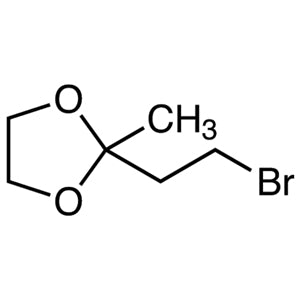
2-(2-Bromoethyl)-2-methyl-1,3-dioxolane TCI B1598
Regular price From Rp 5.407.500,00Regular price -
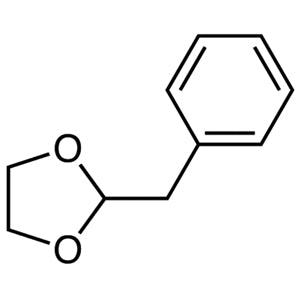
2-Benzyl-1,3-dioxolane TCI B1404
Regular price Rp 1.696.800,00Regular price