TCI E0680 1-Ethyl-3-methylimidazolium Dicyanamide is an ionic liquid composed of an imidazolium cation bearing ethyl and methyl substituents paired with a dicyanamide anion. Unlike conventional inorganic salts, which melt only at very high temperatures, this compound exists as a liquid at ambient temperature and is therefore classified as a room temperature ionic liquid. In the laboratory it serves a triple role as an alternative solvent, a reaction medium, and an electrolyte, standing in for conventional organic solvents that are volatile and flammable, particularly in green chemistry, electrochemistry, and separation research.
The characteristics that make this material a preferred choice are the combination of extremely low vapour pressure, a wide electrochemical stability window, and intrinsic ionic conductivity that requires no added supporting salt. The dicyanamide anion is recognised for delivering relatively low viscosity compared with ionic liquids based on fluorinated anions, so mass transport and ion movement proceed more freely inside electrochemical cells and small scale reactors. Its ability to dissolve a broad range of organic compounds, inorganic species, and even natural polymers gives it considerable flexibility as a working medium.
In Indonesian laboratories this ionic liquid is typically encountered in university and institutional research groups pursuing green chemistry objectives, where replacing volatile organic solvents reduces fume hood loading and solvent emissions. It is also used in electrochemistry laboratories building and characterising cells, and in separation science groups exploring extraction media. Because it functions as both solvent and electrolyte, it is often adopted where a single medium must support reaction, dissolution, and charge transport simultaneously.
TCI brochures (PDF)
- Ionic Liquids 2026-06-08 · p. 8
Related TCI products
- TCI B5447 448245-52-1 1-Butyl-3-methylimidazolium Dicyanamide
- TCI B5487 878027-73-7 1-Butyl-3-methylimidazolium Tricyanomethanide
- TCI B4091 344790-87-0 1-Butyl-3-methylimidazolium Thiocyanate
- TCI B3596 820965-08-0 1-Butyl-3-methylimidazolium Tribromide
- TCI B3542 741677-68-9 1-Butyl-3-methylimidazolium Trifluoro(trifluoromethyl)borate
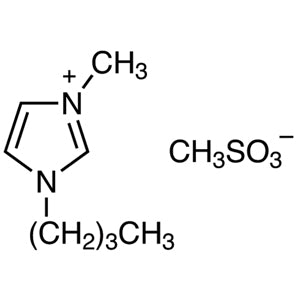
- TCI B3231 342789-81-5 1-Butyl-3-methylimidazolium Methanesulfonate
- Green chemistry solvent substitution — its extremely low vapour pressure allows it to replace volatile, flammable organic solvents in reaction systems, reducing evaporative loss and solvent emissions during extended experimental work.
- Electrochemical cell electrolyte — intrinsic ionic conductivity without supporting salt and a wide electrochemical stability window make it directly usable as an electrolyte for voltammetry and cell characterisation studies.
- Reaction medium for synthesis — the ability to dissolve diverse organic and inorganic compounds allows reactions to be run in a single non-volatile medium that remains liquid at room temperature throughout.
- Separation and extraction research — its solvating breadth across organic, inorganic, and natural polymer species supports extraction studies where conventional organic solvents give inadequate partitioning or unacceptable volatility.
- Mass transport limited studies — the dicyanamide anion gives relatively low viscosity versus fluorinated anion ionic liquids, so ion and mass transport proceed more freely in small scale reactors and cells.
| Brand | TCI |
|---|---|
| CAS number | 370865-89-7 |
| Molecular formula | — |
| Purity | — |
| Category | Chemistry > Specialty Synthesis > Ionic Liquids [Specialty Synthesis] |
| Pack sizes | please refer to the current TCI catalogue listing for this item |
| Physical form | liquid at room temperature (room temperature ionic liquid) |
| Storage | keep tightly closed in a cool, dry place away from moisture |
Store the container tightly closed in a cool, dry area, protected from moisture and away from direct sunlight and heat sources. Ionic liquids of this type are generally hygroscopic, so containers should be opened only briefly and resealed promptly; transfer under dry conditions where the work allows. Use clean, dry, chemically compatible glass or suitable sealed containers, and avoid introducing water or contaminants through wet syringes and pipettes. Handle in a well ventilated area or fume hood, wearing gloves, safety glasses, and a laboratory coat. Consult the manufacturer's safety data sheet before use and follow institutional waste disposal procedures.
—
Produk Terkait
-
1-Butyl-3-methylimidazoliumDicyanamide TCI B5447
Regular price From Rp 1.696.800,00Regular price -
1-Butyl-3-methylimidazoliumTricyanomethanide TCI B5487
Regular price From Rp 1.803.900,00Regular price -
1-Butyl-3-methylimidazoliumThiocyanate TCI B4091
Regular price From Rp 1.115.100,00Regular price -
1-Butyl-3-methylimidazoliumTribromide TCI B3596
Regular price Rp 3.870.300,00Regular price -
1-Butyl-3-methylimidazoliumTrifluoro(trifluoromethyl)borate TCI B3542
Regular price Rp 3.260.250,00Regular price -
1-Butyl-3-methylimidazoliumMethanesulfonate TCI B3231
Regular price From Rp 795.900,00Regular price -
1-Butyl-3-methylimidazoliumIodide TCI B2708
Regular price From Rp 1.538.250,00Regular price -
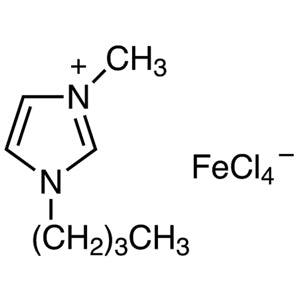
1-Butyl-3-methylimidazoliumTetrachloroferrate TCI B2672
Regular price From Rp 1.378.650,00Regular price