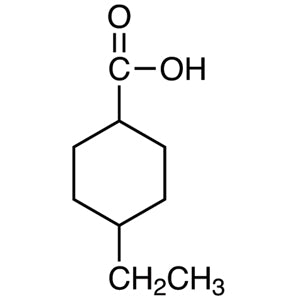
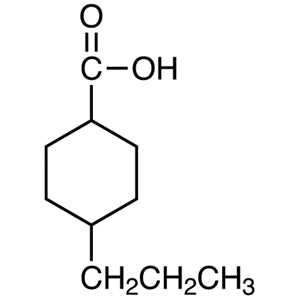
Trans-4-Ethylcyclohexanecarboxylic Acid is a chemical compound widely used as a foundational material in various laboratory reactions. It is a key building block in organic synthesis, particularly in the development of compounds requiring carboxylic acid functionality. This compound is essential for researchers working in pharmaceutical, materials science, and chemical research fields. Its molecular structure consists of a cyclohexane ring with an ethyl group at the fourth position and a carboxylic acid group at the opposite end. This unique structure allows it to participate in a variety of chemical transformations, making it a versatile reagent in synthetic chemistry.
The compound is chemically stable under normal conditions but remains reactive in specific environments, which makes it suitable for a range of chemical processes. Its ability to undergo esterification, hydrolysis, and substitution reactions makes it a preferred choice for laboratory applications. The presence of both the ethyl and carboxylic acid groups provides multiple functional sites for chemical modification, enhancing its utility in synthetic pathways. This flexibility allows researchers to tailor the compound into various derivatives, expanding its applications in both academic and industrial research.
In Indonesian laboratories, Trans-4-Ethylcyclohexanecarboxylic Acid plays a crucial role in scientific research, particularly in the development of new materials and pharmaceutical compounds. Its availability and chemical properties make it a valuable resource for researchers aiming to explore new synthetic routes and chemical transformations. The compound is commonly used in academic and industrial settings, supporting innovation in chemical sciences and related fields.
Related TCI products
- TCI E0966 91328-77-7 4-Ethylcyclohexanecarboxylic Acid (cis- and trans- mixture)
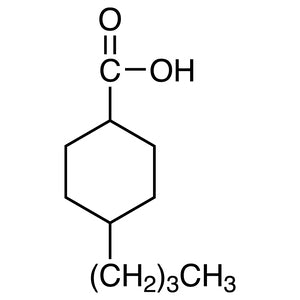
- TCI B2986 71101-89-8 4-Butylcyclohexanecarboxylic Acid (cis- and trans- mixture)
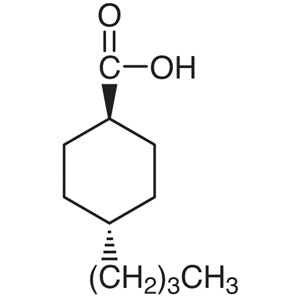
- TCI B1136 38289-28-0 trans-4-Butylcyclohexanecarboxylic Acid
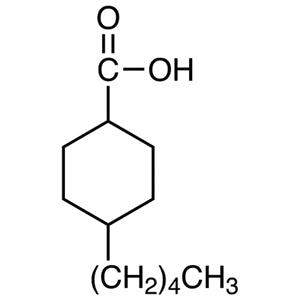
- TCI P2045 38792-89-1 4-Pentylcyclohexanecarboxylic Acid (cis- and trans- mixture)
- TCI P1656 70928-91-5 4-Propylcyclohexanecarboxylic Acid (cis- and trans- mixture)
- TCI P0944 38289-29-1 trans-4-Pentylcyclohexanecarboxylic Acid
- Organic synthesis is a primary application where this compound serves as a versatile building block due to its carboxylic acid functionality and cyclohexane framework.
- Pharmaceutical research benefits from its use in the development of drug molecules requiring carboxylic acid groups for biological activity and structural diversity.
- Material science applications leverage its reactivity in creating polymers and functional materials through esterification and substitution reactions.
- Analytical chemistry uses it as a standard for calibrating instruments and as a reference material in chromatographic and spectroscopic analyses.
- Chemical education incorporates it as a teaching tool to demonstrate organic reactions and molecular structure manipulation in undergraduate and graduate courses.
| Brand | TCI |
|---|---|
| CAS number | 6833-47-2 |
| Molecular formula | — |
| Purity | — |
| Category | Chemistry > Building Blocks > Non-Heterocyclic Building Blocks |
| Pack sizes | Available in various quantities as per standard laboratory supply options |
| Physical form | Solid, crystalline appearance |
| Storage | Store in a cool, dry place away from direct sunlight and moisture |
Trans-4-Ethylcyclohexanecarboxylic Acid should be stored in a cool, dry environment to maintain its chemical stability. It is recommended to keep the compound in a sealed container to prevent exposure to moisture and air, which could lead to degradation. Suitable storage containers include glass or high-density polyethylene (HDPE) bottles with tight-fitting lids. In laboratory settings, it is important to handle the compound with care, using appropriate personal protective equipment such as gloves and safety goggles. While it is not highly toxic, proper ventilation should be maintained when working with the compound to ensure a safe laboratory environment. Regular monitoring of storage conditions is advised to maintain the integrity and usability of the material.
—
Produk Terkait
-
4-EthylcyclohexanecarboxylicAcid(cis-andtrans-mixture) TCI E0966
Regular price Rp 2.359.350,00Regular priceRp 1.665.300,00Sale price Rp 2.359.350,00 -
4-ButylcyclohexanecarboxylicAcid(cis-andtrans-mixture) TCI B2986
Regular price From Rp 4.213.650,00Regular price -
trans-4-ButylcyclohexanecarboxylicAcid TCI B1136
Regular price From Rp 477.750,00Regular price -
4-PentylcyclohexanecarboxylicAcid(cis-andtrans-mixture) TCI P2045
Regular price Rp 5.672.100,00Regular priceRp 3.981.600,00Sale price Rp 5.672.100,00 -
4-PropylcyclohexanecarboxylicAcid(cis-andtrans-mixture) TCI P1656
Regular price Rp 2.518.950,00Regular priceRp 1.776.600,00Sale price Rp 2.518.950,00 -
trans-4-PentylcyclohexanecarboxylicAcid TCI P0944
Regular price Rp 1.246.350,00Regular priceRp 887.250,00Sale price Rp 1.246.350,00 -
trans-4-PropylcyclohexanecarboxylicAcid TCI P0943
Regular price Rp 582.750,00Regular priceRp 423.150,00Sale price Rp 582.750,00 -
trans-4-MethylcyclohexanecarboxylicAcid TCI M1783
Regular price Rp 742.350,00Regular priceRp 534.450,00Sale price Rp 742.350,00