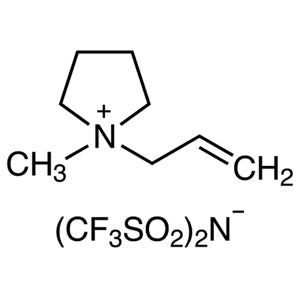
1-Ethyl-1-methylpyrrolidinium Bromide is an ionic liquid widely used in modern chemical applications. As a member of the ionic liquids family, it plays a crucial role in various laboratory processes due to its unique chemical properties. This compound is commonly utilized as a solvent in chemical reactions, particularly in organic synthesis and separation processes. Its non-volatile nature and thermal stability make it an essential component in many experimental setups. In Indonesian laboratories, it is frequently employed for research in chemistry and material science, supporting both academic and industrial studies.
The compound’s properties, such as high boiling point, non-volatility, and good thermal stability, make it a preferred choice over traditional organic solvents. Unlike conventional solvents, it does not evaporate easily, reducing the risk of exposure and environmental impact. Additionally, its ability to dissolve a wide range of substances enhances its versatility in chemical reactions. The non-flammable nature of this ionic liquid also contributes to its safety profile, making it suitable for use in controlled laboratory environments. These characteristics ensure its reliability and effectiveness in various chemical applications.
In Indonesian laboratories, 1-Ethyl-1-methylpyrrolidinium Bromide is commonly used in chemical research and material development. Its stability and solvating ability support a wide range of experimental needs, including electrochemical reactions and advanced synthesis techniques. The availability of this compound in various packaging formats ensures ease of use and convenience for researchers and students. Its growing popularity reflects its importance in modern scientific investigations across different fields of study.
TCI brochures (PDF)
- Ionic Liquids 2026-06-08 · p. 11
Related TCI products
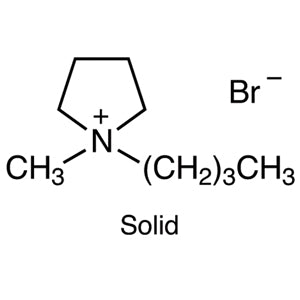
- TCI B3427 93457-69-3 1-Butyl-1-methylpyrrolidinium Bromide
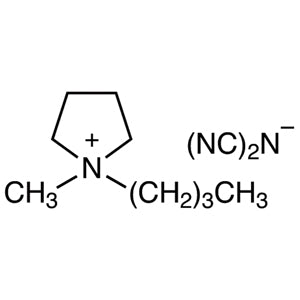
- TCI B5453 370865-80-8 1-Butyl-1-methylpyrrolidinium Dicyanamide
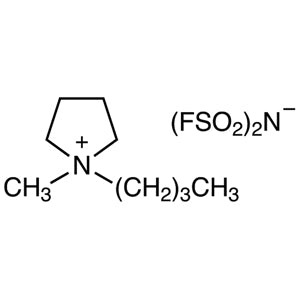
- TCI B5398 1057745-51-3 1-Butyl-1-methylpyrrolidinium Bis(fluorosulfonyl)imide
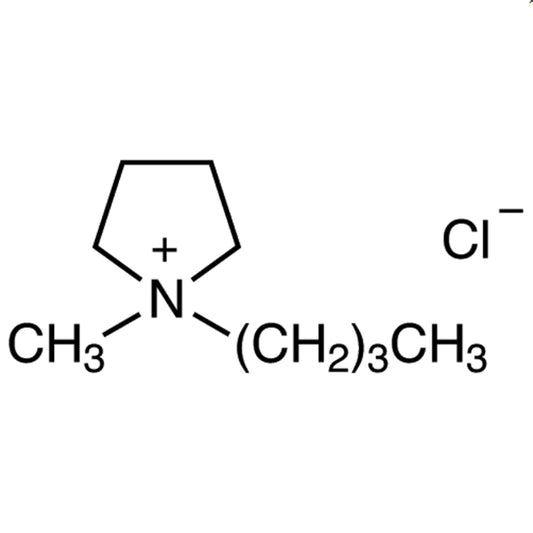
- TCI B3358 479500-35-1 1-Butyl-1-methylpyrrolidinium Chloride
- TCI B2851 223437-11-4 1-Butyl-1-methylpyrrolidinium Bis(trifluoromethanesulfonyl)imide
- TCI A3089 1059624-23-5 1-Allyl-1-methylpyrrolidinium Bis(trifluoromethanesulfonyl)imide
- Organic synthesis reactions benefit from this ionic liquid due to its non-volatile nature and ability to dissolve a wide range of compounds, making it ideal for complex chemical processes.
- Electrochemical studies often utilize this compound as a stable and non-flammable alternative to traditional solvents, enhancing safety and experimental reliability.
- Material science research leverages its unique properties for the development of new materials, particularly in polymer and nanomaterial synthesis.
- Separation processes in analytical chemistry benefit from its high boiling point and low volatility, allowing for efficient and controlled extraction techniques.
- Chemical reaction optimization in laboratory settings relies on its solvating power and thermal stability, supporting a broad spectrum of experimental conditions.
| Brand | TCI |
|---|---|
| CAS number | 69227-51-6 |
| Molecular formula | — |
| Purity | — |
| Category | Chemistry > Specialty Synthesis > Ionic Liquids |
| Pack sizes | Available in various sizes to suit different laboratory needs |
| Physical form | Liquid |
| Storage | Store in a cool, dry place away from direct sunlight |
This ionic liquid should be stored in a cool, dry place away from direct sunlight to maintain its chemical stability. It is recommended to use sealed containers made of materials compatible with its chemical properties to prevent contamination and evaporation. Due to its non-volatile nature, it does not require special containment, but proper labeling is essential for safety. In laboratory settings, it should be handled with care, and appropriate personal protective equipment should be worn when working with it. Its non-flammable characteristics make it safer to use compared to many traditional solvents, but standard laboratory safety protocols should still be followed.
—
Produk Terkait
-
1-Butyl-1-methylpyrrolidiniumBromide TCI B3427
Regular price From Rp 1.035.300,00Regular price -
1-Butyl-1-methylpyrrolidiniumDicyanamide TCI B5453
Regular price From Rp 2.254.350,00Regular price -
1-Butyl-1-methylpyrrolidiniumBis(fluorosulfonyl)imide TCI B5398
Regular price Rp 3.498.600,00Regular price -
1-Butyl-1-methylpyrrolidiniumChloride TCI B3358
Regular price From Rp 1.273.650,00Regular price -
1-Butyl-1-methylpyrrolidiniumBis(trifluoromethanesulfonyl)imide TCI B2851
Regular price From Rp 1.829.100,00Regular price -
1-Allyl-1-methylpyrrolidiniumBis(trifluoromethanesulfonyl)imide TCI A3089
Regular price Rp 2.757.300,00Regular price -
1-(2-Methoxyethyl)-1-methylpyrrolidiniumBis(fluorosulfonyl)imide TCI M2998
Regular price From Rp 2.199.750,00Regular price -
1-Hexyl-1-methylpyrrolidin-1-iumBis((trifluoromethyl)sulfonyl)amide TCI H1824
Regular price From Rp 2.016.000,00Regular price