

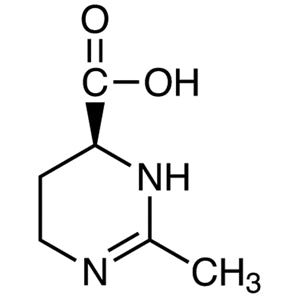
Ectoine is an organic compound known for its exolytic properties and widely used in various biochemical applications. It serves as a key reagent in laboratory settings, helping to extend the lifespan of cells, enhance enzyme stability, and protect cells from environmental stressors such as desiccation, heat, or radiation. As a bioactive compound, Ectoine plays a vital role in biotechnology, pharmaceutical, and microbiological research. Its ability to form protective layers around cells ensures the maintenance of water balance in extreme environments, making it essential for experiments requiring biological stability under challenging conditions.
Ectoine is favored for its hydrophobic nature and its capacity to act as a protective barrier for cellular structures. These properties allow it to maintain cellular integrity in harsh conditions, which is crucial for scientific studies involving stress tolerance or preservation of biological activity. Additionally, Ectoine is non-toxic and highly stable under specific conditions, making it a reliable and safe choice for a wide range of experimental applications. Its chemical stability and biological relevance contribute to its popularity among researchers seeking reliable and effective reagents for their work.
In Indonesian laboratories, Ectoine is commonly used in microbiological, biotechnological, and pharmaceutical research. It is particularly relevant for studies involving cell preservation or enzyme activity enhancement. Due to its limited availability in the local market, sourcing Ectoine from a trusted supplier is essential to ensure quality and consistency in research outcomes. Its role in supporting scientific innovation makes it a valuable component in the laboratory toolkit.
- Microbiological research utilizes Ectoine to protect microbial cells from environmental stress, enhancing survival rates during experimental conditions.
- Biotechnological applications benefit from Ectoine’s ability to stabilize enzymes and maintain cellular integrity, supporting advanced research in bioengineering.
- Pharmaceutical studies employ Ectoine to preserve cell viability and improve the stability of biological compounds, aiding in drug development processes.
- Environmental stress tolerance experiments rely on Ectoine to simulate and study cellular responses to extreme conditions such as desiccation or heat.
- Cell preservation protocols use Ectoine to maintain cellular structure and function, ensuring reliable results in long-term storage and experimental reuse.
| Brand | TCI |
|---|---|
| CAS number | 96702-03-3 |
| Molecular formula | — |
| Purity | — |
| Category | Life Science > Biochemicals and Reagents > Bioactive Compounds |
| Pack sizes | Available in various quantities as per supplier specifications |
| Physical form | Solid powder |
| Storage | Store in a cool, dry place away from direct sunlight |
Ectoine should be stored in a cool, dry environment, away from direct sunlight and moisture to maintain its chemical stability. It is recommended to use airtight containers to prevent contamination and degradation. Due to its hydrophobic nature, it is important to handle Ectoine with care to avoid exposure to incompatible substances. In laboratory settings, proper personal protective equipment should be worn when handling this compound to ensure safety. Regular monitoring of storage conditions is advised to maintain the integrity of the material and ensure its effectiveness in research applications.
—
Produk Terkait
-
4-(p-Tolylthio)thieno[2,3-c]pyridine-2-carboxamide TCI T3498
Regular price From Rp 4.213.650,00Regular price -
BTT3033 TCI B5415
Regular price Rp 10.124.100,00Regular price -
ABEPI1 TCI A3586
Regular price Rp 2.650.200,00Regular price -
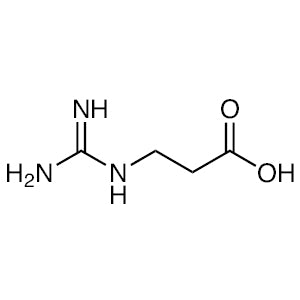
3-GuanidinopropanoicAcid TCI A3421
Regular price From Rp 1.353.450,00Regular price -
Ro41-3118 TCI R0286
Regular price Rp 6.042.750,00Regular price -
RCGD423 TCI R0283
Regular price Rp 6.520.500,00Regular price -
SQ22536 TCI Q0105
Regular price From Rp 5.857.950,00Regular price -
2-[(4-Methylpentan-2-yl)amino]-5-(phenylamino)cyclohexa-2,5-diene-1,4-dione TCI P3373
Regular price From Rp 2.889.600,00Regular price
![251992-66-2 4-(p-Tolylthio)thieno[2,3-c]pyridine-2-carboxamide - AMI Scientific](http://amiscientific.com/cdn/shop/files/TCI2510T3498.jpg?v=1767144174&width=533)
![251992-66-2 4-(p-Tolylthio)thieno[2,3-c]pyridine-2-carboxamide - AMI Scientific](http://amiscientific.com/cdn/shop/files/TCI2510T3498_ff83aa00-e77d-4427-92df-ae99a39bd777.jpg?v=1772425406&width=533)

![2754428-18-5 2-[(4-Methylpentan-2-yl)amino]-5-(phenylamino)cyclohexa-2,5-diene-1,4-dione - AMI Scientific](http://amiscientific.com/cdn/shop/files/TCI2510P3373.jpg?v=1767137436&width=533)