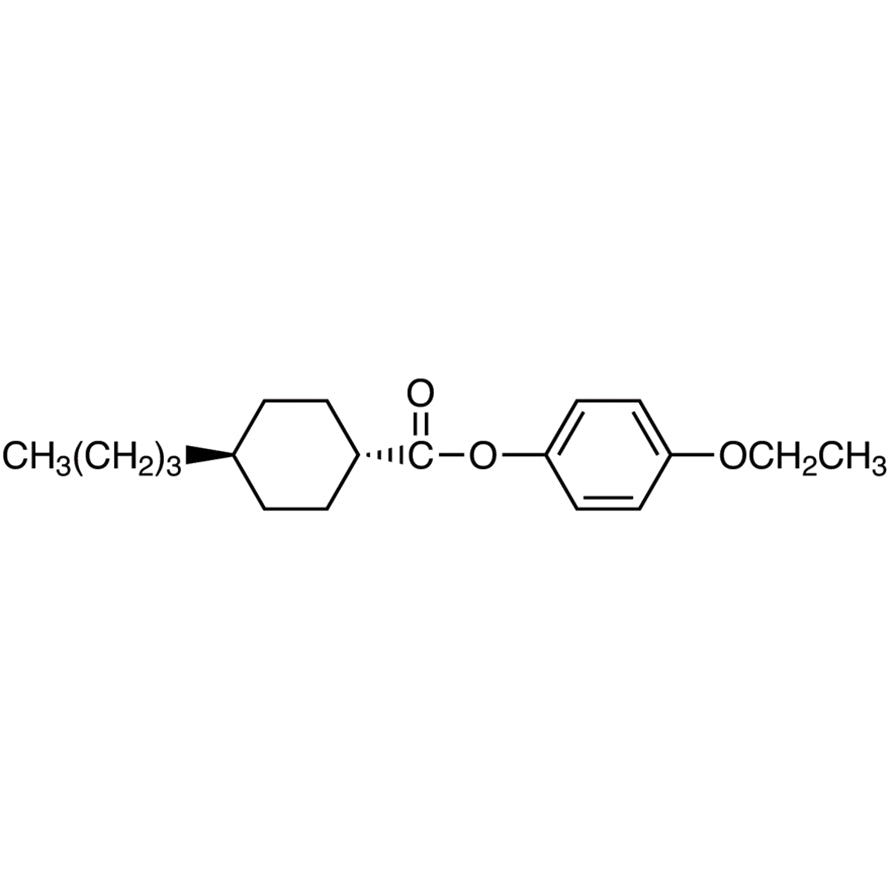
4-Ethoxyphenyl trans-4-Butylcyclohexanecarboxylate is a chemical compound widely utilized in materials science research, particularly in the development of liquid crystal (LC) materials. This compound plays a crucial role in laboratories where scientists investigate the behavior of molecular structures under various stimuli such as temperature or electric fields. Its unique properties make it an essential component in the synthesis of advanced materials used in optical and electronic devices. As a key ingredient in LC material formulations, it enables precise control over molecular alignment, which is fundamental to the performance of display technologies and sensors.
The compound is favored for its complex molecular structure, which facilitates strong interactions with different chemical media. Its excellent solubility in organic solvents simplifies synthesis and processing procedures, making it a preferred choice for researchers. Additionally, its polarity and compatibility with various solvents enhance its versatility in experimental setups. These characteristics allow for accurate manipulation of physical and chemical properties, supporting the development of high-performance materials in both academic and industrial research settings.
In Indonesian laboratories, this compound is commonly used in applied research related to information technology and energy. Institutions and universities in Indonesia rely on it for advancing material science projects, particularly those focused on liquid crystal technology. Its role in developing next-generation display and sensing technologies underscores its importance in the scientific community.
Related TCI products
- TCI E1395 67589-39-3 4-Ethoxyphenyl trans-4-Propylcyclohexanecarboxylate
- TCI B4924 61204-00-0 4-(trans-4-Butylcyclohexyl)benzonitrile
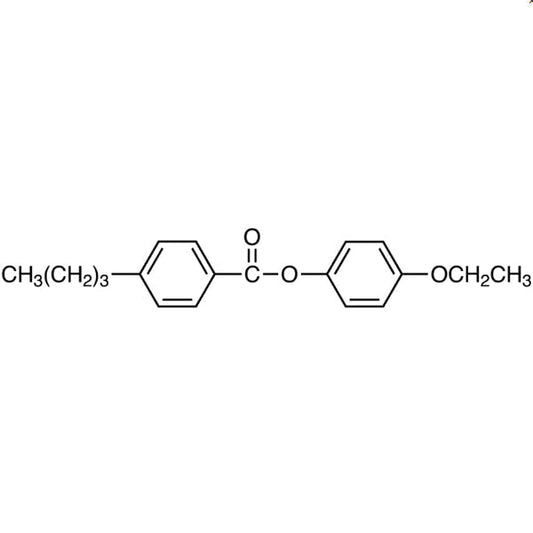
- TCI B0375 62716-65-8 4-Ethoxyphenyl 4-Butylbenzoate
- TCI T3756 132123-45-6 3,4,5-Trifluorophenyl trans,trans-4'-Propylbicyclohexyl-4-carboxylate
- TCI B5364 208709-55-1 1-Butoxy-2,3-difluoro-4-(trans-4-propylcyclohexyl)benzene
- TCI B4915 129738-42-7 trans,trans-4'-(3-Butenyl)-4-(p-tolyl)bicyclohexyl
- Liquid Crystal Material Synthesis: This compound is ideal for creating LC materials due to its ability to align molecules under external stimuli, making it suitable for advanced display technologies.
- Optical Device Development: Its unique molecular structure allows for precise control over light interaction, making it essential in the design of optical components and sensors.
- Electronic Component Fabrication: The compound's compatibility with various solvents and its molecular flexibility support the production of electronic materials with tailored properties.
- Research in Display Technologies: Its role in molecular alignment is critical for the development of high-performance liquid crystal displays used in modern electronics.
- Sensor Technology Innovation: The compound's responsiveness to temperature and electric fields makes it a key ingredient in the development of advanced sensing applications.
| Brand | TCI |
|---|---|
| CAS number | 67589-47-3 |
| Molecular formula | — |
| Purity | — |
| Category | Materials Science > Electronic Materials > Liquid Crystal (LC) Materials |
| Pack sizes | Available in various quantities as per standard laboratory supply |
| Physical form | Liquid |
| Storage | Store in a cool, dry place away from direct sunlight |
This compound should be stored in a cool, dry environment to maintain its chemical integrity. It is recommended to use airtight containers to prevent exposure to moisture and air, which could affect its stability. Due to its organic nature, it is advisable to handle it in a well-ventilated area to minimize inhalation risks. Laboratory personnel should wear appropriate personal protective equipment, such as gloves and safety goggles, when handling the compound. Proper disposal procedures should be followed to ensure environmental safety. Regular monitoring of storage conditions is essential to ensure the material remains suitable for use in research applications.
—
Produk Terkait
-
4-Ethoxyphenyltrans-4-Propylcyclohexanecarboxylate TCI E1395
Regular price From Rp 1.856.400,00Regular price -
4-(trans-4-Butylcyclohexyl)benzonitrile TCI B4924
Regular price From Rp 795.900,00Regular price -
4-Ethoxyphenyl4-Butylbenzoate TCI B0375
Regular price Rp 6.015.450,00Regular price -
3,4,5-Trifluorophenyltrans,trans-4'-Propylbicyclohexyl-4-carboxylate TCI T3756
Regular price From Rp 1.431.150,00Regular price -
1-Butoxy-2,3-difluoro-4-(trans-4-propylcyclohexyl)benzene TCI B5364
Regular price From Rp 1.696.800,00Regular price -
trans,trans-4'-(3-Butenyl)-4-(p-tolyl)bicyclohexyl TCI B4915
Regular price From Rp 1.378.650,00Regular price -
trans-4'-(4-Amylcyclohexyl)biphenyl-4-carbonitrile TCI A2568
Regular price From Rp 743.400,00Regular price -
4-(trans-4-Amylcyclohexyl)benzonitrile TCI A1828
Regular price From Rp 2.650.200,00Regular price