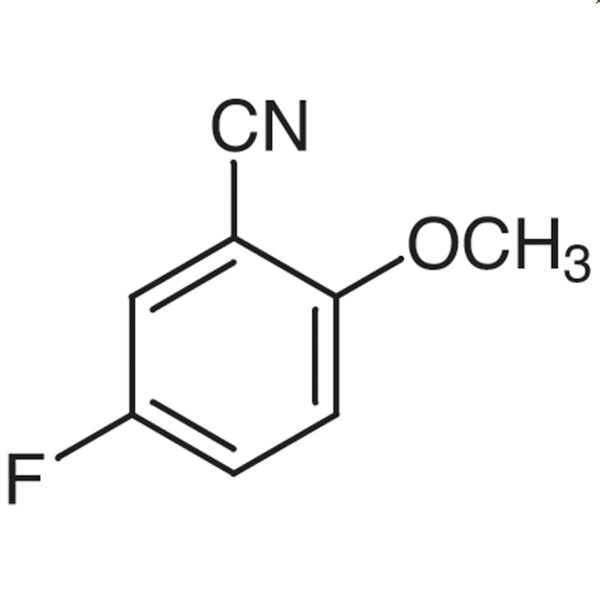
5-Fluoro-2-methoxybenzonitrile is a chemical compound widely used as a building block in the synthesis of complex molecules. It contains both a fluorine group and a nitrile group, making it a versatile intermediate in various chemical reactions. In the laboratory, this compound plays a crucial role in the development of new compounds, particularly in pharmaceutical and organic chemistry research. Its unique structure allows it to participate in multiple reaction types, contributing to the creation of more complex molecular frameworks.
The compound’s stable chemical structure and controlled reactivity make it a preferred choice for chemists working in both academic and industrial settings. The presence of the fluorine atom introduces unique properties that influence the polarity and reactivity of the molecule, enhancing its utility in synthetic pathways. Its ability to undergo substitution and electrophilic reactions makes it a valuable reagent for constructing diverse molecular architectures. These characteristics ensure its reliability and consistency in laboratory applications.
In Indonesian laboratories, 5-Fluoro-2-methoxybenzonitrile is commonly used by researchers and students to expand their understanding of organic synthesis and the development of new compounds. It serves as an essential tool in both educational and research environments, supporting the advancement of scientific knowledge and innovation. Its availability and chemical properties make it a key component in the chemical toolkit of Indonesian laboratories.
TCI brochures (PDF)
- Fluorination Reagents, Fluorinated Building Blocks 2026-03-18 · p. 25
Related TCI products
- TCI F0969 94088-46-7 2-Fluoro-6-methoxybenzonitrile
- TCI F0671 331-62-4 3-Fluoro-4-methoxybenzonitrile
- TCI F0642 127667-01-0 2-Fluoro-5-methoxybenzonitrile
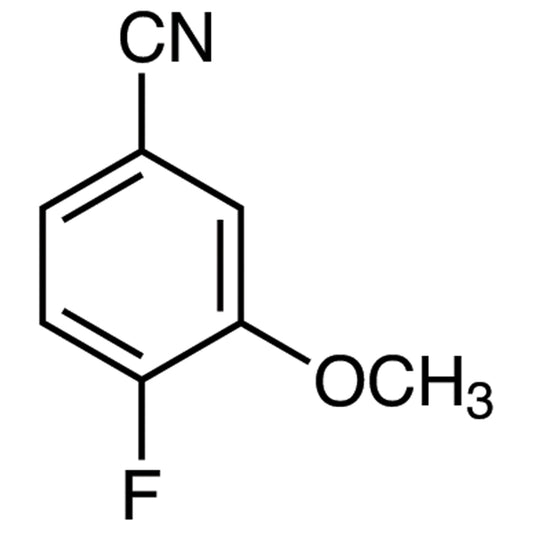
- TCI F0408 243128-37-2 4-Fluoro-3-methoxybenzonitrile
- TCI F0985 140675-43-0 2-Fluoro-6-hydroxybenzonitrile
- TCI F0641 119396-88-2 2-Fluoro-4,5-dimethoxybenzonitrile
- Fluorinated Compound Synthesis: This compound is ideal for creating fluorinated derivatives due to its stable fluorine group, enabling precise molecular modifications in pharmaceutical research.
- Electrophilic Reaction Building Blocks: Its nitrile group makes it suitable for electrophilic reactions, allowing the construction of complex molecular structures in organic synthesis.
- Organic Compound Development: The compound is frequently used in the development of organic compounds with specific functional groups, enhancing the diversity of synthesized materials.
- Pharmaceutical Research Applications: Its fluorine-containing structure is valuable in the synthesis of drug candidates, offering improved bioavailability and metabolic stability.
- Educational Use in Chemistry Labs: It is commonly used in teaching environments to demonstrate synthetic techniques and the role of fluorinated compounds in chemical reactions.
| Brand | TCI |
|---|---|
| CAS number | 189628-38-4 |
| Molecular formula | — |
| Purity | — |
| Category | Chemistry > Building Blocks > Fluorinated Building Blocks |
| Pack sizes | Available in various quantities as per supplier specifications |
| Physical form | Liquid |
| Storage | Store in a cool, dry place away from light and incompatible materials |
This compound should be stored in a cool, dry environment, away from direct sunlight and sources of heat. It is recommended to keep it in a tightly sealed container to prevent exposure to moisture and air. Due to its chemical nature, it should be handled in a well-ventilated area, preferably under a fume hood, to minimize inhalation risks. Avoid contact with incompatible substances such as strong acids or bases. Always use appropriate personal protective equipment, including gloves and safety goggles, when handling this material. Proper storage and handling ensure the compound remains chemically stable and safe for use in laboratory settings.
—
Produk Terkait
-
2-Fluoro-6-methoxybenzonitrile TCI F0969
Regular price From Rp 928.200,00Regular price -
3-Fluoro-4-methoxybenzonitrile TCI F0671
Regular price From Rp 505.050,00Regular price -
2-Fluoro-5-methoxybenzonitrile TCI F0642
Regular price From Rp 1.035.300,00Regular price -
4-Fluoro-3-methoxybenzonitrile TCI F0408
Regular price From Rp 769.650,00Regular price -
2-Fluoro-6-hydroxybenzonitrile TCI F0985
Regular price From Rp 1.405.950,00Regular price -
2-Fluoro-4,5-dimethoxybenzonitrile TCI F0641
Regular price Rp 6.281.100,00Regular price -
3-Fluoro-4-hydroxybenzonitrile TCI F0638
Regular price From Rp 2.704.800,00Regular price -
2-Fluoro-4-hydroxybenzonitrile TCI F0462
Regular price From Rp 1.246.350,00Regular price