


2-(2-Fluorophenyl)-5,5-dimethyl-1,3,2-dioxaborinane is a specialized organic compound widely used in laboratory settings for its role in synthetic chemistry. This organoboron reagent is essential in the development of complex molecular structures, particularly in the synthesis of aromatic and heterocyclic compounds. Its unique chemical properties make it a valuable tool for chemists working on advanced organic reactions. Due to its reactivity and versatility, it is frequently employed in various synthetic pathways to achieve high-purity products with precise structural control.
The compound is known for its stability under controlled conditions and its ability to participate in a range of chemical transformations. Its reactivity with metal halides and organic compounds makes it a preferred choice for reactions such as the Suzuki-Miyaura and Stille cross-coupling reactions. These reactions are fundamental in the synthesis of pharmaceuticals, agrochemicals, and other complex molecules. The compound’s ability to form new bonds and undergo substitution reactions further enhances its utility in synthetic chemistry.
In Indonesian laboratories, this reagent is commonly used by researchers and scientists to develop new compounds and improve existing synthetic methods. Its high reactivity and structural versatility make it a key component in the pursuit of innovative chemical solutions. It is particularly favored for its efficiency in creating complex molecular architectures with high precision. The compound’s role in modern synthetic chemistry is well recognized, making it an essential material for advanced research in the field.
TCI brochures (PDF)
- Suzuki-Miyaura Cross Coupling Reaction 2025-12-01 · p. 16
- Boron Compounds 2025-10-07 · p. 15
- Fluorination Reagents, Fluorinated Building Blocks 2026-03-18 · p. 11
Related TCI products
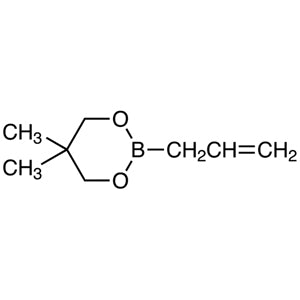
- TCI A2574 911482-75-2 2-Allyl-5,5-dimethyl-1,3,2-dioxaborinane (stabilized with Phenothiazine)
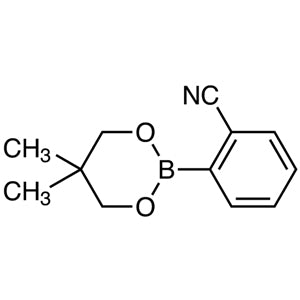
- TCI C2823 214360-47-1 2-(2-Cyanophenyl)-5,5-dimethyl-1,3,2-dioxaborinane
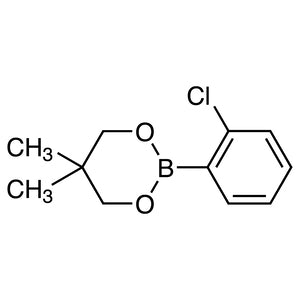
- TCI C2004 346656-42-6 2-(2-Chlorophenyl)-5,5-dimethyl-1,3,2-dioxaborinane
- TCI E0667 346656-34-6 Ethyl 2-(5,5-Dimethyl-1,3,2-dioxaborinan-2-yl)benzoate
- TCI F1201 214360-58-4 2-(4-Fluorophenyl)-4,4,5,5-tetramethyl-1,3,2-dioxaborolane
- TCI F1085 876062-39-4 2-(2-Fluorophenyl)-4,4,5,5-tetramethyl-1,3,2-dioxaborolane
- Synthetic Organic Chemistry: This reagent is ideal for constructing complex molecular frameworks due to its reactivity and compatibility with various coupling reactions.
- Pharmaceutical Development: It is widely used in the synthesis of drug molecules, where precise structural control is essential for biological activity.
- Heterocyclic Compound Synthesis: Its ability to participate in cross-coupling reactions makes it suitable for the formation of heterocyclic structures.
- Industrial Chemical Production: It is employed in the production of specialty chemicals, offering a reliable and efficient synthetic pathway.
- Academic Research: It is a preferred choice for researchers exploring new synthetic methodologies and molecular design strategies.
| Brand | TCI |
|---|---|
| CAS number | 346656-39-1 |
| Molecular formula | — |
| Purity | — |
| Category | Chemistry > Organometallic Reagents > Organoboron [Organometallic Reagents] |
| Pack sizes | Available in various quantities as per standard laboratory supply |
| Physical form | Solid or liquid, depending on the specific formulation |
| Storage | Store in a cool, dry place away from moisture and direct sunlight |
This compound should be stored in a cool, dry environment to maintain its chemical stability. It is recommended to use airtight containers to prevent exposure to moisture and air, which may affect its reactivity. Proper labeling of storage containers is essential to ensure safe handling and prevent accidental use. Due to its reactivity, it should be kept away from incompatible substances such as strong oxidizing agents. Laboratory personnel should wear appropriate personal protective equipment, including gloves and safety goggles, when handling this material. Regular monitoring of storage conditions is advised to ensure the integrity of the compound remains intact for laboratory use.
—
Produk Terkait
-
2-Allyl-5,5-dimethyl-1,3,2-dioxaborinane(stabilizedwithPhenothiazine) TCI A2574
Regular price From Rp 3.021.900,00Regular price -
2-(2-Cyanophenyl)-5,5-dimethyl-1,3,2-dioxaborinane TCI C2823
Regular price From Rp 1.140.300,00Regular price -
2-(2-Chlorophenyl)-5,5-dimethyl-1,3,2-dioxaborinane TCI C2004
Regular price Rp 4.161.150,00Regular price -
Ethyl2-(5,5-Dimethyl-1,3,2-dioxaborinan-2-yl)benzoate TCI E0667
Regular price Rp 3.658.200,00Regular price -
2-(4-Fluorophenyl)-4,4,5,5-tetramethyl-1,3,2-dioxaborolane TCI F1201
Regular price From Rp 795.900,00Regular price -
2-(2-Fluorophenyl)-4,4,5,5-tetramethyl-1,3,2-dioxaborolane TCI F1085
Regular price From Rp 2.041.200,00Regular price -
1,4-Dimethyl-5-(4,4,5,5-tetramethyl-1,3,2-dioxaborolan-2-yl)-1H-pyrazole TCI D6559
Regular price Rp 2.121.000,00Regular price -
2-[3-(9,9-Dimethyl-9H-fluoren-2-yl)phenyl]-4,4,5,5-tetramethyl-1,3,2-dioxaborolane TCI D5800
Regular price From Rp 1.565.550,00Regular price



![2-[3-(9,9-Dimethyl-9H-fluoren-2-yl)phenyl]-4,4,5,5-tetramethyl-1,3,2-dioxaborolane (CAS 1005771-03-8) - TCI D5800 - AMI Scientific](http://amiscientific.com/cdn/shop/files/TCI2510D5800.jpg?v=1769142139&width=533)