1-(4-Fluorophenyl)-1,3-dihydroisobenzofuran-5-carbonitrile is a chemical compound widely used as a building block in the synthesis of complex molecules. This compound plays a crucial role in organic chemistry laboratories, where it serves as a key intermediate in various synthetic pathways. Its unique molecular structure makes it an essential tool for researchers aiming to develop compounds with specific functional properties. Due to its reactivity and structural versatility, it is frequently employed in both academic and industrial research settings.
The compound’s properties make it a preferred choice for chemical synthesis. It exhibits good solubility in organic solvents, which facilitates its use in a wide range of chemical reactions. The presence of a fluorine atom on the phenyl ring contributes to its chemical stability, reducing the risk of degradation during synthesis. Additionally, its reactive nature allows for precise control over reaction outcomes, making it a reliable component in synthetic processes. These characteristics make it a valuable material for chemists working on complex molecule development.
In Indonesian laboratories, this compound is particularly relevant for research in organic chemistry, pharmacology, and materials science. It is commonly used in academic and industrial research to create compounds with specific biological or physical properties. Its availability through reliable suppliers like AMI Scientific ensures that researchers in Indonesia have access to this essential chemical for their experiments and projects.
Related TCI products
- TCI A3230 120068-79-3 5-Amino-1-[2,6-dichloro-4-(trifluoromethyl)phenyl]-1H-pyrazole-3-carbonitrile
- TCI B5335 1030825-20-7 2-(5-Bromo-2-methylbenzyl)-5-(4-fluorophenyl)thiophene
- TCI F0819 93957-50-7 (E)-3-[3-(4-Fluorophenyl)-1-isopropylindol-2-yl]acrolein
- TCI B2764 27469-60-9 1-[Bis(4-fluorophenyl)methyl]piperazine
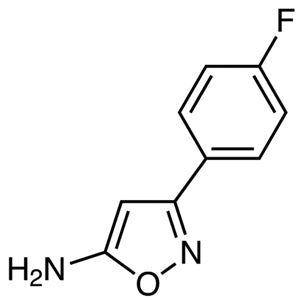
- TCI A2929 81465-82-9 5-Amino-3-(4-fluorophenyl)isoxazole
- TCI F1428 33282-24-5 5-(4-Fluorophenyl)isoxazole-3-carboxylic Acid
- Organic synthesis applications benefit from this compound’s reactivity and structural versatility, enabling the creation of complex molecules with desired properties.
- Pharmaceutical research utilizes this compound as a building block for developing new drugs with specific biological activities.
- Materials science applications leverage its stability and solubility to synthesize advanced materials with tailored properties.
- Analytical chemistry laboratories use it as a reference standard for spectroscopic and chromatographic analyses.
- Environmental research incorporates it in the study of fluorinated compounds and their behavior in chemical systems.
| Brand | TCI |
|---|---|
| CAS number | 64169-67-1 |
| Molecular formula | — |
| Purity | — |
| Category | Chemistry > Building Blocks > Fluorinated Building Blocks |
| Pack sizes | Available in various quantities as per supplier specifications |
| Physical form | Solid |
| Storage | Store in a cool, dry place away from light and moisture |
This compound should be stored in a cool, dry environment, away from direct sunlight and sources of heat. It is recommended to keep it in a tightly sealed container to prevent exposure to moisture and air. Due to its chemical stability, it does not require refrigeration under normal storage conditions. When handling, it is advisable to use appropriate personal protective equipment such as gloves and safety goggles to ensure safety. The compound is generally non-hazardous under standard laboratory conditions, but care should be taken to avoid inhalation or skin contact. Proper ventilation should be maintained in the laboratory to ensure safe handling and storage.
—
Product Categories
Produk Terkait
-
5-Amino-1-[2,6-dichloro-4-(trifluoromethyl)phenyl]-1H-pyrazole-3-carbonitrile TCI A3230
Regular price From Rp 795.900,00Regular price -
2-(5-Bromo-2-methylbenzyl)-5-(4-fluorophenyl)thiophene TCI B5335
Regular price From Rp 1.035.300,00Regular price -
(E)-3-[3-(4-Fluorophenyl)-1-isopropylindol-2-yl]acrolein TCI F0819
Regular price From Rp 717.150,00Regular price -
1-[Bis(4-fluorophenyl)methyl]piperazine TCI B2764
Regular price From Rp 769.650,00Regular price -
5-Amino-3-(4-fluorophenyl)isoxazole TCI A2929
Regular price From Rp 1.510.950,00Regular price -
5-(4-Fluorophenyl)isoxazole-3-carboxylicAcid TCI F1428
Regular price From Rp 2.386.650,00Regular price -
2-(4-Fluorophenyl)imidazo[1,2-a]pyridine TCI F1356
Regular price Rp 2.969.400,00Regular price -
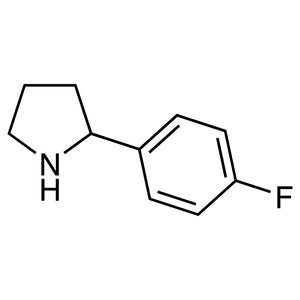
2-(4-Fluorophenyl)pyrrolidine TCI F1329
Regular price Rp 7.129.500,00Regular price
![120068-79-3 5-Amino-1-[2,6-dichloro-4-(trifluoromethyl)phenyl]-1H-pyrazole-3-carbonitrile - AMI Scientific](http://amiscientific.com/cdn/shop/files/TCI2510A3230.jpg?v=1769141482&width=533)

![(E)-3-[3-(4-Fluorophenyl)-1-isopropylindol-2-yl]acrolein (CAS 93957-50-7) - TCI F0819 - AMI Scientific](http://amiscientific.com/cdn/shop/files/TCI2510F0819.jpg?v=1767113880&width=533)
![27469-60-9 1-[Bis(4-fluorophenyl)methyl]piperazine - AMI Scientific](http://amiscientific.com/cdn/shop/files/TCI2510B2764.jpg?v=1768815392&width=533)

![2-(4-Fluorophenyl)imidazo[1,2-a]pyridine (CAS 347-12-6) - TCI F1356 - AMI Scientific](http://amiscientific.com/cdn/shop/files/TCI2510F1356.jpg?v=1768819019&width=533)