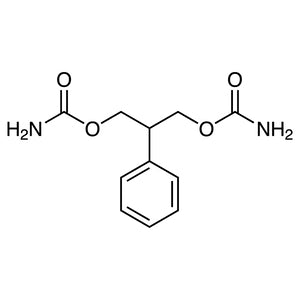
Felbamate is a chemical compound widely used in pharmaceutical and biochemical research, particularly in drug development and the study of active compound mechanisms. As a key reagent in experimental settings, it plays a crucial role in laboratory investigations aimed at understanding the pharmacological and biochemical properties of various substances. Its complex structure allows for versatile applications, making it an essential component in a range of scientific experiments. Felbamate is commonly employed in pharmacological activity testing and toxicity studies, contributing to the advancement of therapeutic research and the discovery of new treatments.
One of the main reasons Felbamate is preferred in laboratory settings is its chemical stability under specific conditions, which ensures reliable results over extended periods. Its ability to interact with a variety of reagents and enzymes makes it suitable for high-reactivity experiments. Additionally, its resistance to degradation simplifies isolation and identification processes in chemical analysis. These properties make it a valuable tool for researchers seeking consistent and reproducible outcomes in their experiments.
In Indonesian laboratories, Felbamate is frequently used in scientific research, especially in the fields of pharmacy, biochemistry, and neuropharmacology. It is commonly found in studies related to the development of new drugs and the investigation of compound effects on the nervous system. Its availability in the market supports ongoing research efforts, contributing to the advancement of scientific knowledge and medical innovation in the region.
- Pharmaceutical Research: Felbamate is used to study the pharmacological effects of compounds on biological systems, aiding in the development of new therapeutic agents.
- Toxicity Testing: It is employed in assessing the safety and potential side effects of chemical substances, ensuring compliance with regulatory standards.
- Neuropharmacological Studies: Felbamate helps in investigating the interaction of compounds with the nervous system, supporting research on neurological disorders.
- Biochemical Analysis: Its stability and reactivity make it ideal for experiments requiring precise chemical interactions and reaction monitoring.
- Drug Synthesis: It serves as a building block in the synthesis of other compounds, contributing to the creation of novel pharmaceutical products.
| Brand | TCI |
|---|---|
| CAS number | 25451-15-4 |
| Molecular formula | — |
| Purity | — |
| Category | Life Science > Biochemicals and Reagents > Pharmaceutical Research Reagents |
| Pack sizes | Available in various quantities as per supplier specifications |
| Physical form | Solid (as per standard product description) |
| Storage | Store in a cool, dry place away from direct sunlight and moisture |
Felbamate should be stored in a cool, dry environment to maintain its chemical stability and prevent degradation. It is recommended to keep it in a sealed container to minimize exposure to moisture and air. Proper ventilation is essential when handling the compound to ensure a safe working environment. Avoid direct contact with skin and eyes, and use appropriate personal protective equipment such as gloves and safety goggles. Due to its reactivity, it should be handled in a well-ventilated laboratory setting. Regular monitoring of storage conditions is advised to ensure the integrity of the material remains intact for experimental use.
—
Produk Terkait
-
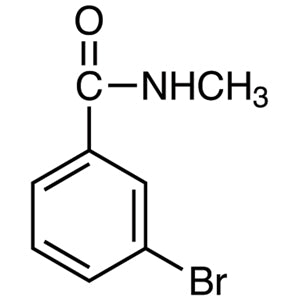
3-Bromo-N-methylbenzamide TCI B5644
Regular price From Rp 1.431.150,00Regular price -
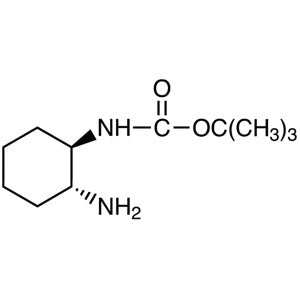
(1R,2R)-N1-(tert-Butoxycarbonyl)-1,2-cyclohexanediamine TCI B5647
Regular price Rp 3.367.350,00Regular price -
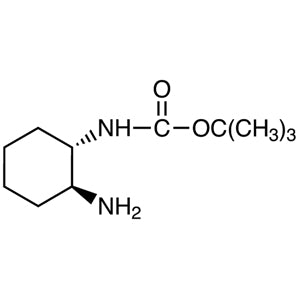
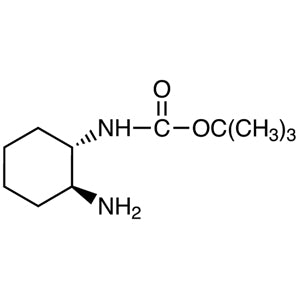
(1S,2S)-N1-(tert-Butoxycarbonyl)-1,2-cyclohexanediamine TCI B5648
Regular price From Rp 2.809.800,00Regular price -
N-Benzyl-2,2,2-trifluoroacetamide TCI B5705
Regular price From Rp 1.326.150,00Regular price -
SB-366791 TCI B5762
Regular price From Rp 5.485.200,00Regular price -
N-Carbobenzoxypropargylamine TCI B5958
Regular price Rp 4.849.950,00Regular price -
tert-Butyl(3-Oxo-3-phenylpropyl)carbamate TCI B5981
Regular price Rp 4.584.300,00Regular price -
SB297006 TCI B6053
Regular price From Rp 3.710.700,00Regular price