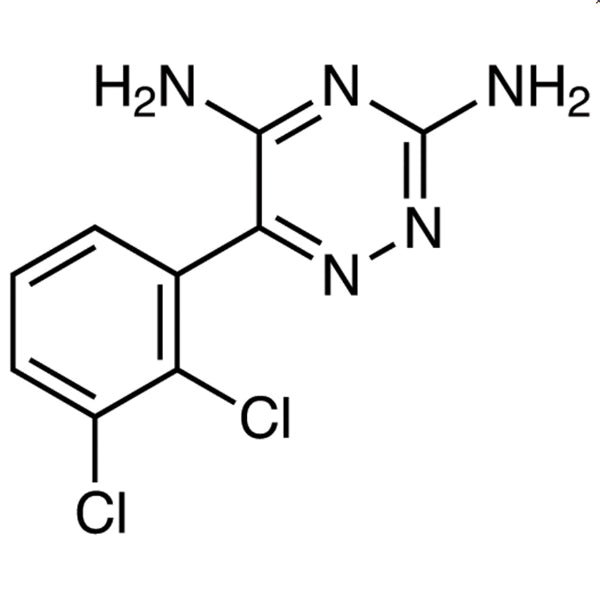
Lamotrigine is a chemical compound widely used in pharmacological and pharmaceutical research. As a pharmaceutical research reagent, it plays a crucial role in laboratories where experimental studies are conducted. This compound is commonly employed to investigate the mechanisms of action of anticonvulsant drugs, particularly in research related to epilepsy and neurological disorders. Its versatility makes it an essential component in various biochemical and pharmacological studies.
The chemical properties of Lamotrigine make it a preferred choice for researchers. It exhibits relatively stable chemical characteristics under normal conditions and dissolves easily in organic solvents such as ethylamine or acetone. These features contribute to its reliability in a wide range of chemical reactions and laboratory tests. Additionally, its favorable safety profile ensures minimal risk of toxicity or hazardous reactions during experimental use, enhancing its appeal for high-precision scientific work.
In Indonesian laboratories, Lamotrigine is commonly used in research settings that require high-quality chemical reagents. It is frequently found in pharmaceutical and biochemical laboratories where it supports the synthesis of other compounds or the testing of biological activities. Its consistent quality and stability make it a trusted material for scientific experiments that demand accuracy and reproducibility.
- Anticonvulsant Drug Mechanism Studies: Lamotrigine is used to explore how anticonvulsant drugs function, aiding in the development of new epilepsy treatments.
- Neurological Disorder Research: It supports investigations into neurological conditions by helping researchers understand the effects of anticonvulsants on neural pathways.
- Biochemical Synthesis: Lamotrigine serves as a building block in the synthesis of other pharmaceutical compounds, contributing to drug development efforts.
- Pharmacological Activity Testing: It is employed in assays to evaluate the biological activity of compounds, providing data for drug efficacy and safety assessments.
- Laboratory Reagent for Experimental Protocols: Its stable properties make it suitable for inclusion in various experimental protocols requiring reliable chemical reagents.
| Brand | TCI |
|---|---|
| CAS number | 84057-84-1 |
| Molecular formula | — |
| Purity | — |
| Category | Life Science > Biochemicals and Reagents > Pharmaceutical Research Reagents |
| Pack sizes | Available in standard laboratory quantities |
| Physical form | Solid powder |
| Storage | Store in a cool, dry place away from direct sunlight |
Lamotrigine should be stored in a cool, dry place, away from direct sunlight and moisture. It is recommended to keep it in a sealed container to prevent contamination and maintain its chemical integrity. Suitable containers include glass or plastic vials with tight-fitting lids. Due to its stability, it does not require refrigeration but should be protected from environmental factors that may affect its purity. General laboratory precautions include wearing appropriate personal protective equipment when handling the compound and ensuring proper ventilation in the workspace to minimize exposure. Regular inspection of storage conditions is advised to ensure the compound remains in optimal condition for experimental use.
—
Produk Terkait
-
TCI B5774 5,10-Bis(4,4,5,5-tetramethyl-1,3,2-dioxaborolan-2-yl)naphtho[1,2-c:5,6-c']bis([1,2,5]oxadiazole)
Regular price Rp 10.255.350,00Regular price -
Dihydroiodide TCI B6569
Regular price From Rp 1.936.200,00Regular price -
Trifluoromethanesulfonate TCI B7003
Regular price From Rp 1.936.200,00Regular price
![5,10-Bis(4,4,5,5-tetramethyl-1,3,2-dioxaborolan-2-yl)naphtho[1,2-c:5,6-c']bis([1,2,5]oxadiazole) - TCI B5774 - AMI Scientific](http://amiscientific.com/cdn/shop/files/TCI2510B5774.jpg?v=1769180228&width=533)