


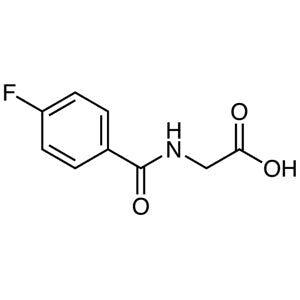
4-Fluorohippuric Acid is a chemical compound widely used in scientific experiments, particularly in the fields of biochemistry and pharmacology. It plays a crucial role in laboratory research by enabling the study of drug metabolism and the interaction of compounds with biological systems. As a bioactive compound, it is essential for investigating biological activity and pharmacological effects. Its unique chemical structure allows it to interact with various enzymes and receptors within the body, making it a valuable tool for researchers.
One of the key properties that make 4-Fluorohippuric Acid a preferred choice is its chemical stability under specific conditions, which ensures reliable results in analytical methods. Its high purity and solid form contribute to the accuracy and precision required in laboratory experiments. These characteristics make it an ideal material for quantitative analysis and biochemical assays. Additionally, its versatility allows it to be used in a variety of experimental setups, enhancing its applicability across different research domains.
In Indonesian laboratories, 4-Fluorohippuric Acid is commonly used in pharmacological, toxicological, and biochemical research. It is an essential component in experiments aimed at developing analytical methods and testing biological activity. Its presence in research projects related to drug metabolism and bioactive compound interactions highlights its importance in advancing scientific understanding in these fields.
- Pharmacological research utilizes 4-Fluorohippuric Acid to study drug metabolism and interactions with biological systems.
- Toxicological studies benefit from its use in assessing the impact of compounds on living organisms and their metabolic pathways.
- Biochemical experiments rely on this compound to investigate enzyme activity and receptor interactions in cellular processes.
- Quantitative analysis in analytical chemistry requires its stable chemical properties for accurate and reproducible results.
- Development of new analytical methods often includes 4-Fluorohippuric Acid as a reference standard for calibration and validation.
| Brand | TCI |
|---|---|
| CAS number | 366-79-0 |
| Molecular formula | — |
| Purity | — |
| Category | Life Science > Biochemicals and Reagents > Bioactive Compounds |
| Pack sizes | Available in various quantities as per standard laboratory requirements |
| Physical form | Solid |
| Storage | Store in a cool, dry place away from direct sunlight |
4-Fluorohippuric Acid should be stored in a cool, dry environment to maintain its chemical stability and prevent degradation. It is recommended to use airtight containers to protect it from moisture and contaminants. Due to its chemical nature, it should be handled with appropriate personal protective equipment, such as gloves and safety goggles, to ensure laboratory safety. Avoid exposure to direct sunlight and keep it away from incompatible substances. Regular monitoring of storage conditions is essential to maintain its integrity and effectiveness for research purposes. Proper labeling and secure storage are also important to prevent accidental use or contamination.
—
Produk Terkait
-
4-(p-Tolylthio)thieno[2,3-c]pyridine-2-carboxamide TCI T3498
Regular price From Rp 4.213.650,00Regular price -
BTT3033 TCI B5415
Regular price Rp 10.124.100,00Regular price -
ABEPI1 TCI A3586
Regular price Rp 2.650.200,00Regular price -
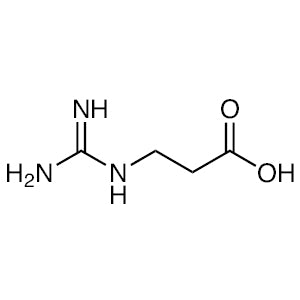
3-GuanidinopropanoicAcid TCI A3421
Regular price From Rp 1.353.450,00Regular price -
Ro41-3118 TCI R0286
Regular price Rp 6.042.750,00Regular price -
RCGD423 TCI R0283
Regular price Rp 6.520.500,00Regular price -
SQ22536 TCI Q0105
Regular price From Rp 5.857.950,00Regular price -
2-[(4-Methylpentan-2-yl)amino]-5-(phenylamino)cyclohexa-2,5-diene-1,4-dione TCI P3373
Regular price From Rp 2.889.600,00Regular price
![251992-66-2 4-(p-Tolylthio)thieno[2,3-c]pyridine-2-carboxamide - AMI Scientific](http://amiscientific.com/cdn/shop/files/TCI2510T3498.jpg?v=1767144174&width=533)
![251992-66-2 4-(p-Tolylthio)thieno[2,3-c]pyridine-2-carboxamide - AMI Scientific](http://amiscientific.com/cdn/shop/files/TCI2510T3498_ff83aa00-e77d-4427-92df-ae99a39bd777.jpg?v=1772425406&width=533)

![2754428-18-5 2-[(4-Methylpentan-2-yl)amino]-5-(phenylamino)cyclohexa-2,5-diene-1,4-dione - AMI Scientific](http://amiscientific.com/cdn/shop/files/TCI2510P3373.jpg?v=1767137436&width=533)