


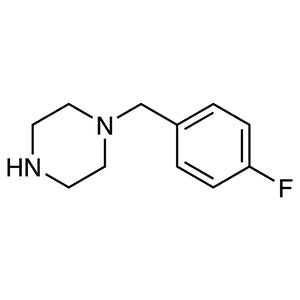
1-(4-Fluorobenzyl)piperazine is a chemical compound widely used as a building block in the synthesis of complex molecules. It plays a crucial role in laboratory settings, particularly in organic chemistry and pharmacological research. This compound is valued for its versatility and ability to participate in various chemical reactions, making it an essential component in the development of new compounds with specific biological activities. Its presence in research laboratories supports the creation of advanced pharmaceuticals and other specialized chemical products.
The compound's fluorinated structure provides unique chemical properties that enhance its reactivity and stability under controlled conditions. These characteristics make it a preferred choice for researchers aiming to modify molecular structures with precision. The presence of fluorine atoms in its molecular framework allows for greater flexibility in chemical modifications, enabling the synthesis of compounds with tailored biological functions. This adaptability is a key factor in its widespread use across multiple scientific disciplines.
In Indonesian laboratories, 1-(4-Fluorobenzyl)piperazine is commonly utilized in scientific research and the development of chemical products. It is a fundamental reagent in experiments focused on the synthesis of bioactive compounds. Its availability and reliability make it a relevant option for local research institutions and academic settings. The compound supports ongoing efforts in pharmaceutical and organic chemistry, contributing to the advancement of scientific knowledge in the region.
TCI brochures (PDF)
- Fluorination Reagents, Fluorinated Building Blocks 2026-03-18 · p. 16
Related TCI products
- TCI F1092 55513-19-4 1-(3-Fluorobenzyl)piperazine
- TCI C2965 231278-20-9 4-[3-Chloro-4-(3-fluorobenzyloxy)phenylamino]-6-iodoquinazoline
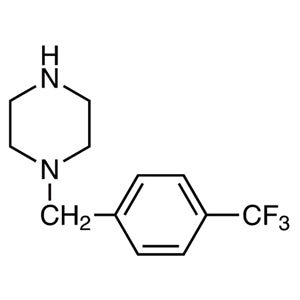
- TCI T3075 107890-32-4 1-(4-Trifluoromethylbenzyl)piperazine
- TCI T2741 30459-17-7 1-(4-Trifluoromethylphenyl)piperazine
- TCI T2739 63854-31-9 1-(2-Trifluoromethylphenyl)piperazine
- TCI B2764 27469-60-9 1-[Bis(4-fluorophenyl)methyl]piperazine
- Pharmacological research for the synthesis of bioactive compounds due to its reactivity and fluorinated structure.
- Organic chemistry experiments requiring flexible molecular building blocks for compound modification.
- Drug development projects aiming to create new pharmaceuticals with targeted biological activities.
- Academic research in chemical synthesis, especially in universities and research institutes.
- Industrial applications in the production of specialized chemical products for pharmaceutical and biotechnology sectors.
| Brand | TCI |
|---|---|
| CAS number | 70931-28-1 |
| Molecular formula | — |
| Purity | — |
| Category | Chemistry > Building Blocks > Fluorinated Building Blocks |
| Pack sizes | Available in various quantities as per standard laboratory supply |
| Physical form | Solid or liquid, depending on the specific product variant |
| Storage | Store in a cool, dry place away from direct sunlight and moisture |
This compound should be stored in a cool, dry environment, away from direct sunlight and moisture to maintain its chemical stability. It is recommended to use airtight containers to prevent exposure to air and humidity, which could affect its reactivity. In laboratory settings, proper ventilation is essential to minimize inhalation risks. Handling should be done with appropriate personal protective equipment, such as gloves and safety goggles, to ensure safety. The compound should be kept in a secure location, away from incompatible materials to prevent any potential chemical interactions. Regular monitoring of storage conditions is advised to ensure the compound remains in optimal condition for use.
—
Produk Terkait
-
1-(3-Fluorobenzyl)piperazine TCI F1092
Regular price From Rp 1.643.250,00Regular priceRp 1.164.450,00Sale price From Rp 1.643.250,00 -
4-[3-Chloro-4-(3-fluorobenzyloxy)phenylamino]-6-iodoquinazoline TCI C2965
Regular price From Rp 795.900,00Regular priceRp 572.250,00Sale price From Rp 795.900,00 -
1-(4-Trifluoromethylbenzyl)piperazine TCI T3075
Regular price Rp 1.881.600,00Regular priceRp 1.331.400,00Sale price Rp 1.881.600,00 -
1-(4-Trifluoromethylphenyl)piperazine TCI T2741
Regular price Rp 1.670.550,00Regular priceRp 1.183.350,00Sale price Rp 1.670.550,00 -
1-(2-Trifluoromethylphenyl)piperazine TCI T2739
Regular price Rp 9.566.550,00Regular priceRp 1.837.500,00Sale price Rp 9.566.550,00 -
1-[Bis(4-fluorophenyl)methyl]piperazine TCI B2764
Regular price From Rp 822.150,00Regular priceRp 590.100,00Sale price From Rp 822.150,00 -
1-Benzyl-3-[2-(trifluoromethyl)phenyl]piperazine TCI P2875
Regular price From Rp 3.419.850,00Regular priceRp 2.406.600,00Sale price From Rp 3.419.850,00 -
1-Benzyl-3-(4-fluorophenyl)piperazine TCI F1303
Regular price From Rp 2.147.250,00Regular priceRp 1.517.250,00Sale price From Rp 2.147.250,00


![TCI C2965 231278-20-9 4-[3-Chloro-4-(3-fluorobenzyloxy)phenylamino]-6-iodoquinazoline](http://amiscientific.com/cdn/shop/files/TCI2510C2965_8be8107b-0ff8-46a9-b218-244eb7118ac0.jpg?v=1792634996&width=533)
![4-[3-Chloro-4-(3-fluorobenzyloxy)phenylamino]-6-iodoquinazoline (CAS 231278-20-9) - TCI C2965 - AMI Scientific](http://amiscientific.com/cdn/shop/files/TCI2510C2965.jpg?v=1767099034&width=533)



![TCI B2764 27469-60-9 1-[Bis(4-fluorophenyl)methyl]piperazine](http://amiscientific.com/cdn/shop/files/TCI2510B2764_6e26e84e-e5d9-4395-8f98-31d4c41a77bb.jpg?v=1792660772&width=533)
![27469-60-9 1-[Bis(4-fluorophenyl)methyl]piperazine - AMI Scientific](http://amiscientific.com/cdn/shop/files/TCI2510B2764.jpg?v=1768815392&width=533)
![TCI P2875 2456414-49-4 1-Benzyl-3-[2-(trifluoromethyl)phenyl]piperazine](http://amiscientific.com/cdn/shop/files/TCI2510P2875_64ae2227-d7e5-442a-9800-92f4d6ed4b91.jpg?v=1792653843&width=533)
![2456414-49-4 1-Benzyl-3-[2-(trifluoromethyl)phenyl]piperazine - AMI Scientific](http://amiscientific.com/cdn/shop/files/TCI2510P2875.jpg?v=1767136759&width=533)

