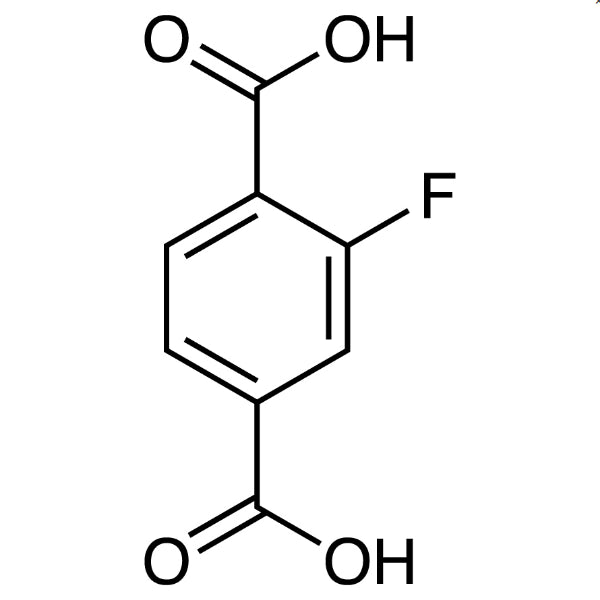
2-Fluoroterephthalic Acid is a chemical compound widely used in laboratory settings, particularly in the synthesis of complex organic compounds. This versatile reagent plays a crucial role in various chemical reactions, offering a reliable foundation for the development of new materials and pharmaceuticals. Its unique molecular structure, featuring two fluorine atoms and a carboxylic acid group, contributes to its reactivity and applicability across multiple chemical processes. In the laboratory, it is a key component for researchers aiming to create compounds with specific functional properties.
The compound's stability combined with its reactivity makes it a preferred choice for high-precision experiments. Its ability to participate in substitution reactions, esterification, and other chemical transformations highlights its utility in organic chemistry. The presence of fluorine atoms enhances its compatibility with various reaction conditions, making it suitable for both academic and industrial research. Its chemical versatility allows it to be used in a wide range of applications, from material science to pharmaceutical development.
In Indonesian laboratories, 2-Fluoroterephthalic Acid is commonly used in scientific research, pharmaceutical product development, and organic chemistry studies. It is an essential reagent in the synthesis of compounds with specific properties, contributing to advancements in various scientific fields. Its role in the creation of new materials and drug compounds underscores its importance in both academic and applied research settings.
TCI brochures (PDF)
- Fluorination Reagents, Fluorinated Building Blocks 2026-03-18 · p. 23
Related TCI products
- TCI T0930 652-36-8 Tetrafluoroterephthalic Acid
- TCI T0166 100-21-0 Terephthalic Acid
- TCI B6503 366008-67-5 2,5-Bis(trifluoromethyl)terephthalic Acid
- TCI T4088 3217-47-8 2,3,5,6-Tetrafluoroterephthalaldehyde
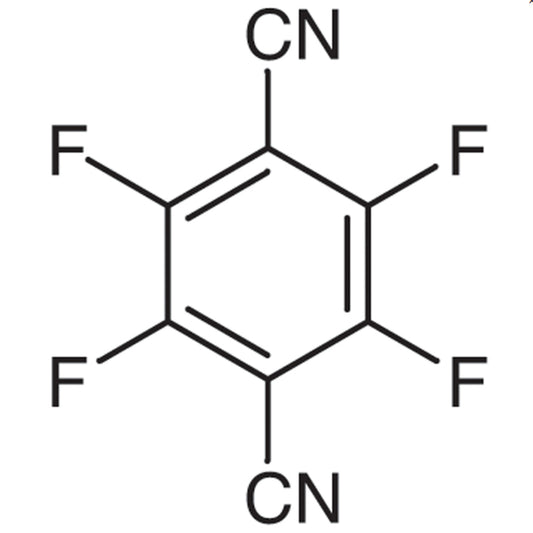
- TCI T1050 1835-49-0 Tetrafluoroterephthalonitrile
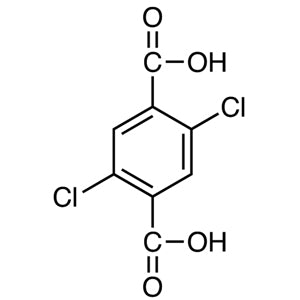
- TCI D1698 13799-90-1 2,5-Dichloroterephthalic Acid
- Organic synthesis: This compound is ideal for synthesizing complex organic molecules due to its reactivity and structural versatility.
- Pharmaceutical research: It is frequently used in the development of new drugs and medicinal compounds due to its functional group compatibility.
- Material science: The presence of fluorine atoms makes it suitable for creating advanced materials with specific chemical properties.
- Analytical chemistry: It serves as a reagent in various analytical procedures requiring precise chemical reactions and controlled environments.
- Environmental studies: It is used in the analysis of chemical compounds in environmental samples due to its stability and reactivity.
| Brand | TCI |
|---|---|
| CAS number | 3906-87-4 |
| Molecular formula | — |
| Purity | — |
| Category | TCI |
| Pack sizes | Available in various quantities as per standard laboratory requirements |
| Physical form | Solid |
| Storage | Store in a cool, dry place away from moisture and direct sunlight |
This compound should be stored in a cool, dry environment to maintain its chemical integrity. It is recommended to use airtight containers to prevent exposure to moisture and air, which could affect its reactivity. Due to its chemical nature, it should be handled with appropriate personal protective equipment, such as gloves and safety goggles, to ensure laboratory safety. Storage should be away from incompatible substances to avoid any potential chemical interactions. Proper labeling of containers is essential for safe handling and to prevent accidental exposure. Regular monitoring of storage conditions ensures the compound remains stable and suitable for use in laboratory applications.
—
Produk Terkait
-
TetrafluoroterephthalicAcid TCI T0930
Regular price From Rp 980.700,00Regular price -
TerephthalicAcid TCI T0166
Regular price From Rp 452.550,00Regular price -
2,5-Bis(trifluoromethyl)terephthalicAcid TCI B6503
Regular price From Rp 3.155.250,00Regular price -
2,3,5,6-Tetrafluoroterephthalaldehyde TCI T4088
Regular price From Rp 2.068.500,00Regular price -
Tetrafluoroterephthalonitrile TCI T1050
Regular price From Rp 1.431.150,00Regular price -
2,5-DichloroterephthalicAcid TCI D1698
Regular price From Rp 769.650,00Regular price -
2-ChloroterephthalicAcid TCI C3875
Regular price Rp 2.174.550,00Regular price -
2,3,5,6-TetrachloroterephthalicAcid TCI C3862
Regular price From Rp 2.571.450,00Regular price