

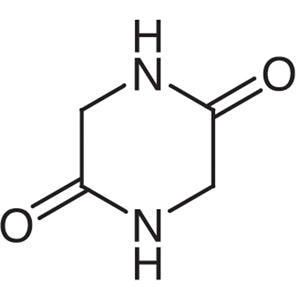
Glycine Anhydride (TCI G0100), with CAS number 106-57-0, is a chemical compound widely used in laboratory settings, particularly in organic chemistry and biochemical research. As a key intermediate in peptide synthesis, it plays a crucial role in the formation of peptide bonds, enabling the creation of bioactive molecules. Its chemical structure is simple yet highly functional, making it a versatile reagent in synthetic pathways. This compound is essential for researchers aiming to develop new drugs or study biological processes at the molecular level.
The reactivity of Glycine Anhydride, especially towards water and polar solvents, makes it a preferred choice in high-activation chemical reactions such as amidation and ester bond formation. Its ability to participate in such reactions under controlled conditions ensures efficiency and reliability in laboratory procedures. Additionally, its stability under specific conditions allows for consistent performance in various synthetic applications. This combination of reactivity and stability enhances its utility in both academic and industrial research environments.
In Indonesian laboratories, Glycine Anhydride is commonly used by researchers in chemistry and molecular biology. It is an essential component in the synthesis of peptides and proteins, supporting studies in pharmacology, biotechnology, and drug development. Its availability in multiple packaging options makes it accessible for both small-scale research and larger industrial applications. This widespread use highlights its importance in advancing scientific research in Indonesia.
- Peptide Synthesis: Glycine Anhydride is ideal for peptide synthesis due to its role in forming peptide bonds, which are essential for creating bioactive molecules.
- Drug Development: Its use in synthesizing bioactive compounds supports pharmaceutical research, aiding in the creation of new therapeutic agents.
- Biochemical Research: The compound is widely used in biochemical studies to investigate molecular interactions and biological functions.
- Organic Chemistry Experiments: Its reactivity makes it suitable for organic reactions requiring high activation, such as amidation and ester formation.
- Molecular Biology Studies: Glycine Anhydride contributes to the synthesis of proteins and peptides, supporting research in molecular biology and biotechnology.
| Brand | TCI |
|---|---|
| CAS number | 106-57-0 |
| Molecular formula | — |
| Purity | — |
| Category | Chemistry > Chemical Biology > Peptide Chemistry |
| Pack sizes | Available in multiple packaging options for laboratory and industrial use |
| Physical form | Solid |
| Storage | Store in a cool, dry place away from moisture and direct sunlight |
Glycine Anhydride should be stored in a cool, dry environment to maintain its chemical stability. It is recommended to use airtight containers to prevent exposure to moisture, which can affect its reactivity. Due to its sensitivity to water, it should be kept away from humid conditions and direct sunlight. Proper labeling of containers is essential for safe handling. Laboratory personnel should wear appropriate personal protective equipment when handling the compound to ensure safety. Regular monitoring of storage conditions is advised to maintain the integrity of the material during long-term storage.
—
Product Categories
Produk Terkait
-
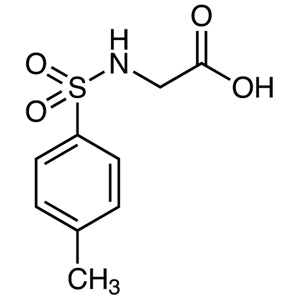
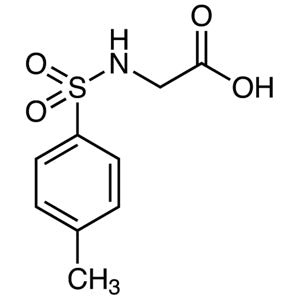
N-(p-Toluenesulfonyl)glycine TCI T2803
Regular price From Rp 1.538.250,00Regular price -
N-(o-Toluoyl)glycine TCI T0719
Regular price From Rp 2.677.500,00Regular price -
N-(p-Toluoyl)glycine TCI T0313
Regular price From Rp 1.538.250,00Regular price -
N-(m-Toluoyl)glycine TCI T0312
Regular price From Rp 1.273.650,00Regular price -
Phenylthiohydantoin-glycine TCI P0376
Regular price Rp 1.115.100,00Regular price -
N-(4-Hydroxyphenyl)glycine TCI H0292
Regular price Rp 1.829.100,00Regular price -
N-[(9H-Fluoren-9-ylmethoxy)carbonyl]glycine TCI F0293
Regular price From Rp 584.850,00Regular price -
N-(Diphenylmethylene)glycineEthylEster TCI D3833
Regular price From Rp 1.273.650,00Regular price


![N-[(9H-Fluoren-9-ylmethoxy)carbonyl]glycine (CAS 29022-11-5) - TCI F0293 - AMI Scientific](http://amiscientific.com/cdn/shop/files/TCI2510F0293.jpg?v=1768205330&width=533)
![N-[(9H-Fluoren-9-ylmethoxy)carbonyl]glycine (CAS 29022-11-5) - TCI F0293 - AMI Scientific](http://amiscientific.com/cdn/shop/files/TCI2510F0293_04c965c5-0333-4986-9d9a-0a4a1c61510b.jpg?v=1769056002&width=533)
