Glutaconaldehydedianil Hydrochloride is a specialised organic reagent built around a conjugated polymethine chain terminated at both ends by aniline groups, and it is supplied as the hydrochloride salt, a form that is more stable and considerably easier to handle than the free base. The compound is widely recognised as the ring-opening product formed from pyridinium salts in the König reaction, and for that reason it has become an important building block both in dye chemistry and in the preparation of stains used on biological tissue. Within a laboratory it functions as a chromophore source rather than a bulk solvent or routine buffer component.
The property that makes this reagent valuable is its extended conjugated system, which produces strong light absorption in the visible region, so the colour changes it generates can be followed easily and in many cases observed with the unaided eye. The two aniline termini act as good leaving groups towards nucleophilic attack by amines, which makes the reagent a practical bridge for joining two heterocyclic units into a cyanine dye of controlled chain length. Its hydrochloride salt form is a coloured solid, and this physical state simplifies weighing, storage, and dissolution in polar organic solvents during preparation.
In Indonesian laboratories the product sits in the life science line under cell biology, haematology, and histology, which reflects how it is actually used: as the chromophore supplier in staining preparations that distinguish cellular and tissue components under the microscope. It is typically found in university research laboratories, histopathology units, and synthetic organic chemistry groups preparing their own dye systems rather than purchasing finished stains.
Related TCI products
- TCI B3581 1871-22-3 Blue Tetrazolium [for Biochemical Research]
- TCI A5105 61-73-4 Methylene Blue [Ion association reagent for spectrophotometric analysis]
- TCI A5100 2437-29-8 Malachite Green, Oxalate [Sensitive spectrophotometric reagent for PO4]
- TCI A2412 28718-90-3 DAPI 2HCl [for Biochemical Research]
- TCI A0579 1718-34-9 Mordant Orange 1 Monosodium Salt
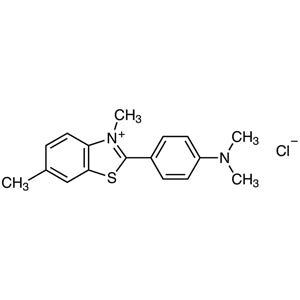
- TCI T0558 2390-54-7 Basic Yellow 1
- Cyanine dye synthesis — the two aniline leaving groups allow controlled coupling of heterocyclic units, letting chemists build dyes with a defined polymethine chain length.
- Histological staining preparation — serves as the chromophore source in stain formulations used to differentiate tissue components and cellular structures during microscopic examination.
- Haematology stain formulation — supplies the coloured conjugated system needed for preparations that distinguish blood cell components in routine and research slide work.
- König reaction studies — as the recognised pyridinium ring-opening product, it is directly relevant for teaching and investigating this classical transformation and its mechanism.
- Visible-region colorimetric work — the strong absorption produced by its long conjugated system makes resulting colour changes easy to follow, sometimes even by simple visual observation.
| Brand | TCI |
|---|---|
| CAS number | 1497-49-0 |
| Molecular formula | — |
| Purity | — |
| Category | Life Science > Cell Biology > Hematology and Histology |
| Pack sizes | available in standard TCI catalogue pack sizes; please confirm the required quantity when ordering |
| Physical form | coloured solid, supplied as the hydrochloride salt |
| Storage | — |
- Product code: G0201
Store the reagent in its original tightly closed container in a cool, dry place, protected from light and moisture, since the conjugated polymethine system is sensitive to prolonged light exposure. Amber glass or opaque, well-sealed containers are suitable for any portions transferred from the original packaging, and containers should be clearly labelled. Handle the solid in a fume hood using gloves, safety glasses, and a laboratory coat to avoid skin contact and inhalation of dust, and keep it away from strong oxidising agents and from amine-containing materials that could react with it. Prepare solutions in polar organic solvents immediately before use where possible, and dispose of residues according to local chemical waste procedures.
—
Product Categories
Produk Terkait
-
BlueTetrazolium[forBiochemicalResearch] TCI B3581
Regular price From Rp 1.246.350,00Regular price -
MethyleneBlue[Ionassociationreagentforspectrophotometricanalysis] TCI A5105
Regular price Rp 955.500,00Regular price -
MalachiteGreen,Oxalate[SensitivespectrophotometricreagentforPO4] TCI A5100
Regular price Rp 2.332.050,00Regular price -
DAPI2HCl[forBiochemicalResearch] TCI A2412
Regular price Rp 1.590.750,00Regular price -
MordantOrange1MonosodiumSalt TCI A0579
Regular price Rp 1.829.100,00Regular price -
BasicYellow1 TCI T0558
Regular price Rp 2.094.750,00Regular price -
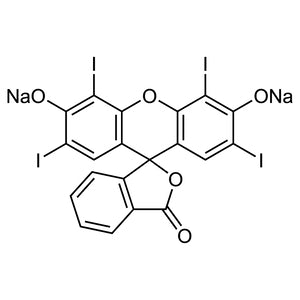
ErythrosineB TCI T0557
Regular price Rp 1.008.000,00Regular price -
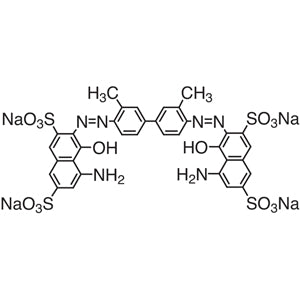
DirectBlue14 TCI T0556
Regular price Rp 1.087.800,00Regular price
![1871-22-3 Blue Tetrazolium [for Biochemical Research] - AMI Scientific](http://amiscientific.com/cdn/shop/files/TCI2510B3581_25792e25-dbc5-4e62-a711-c5f5176b1b02.jpg?v=1767433226&width=533)
![61-73-4 Methylene Blue [Ion association reagent for spectrophotometric analysis] - AMI Scientific](http://amiscientific.com/cdn/shop/files/TCI2510A5105.jpg?v=1767084859&width=533)
![2437-29-8 Malachite Green, Oxalate [Sensitive spectrophotometric reagent for PO4] - AMI Scientific](http://amiscientific.com/cdn/shop/files/TCI2510A5100.jpg?v=1767084843&width=533)
![28718-90-3 DAPI 2HCl [for Biochemical Research] - AMI Scientific](http://amiscientific.com/cdn/shop/files/TCI2510A2412.jpg?v=1767082817&width=533)