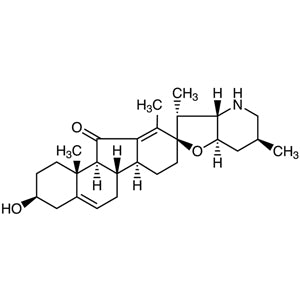
![TCI G0629 95975-55-6 Guggulsterone [mixture of (E)- and (Z)- isomers]](http://amiscientific.com/cdn/shop/files/TCI2510G0629_199b3df4-f0c2-4d26-9efb-28407bde8e00.jpg?v=1792643298&width=1946)
![Guggulsterone [mixture of (E)- and (Z)- isomers] (CAS 95975-55-6) - TCI G0629 - AMI Scientific](http://amiscientific.com/cdn/shop/files/TCI2510G0629.jpg?v=1767115467&width=1946)
![TCI G0629 95975-55-6 Guggulsterone [mixture of (E)- and (Z)- isomers]](http://amiscientific.com/cdn/shop/files/TCI2510G0629_199b3df4-f0c2-4d26-9efb-28407bde8e00.jpg?v=1792643298&width=1445)
![Guggulsterone [mixture of (E)- and (Z)- isomers] (CAS 95975-55-6) - TCI G0629 - AMI Scientific](http://amiscientific.com/cdn/shop/files/TCI2510G0629.jpg?v=1767115467&width=1445)
Guggulsterone is a natural compound derived from the plant *Commiphora mukul*, widely used in pharmacology and biochemical research. It serves as a key reagent in laboratory settings, enabling scientists to investigate its biological activities. This compound is particularly valuable for studying anti-inflammatory, antidiabetic, and anticancer effects. Due to its complex chemical structure, it is often employed in experimental research to explore alternative therapeutic approaches. Its presence in herbal formulations makes it a critical component for researchers aiming to develop natural health products or expand knowledge about plant-derived bioactive compounds.
Guggulsterone is preferred for its unique chemical properties, which include a mixture of (E)- and (Z)-isomers. This structural diversity contributes to its varied biological activities, making it a versatile tool in experimental studies. Its sensitivity to environmental conditions necessitates careful handling to maintain its integrity. The availability of pure forms ensures consistency and reliability in research applications, allowing for accurate and reproducible results. As a result, it is a trusted choice for scientists seeking to explore the pharmacological potential of natural compounds.
In Indonesian laboratories, Guggulsterone is commonly used as a research material in pharmacology, biochemistry, and phytochemistry. Local researchers frequently utilize it to develop natural health products or investigate the biological effects of plant extracts. Its role in advancing scientific understanding of herbal medicine makes it an essential component in both academic and industrial research settings.
TCI brochures (PDF)
- Steroids 2026-07-28 · p. 8
- Pharmaceutical Ingredients for Research and Experimental Use 2026-03-09 · p. 22
- Anti-inflammatory Research: Guggulsterone is used to study its effects on inflammation, offering insights into potential therapeutic applications.
- Antidiabetic Studies: It is employed to evaluate its impact on blood sugar regulation, supporting research into natural treatments for diabetes.
- Anticancer Investigations: Guggulsterone's potential to inhibit cancer cell growth makes it a valuable tool in oncology research.
- Herbal Medicine Development: Its presence in traditional formulations aids in the development of natural health products and pharmaceuticals.
- Phytochemical Analysis: It is used to analyze plant-derived compounds, contributing to the understanding of bioactive ingredients in herbal medicine.
| Brand | TCI |
|---|---|
| CAS number | 95975-55-6 |
| Molecular formula | — |
| Purity | — |
| Category | Life Science > Biochemicals and Reagents > Crude Medicine Ingredients for Research and Experimental Use |
| Pack sizes | Available in various quantities as per supplier specifications |
| Physical form | Solid, typically in powder form |
| Storage | Requires storage in a cool, dry place away from light |
Guggulsterone should be stored in a cool, dry environment to maintain its stability and prevent degradation. It is recommended to keep it in a sealed container to minimize exposure to moisture and air. Due to its sensitivity, it should be handled with care to avoid contamination. Laboratory personnel should use appropriate personal protective equipment when working with this compound. Proper labeling and storage conditions are essential to ensure the compound remains effective for research purposes. Regular monitoring of storage conditions helps in maintaining its integrity and usability in experimental studies.
—
Product Categories
- Biochemicals and ReagentsCrude Medicine Ingredients for Research and Experimental Use
- Biochemicals and ReagentsPharmaceutical Research Reagents (for Experimental Use)Antilipemic Ingredients (for Research and Experimental Use)
- Biochemicals and ReagentsSteroidsPhytosteroids [Steroids]
- Cell BiologyCancer ResearchAntitumor Agents for Research
- Cell BiologyCell Signaling and NeuroscienceCytokines, Growth Factors and Hormones
- Pharmaceutical Development and Drug Discovery ResearchPharmaceutical Research Reagents (for Experimental Use)Antilipemic Ingredients (for Research and Experimental Use)
- Pharmaceutical Development and Drug Discovery ResearchCrude Medicine Ingredients for Research and Experimental Use
Produk Terkait
-
20(R)-GinsenosideRh2 TCI G0567
Regular price From Rp 4.293.450,00Regular priceRp 3.017.700,00Sale price From Rp 4.293.450,00 -
Panaxadiol TCI P2811
Regular price From Rp 3.207.750,00Regular priceRp 2.258.550,00Sale price From Rp 3.207.750,00 -
(20S)-Protopanaxadiol TCI P2651
Regular price Rp 5.988.150,00Regular priceRp 4.203.150,00Sale price Rp 5.988.150,00 -
GinsenosideC-K TCI G0590
Regular price Rp 3.949.050,00Regular priceRp 2.777.250,00Sale price Rp 3.949.050,00 -
20(S)-GinsenosideRg3 TCI G0568
Regular price Rp 2.597.700,00Regular priceRp 1.832.250,00Sale price Rp 2.597.700,00 -
20(R)-GinsenosideRg3 TCI G0536
Regular price Rp 5.194.350,00Regular priceRp 3.647.700,00Sale price Rp 5.194.350,00 -
Jervine TCI J0009
Regular price Rp 8.055.600,00Regular priceRp 5.649.000,00Sale price Rp 8.055.600,00 -
AbirateroneAcetate TCI A2891
Regular price From Rp 4.081.350,00Regular priceRp 2.869.650,00Sale price From Rp 4.081.350,00