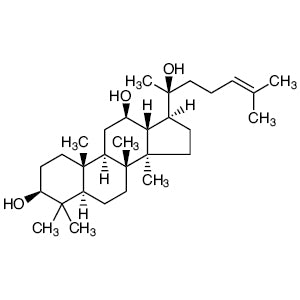
Panaxadiol is a naturally occurring compound derived from specific plant sources, widely utilized in life sciences and bio-pharmacology research. It plays a crucial role in laboratory settings where scientists investigate biological activities, particularly in antioxidant effects and metabolic pathway modulation. As a key component in the development of pharmaceuticals and natural product research, Panaxadiol supports the exploration of bioactive compounds from plant-based materials. Its presence in experimental studies contributes to the understanding of therapeutic potential in medical treatments and health-related research.
The compound’s unique chemical structure and stability under certain conditions make it a preferred choice for researchers. Its ability to withstand various analytical methods, such as chromatography and spectroscopy, enhances its utility in laboratory analysis. Additionally, its resistance to degradation ensures long-term reliability in experimental applications. These properties make Panaxadiol a valuable tool for both academic and industrial research, especially in the field of natural product chemistry and drug discovery.
In Indonesian laboratories, Panaxadiol is commonly used in health and pharmacology research. It is a key ingredient in experiments aimed at exploring the potential of natural compounds in therapeutic applications. Many research institutions and universities in Indonesia incorporate Panaxadiol into their studies to investigate its antioxidant properties and its role in metabolic processes. Its application extends to the development of new treatments and the analysis of bioactive compounds in plant-based medicines.
- Antioxidant Effect Research: Panaxadiol is ideal for studying its antioxidant properties, helping researchers understand its role in neutralizing free radicals and protecting cellular structures.
- Metabolic Pathway Analysis: Its ability to influence metabolic processes makes it suitable for experiments examining how natural compounds interact with cellular metabolism.
- Drug Development Studies: Panaxadiol serves as a key component in the development of pharmaceuticals, supporting the exploration of natural compounds for therapeutic use.
- Natural Product Chemistry: Its complex chemical structure makes it a valuable tool for analyzing bioactive compounds derived from plant sources.
- Therapeutic Potential Exploration: Researchers use Panaxadiol to investigate its potential applications in medical treatments and alternative therapies.
| Brand | TCI |
|---|---|
| CAS number | 19666-76-3 |
| Molecular formula | — |
| Purity | — |
| Category | Life Science > Biochemicals and Reagents > Crude Medicine Ingredients for Research and Experimental Use |
| Pack sizes | Available in various quantities as per supplier specifications |
| Physical form | Solid or powder, depending on the batch |
| Storage | Store in a cool, dry place away from direct sunlight |
Panaxadiol should be stored in a cool, dry environment to maintain its stability and prevent degradation. It is recommended to use airtight containers to protect it from moisture and contaminants. Due to its chemical nature, it should be handled with appropriate personal protective equipment such as gloves and safety goggles. Avoid exposure to high temperatures and direct sunlight to preserve its integrity. Proper labeling and storage conditions ensure the compound remains effective for research applications. Regular monitoring of storage conditions is advised to maintain its quality and usability in laboratory settings.
—
Product Categories
- Biochemicals and ReagentsCrude Medicine Ingredients for Research and Experimental Use
- Biochemicals and ReagentsSteroidsPhytosteroids [Steroids]
- Biochemicals and ReagentsTerpenesTriterpenes
- Cell BiologyCancer ResearchAntitumor Agents for Research
- Cell BiologyCell Signaling and NeuroscienceCytokines, Growth Factors and Hormones
- Pharmaceutical Development and Drug Discovery ResearchCrude Medicine Ingredients for Research and Experimental Use
Produk Terkait
-
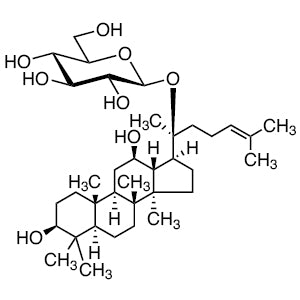
(20S)-Protopanaxadiol TCI P2651
Regular price Rp 5.988.150,00Regular priceRp 4.203.150,00Sale price Rp 5.988.150,00 -
20(S)-GinsenosideRg3 TCI G0568
Regular price Rp 2.597.700,00Regular priceRp 1.832.250,00Sale price Rp 2.597.700,00 -
20(R)-GinsenosideRh2 TCI G0567
Regular price From Rp 4.293.450,00Regular priceRp 3.017.700,00Sale price From Rp 4.293.450,00 -
20(R)-GinsenosideRg3 TCI G0536
Regular price Rp 5.194.350,00Regular priceRp 3.647.700,00Sale price Rp 5.194.350,00 -
Guggulsterone[mixtureof(E)-and(Z)-isomers] TCI G0629
Regular price Rp 8.374.800,00Regular priceRp 5.871.600,00Sale price Rp 8.374.800,00 -
GinsenosideC-K TCI G0590
Regular price Rp 3.949.050,00Regular priceRp 2.777.250,00Sale price Rp 3.949.050,00 -
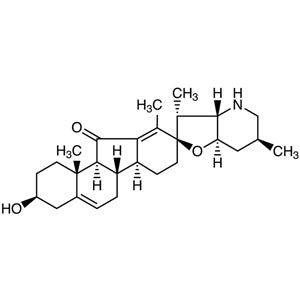
Jervine TCI J0009
Regular price Rp 8.055.600,00Regular priceRp 5.649.000,00Sale price Rp 8.055.600,00 -
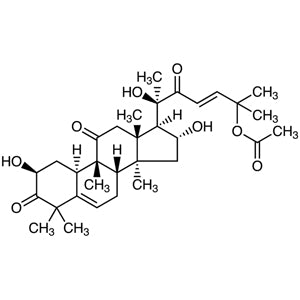
CucurbitacinB TCI C3442
Regular price From Rp 3.472.350,00Regular priceRp 2.427.600,00Sale price From Rp 3.472.350,00